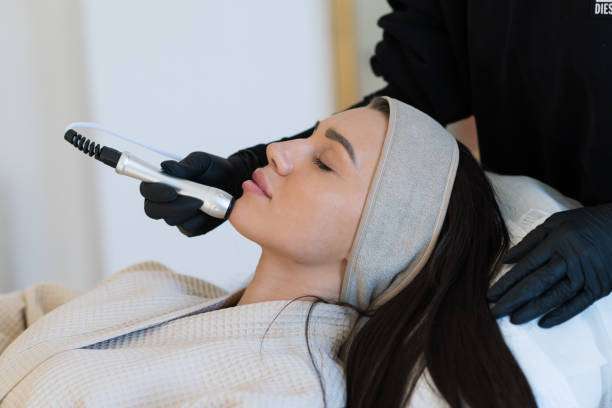

Dubai skin has to deal with an unusual combination: strong UV exposure outdoors, dry air from constant indoor AC, humidity changes and frequent travel. HydraFacial Treatment in Dubai combines controlled cleansing, exfoliation, extraction and hydration in one non-invasive treatment, helping address surface buildup and dehydration without the recovery associated with more aggressive resurfacing.
The important distinction is that HydraFacial works primarily at the skin surface rather than changing facial anatomy or injecting material into deeper tissue. Its Vortex-Fusion system uses a specialized handpiece and solutions to loosen surface debris, perform controlled extraction and deliver hydrating skincare ingredients during the same treatment.
Why Dubai Skin Often Needs More Than a Basic Facial
Dubai’s environment can make otherwise manageable skin concerns noticeably more persistent.
Outdoor UV exposure can contribute to uneven pigmentation and visible photoaging. At the same time, prolonged exposure to air-conditioned environments can leave the stratum corneum feeling tight or dehydrated.
Then there is the humidity swing.
A person may spend an afternoon outdoors in humid conditions, move into a heavily air-conditioned office, fly internationally that evening and wake up in another climate. The skin barrier has to adapt repeatedly.
For many patients, the result is not one isolated concern. It may be a combination of dullness, surface dehydration, enlarged-looking pores, excess oil around the T-zone and uneven texture.
HydraFacial is designed around this type of multi-factor skin maintenance rather than targeting only one visible issue. The treatment can be customized with different tips, solutions and optional additions according to the patient’s skin goals.
The Dubai Skin Cycle
Dubai sun + environmental exposure
                ↓
Surface buildup and dehydration
                ↓
Congested pores + dull-looking texture
                ↓
Controlled cleansing and exfoliation
                ↓
Gentle extraction
                ↓
Hydration + targeted skincare infusion
                ↓
Smoother, fresher-looking skin
This does not mean a HydraFacial reverses UV damage or permanently changes the biology of aging skin. It is better understood as a controlled surface treatment that supports skin cleanliness, hydration and appearance.
That distinction matters when choosing an aesthetic treatment.
HydraFacial Compared With Other Skin Treatments
Not every patient who wants brighter or smoother skin needs the same level of intervention. Microdermabrasion, chemical peels and HydraFacial can all address surface-related concerns, but they do so through different mechanisms.
| Treatment | Primary Action | Typical Skin Focus | Downtime | Best Suited For |
|---|---|---|---|---|
| HydraFacial | Cleansing, exfoliation, extraction and hydration | Congestion, dehydration, dullness, texture | Usually minimal | Patients wanting a multi-step maintenance treatment |
| Microdermabrasion | Mechanical exfoliation | Surface texture, dullness, uneven tone | Usually minimal | Patients needing controlled superficial exfoliation |
| Chemical Peel | Chemical exfoliation at a selected depth | Texture, pigmentation, selected acne concerns | Depends on peel depth | Patients needing a more targeted chemical resurfacing approach |
| Basic Facial | Cleansing and topical skincare | General maintenance | Minimal | Routine skincare and relaxation |
| Laser Resurfacing | Controlled thermal/ablative or non-ablative skin remodeling | Texture, pigmentation and signs of aging depending on device | Device-dependent | Patients requiring more intensive resurfacing |
Microdermabrasion physically removes the outermost layer of skin and can improve the appearance of texture and tone, while chemical peels use controlled chemical exfoliation and may require recovery depending on their depth.
HydraFacial occupies a different position. Rather than relying primarily on mechanical abrasion or a standalone chemical peel, its system combines cleansing, exfoliation, extraction and hydration within one treatment sequence.
The right choice therefore depends on the actual skin problem. A patient with significant pigmentation, active inflammatory acne, deep acne scarring or advanced photodamage may require a treatment plan beyond a hydration-focused facial.
Clinical Execution and Technique Behind HydraFacial
A well-performed treatment should begin with assessment rather than immediately placing the handpiece against the skin.
The provider needs to understand whether the patient’s primary issue is dehydration, congestion, sensitivity, uneven texture, oil production or a combination of these factors. Existing skincare products and recent procedures also matter because excessive exfoliation can irritate the skin barrier. Dermatology guidance similarly emphasizes matching exfoliation intensity to skin type and avoiding over-exfoliation.
Step One: Surface Preparation
The skin is cleansed to remove makeup, sunscreen, sebum and environmental residue.
This creates a cleaner surface for the subsequent stages and allows the provider to assess how the skin responds during treatment.
Step Two: Controlled Exfoliation
The treatment then uses a specialized HydroPeel tip and solution to loosen dead surface cells and impurities.
The goal is not to aggressively strip the epidermis. Good technique means using an appropriate treatment intensity for the patient’s skin condition rather than assuming that stronger exfoliation produces better results.
Step Three: Vortex-Assisted Extraction
Extraction is one of the features that differentiates HydraFacial from a conventional facial.
The device uses controlled suction and vortex action to assist with the removal of pore debris. The objective is to clear superficial congestion without the repeated manual squeezing that can unnecessarily traumatize the surrounding skin.
Patients should also understand that a pore is not a permanent hole that can be “closed” by a facial. Pore appearance is influenced by sebum, follicular structure, skin thickness and aging. A treatment can make pores look cleaner and less conspicuous without permanently changing their underlying anatomy.
Step Four: Hydration and Infusion
The final stage introduces hydrating and nourishing solutions to the treated surface.
HydraFacial’s system is designed to cleanse, exfoliate, extract and hydrate as part of one continuous treatment. Depending on the treatment configuration, providers can also use targeted boosters or additional modalities.
For patients researching advanced facial hydration and skin cleansing treatments, the important question is not simply which facial sounds more advanced. It is whether the treatment protocol actually matches the condition of their skin.
What Patients Commonly Get Wrong About HydraFacial
“If my skin feels dry, I only need a heavier moisturizer.”
Not necessarily.
Dehydrated skin can coexist with surface buildup and excess sebum. Simply applying richer products may make some congested skin feel heavier without addressing the underlying surface condition.
“Extraction should hurt if it is working.”
Pain is not a useful measure of treatment quality.
Aggressive squeezing can irritate surrounding tissue and potentially worsen inflammation. HydraFacial uses controlled suction-based extraction rather than relying entirely on forceful manual manipulation.
“One HydraFacial will permanently fix my pores.”
A single treatment can make the skin appear cleaner, smoother and more hydrated, but it cannot permanently remodel pore anatomy.
Skin continues producing sebum, shedding cells and responding to environmental exposure. Long-term improvement in appearance depends on consistent skincare, sun protection and an appropriate treatment schedule.
What About Sensitive Skin?
Sensitivity changes the treatment equation.
Patients with compromised skin barriers, active irritation, sunburn, open lesions or certain inflammatory skin conditions may not be appropriate candidates until the underlying problem has been assessed and managed.
This is particularly relevant in Dubai, where patients may combine professional treatments with strong active ingredients at home. Retinoids, exfoliating acids and other products can increase sensitivity, so the complete skincare history should be considered before treatment.
HydraFacial Treatment Roadmap
- Skin assessment: The provider reviews skin type, hydration, congestion, texture and current skincare use.
- Treatment planning: The intensity and treatment configuration are selected according to the patient’s skin rather than using one identical protocol for everyone.
- Cleansing: Surface impurities, makeup, sunscreen residue and excess oil are removed.
- Exfoliation: Controlled exfoliation helps remove accumulated dead skin cells from the superficial layer.
- Extraction: Vortex-assisted suction helps remove superficial pore debris.
- Hydration: Hydrating and selected skincare solutions are applied through the treatment system.
- Post-treatment care: The skin is protected and the patient receives guidance on maintaining the result, including sensible sun protection.
- Follow-up planning: If the goal is ongoing skin maintenance, future treatments can be spaced according to skin condition and response rather than following an arbitrary schedule.
The immediate cosmetic effect can be attractive because the skin may look fresher and more hydrated after treatment. However, patients should separate an immediate cosmetic improvement from long-term treatment of chronic dermatological conditions.
For example, persistent acne requires an appropriate acne-management strategy, and significant pigmentation may need a more targeted approach. The American Academy of Dermatology notes that acne treatment is individualized and may involve medications or procedures depending on the clinical situation.
Long-Term Skin Health in Dubai
The most useful way to think about HydraFacial is as part of a broader skin-maintenance strategy.
A treatment can remove surface buildup and improve hydration, but daily habits still determine much of what happens between appointments. Consistent broad-spectrum sun protection, appropriate cleansing, barrier-supportive moisturization and carefully selected active ingredients remain important.
That is especially relevant in Dubai. Sun exposure does not stop because a patient has completed an aesthetic treatment, and frequent travel can repeatedly expose the skin to different humidity and environmental conditions.
Patients considering HydraFacial Treatment in Dubai should therefore look beyond the immediate glow and ask a more useful question: what does their skin actually need now, and what treatment plan can support that need without unnecessarily irritating the barrier?
At Tajmeels Clinic, HydraFacial treatment can be considered within a personalized aesthetic skincare plan, with the treatment approach selected according to individual skin concerns, condition and goals.
Healthy-looking skin is rarely the result of one procedure alone. The stronger approach is consistent assessment, sensible treatment selection and a skincare routine that protects the skin between professional appointments.