
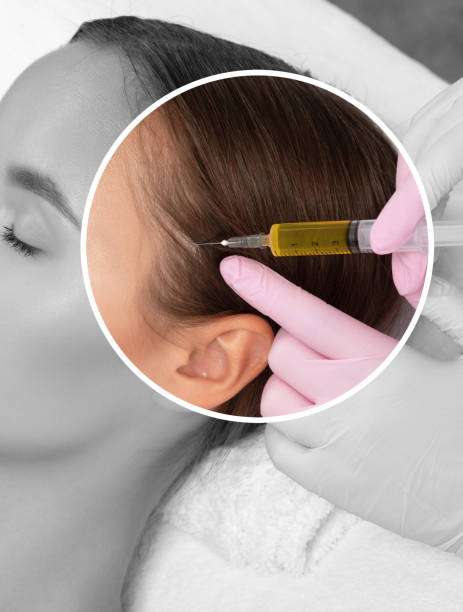

ACell PRP Treatment for Hair in Dubai combines platelet-rich plasma with an extracellular matrix product in an approach intended to support the scalp’s tissue environment. It differs from PRP alone, medication, and hair transplantation in both its proposed mechanism and the strength of available evidence.
Patients researching hair restoration often encounter several treatments that sound similar but work in different ways.
Understanding those differences can help clarify which options are worth discussing during a clinical consultation.
Understanding the Main Treatment Approaches
Hair restoration options generally fall into three broad categories: treatments intended to manage hair loss, procedures designed to support existing follicles, and surgical methods that redistribute hair.
ACell combined with PRP belongs to the regenerative-treatment category.
Its proposed role is different from that of medication, which may address certain biological processes involved in hair loss, or transplantation, which physically relocates follicles.
These approaches should not be treated as interchangeable.
ACell Combined With PRP Versus PRP Alone
PRP is prepared from a patient’s own blood and contains a concentrated portion of platelets.
Platelets release signaling molecules involved in tissue repair. Researchers have investigated whether these signals may support hair growth in some people with pattern hair loss.
Clinical reviews have reported potential improvements in hair density with PRP, but study protocols and results vary considerably.
ACell is an extracellular matrix product added to the combination in some treatment approaches.
The proposed purpose is to provide a supportive tissue environment. However, the additional benefit of combining ACell with PRP for hair restoration has not been established by strong clinical evidence.
Comparing Common Hair Restoration Options
| Treatment | Main approach | Important limitation |
|---|---|---|
| ACell combined with PRP | PRP combined with an extracellular matrix product | Evidence for the combination’s additional hair-growth benefit is limited |
| PRP alone | Platelet-rich plasma injections into selected scalp areas | Results vary, and treatment protocols are not standardized |
| Topical minoxidil | Medication used for certain types of hair loss | Requires ongoing use and may cause scalp irritation |
| Oral hair-loss medication | Medication selected according to diagnosis and suitability | Potential side effects and monitoring requirements vary |
| Hair transplantation | Moves follicular units from a donor area to thinning or bald regions | Requires suitable donor hair and does not stop ongoing native hair loss |
The appropriate choice depends on the cause and pattern of hair loss, medical history, and individual goals.
How Hair Loss Diagnosis Influences Treatment Selection
A patient with gradual pattern hair loss may have different options from someone experiencing sudden shedding or a scarring scalp condition.
Pattern hair loss is often managed with treatments intended to slow progression or improve the appearance of existing hair.
Temporary shedding may require identifying and addressing the underlying trigger.
Scarring hair loss can involve permanent follicular damage and requires a different clinical approach.
This is why a treatment should not be selected based on a broad label such as “hair thinning” alone.
Where Regenerative Treatments May Fit
Regenerative treatments are sometimes discussed as an additional option for people seeking non-surgical approaches.
PRP has been investigated in clinical studies, including research involving patients with androgenetic alopecia. Findings are encouraging in some studies but remain limited by differences in preparation, injection schedules, sample sizes, and follow-up periods.
These findings do not establish that every regenerative product or combination has the same effect.
Patients should ask which specific treatment is being offered and what evidence supports its use.
Comparing Regenerative Treatment With Hair Transplantation
Hair transplantation works differently from injections.
During transplantation, follicular units are harvested from a donor region and placed into selected recipient areas.
The procedure can provide coverage where suitable follicles are available, but donor supply is finite and surgical planning is essential.
An injection-based treatment does not physically relocate follicles. It should not be assumed to recreate hair in areas where follicles are no longer present.
The two approaches therefore address different clinical needs.
Common Misunderstandings About Treatment Comparisons
“Regenerative treatments are always safer because they are non-surgical.”
Non-surgical procedures can still cause complications. Injection-based treatments may involve pain, swelling, bruising, infection, or reactions to the materials used.
“PRP and ACell PRP are the same treatment.”
They are not identical. PRP alone uses a platelet concentrate, while the combined approach adds an extracellular matrix product. Evidence for one cannot automatically be applied to the other.
“A transplant is unnecessary if injections are available.”
That depends on the patient’s condition. Some people may be candidates for medical or injection-based treatment, while others may need to discuss surgical restoration.
A Practical Way to Compare Your Options
Before choosing a treatment, consider the following:
- What is causing the hair loss?
- Are follicles still present in the thinning area?
- Is the goal to slow progression, improve density, or restore coverage?
- What evidence supports the proposed treatment?
- What are the potential side effects?
- Will maintenance or repeat treatment be necessary?
- What alternatives are available?
- How will progress be measured?
These questions can help patients compare options on clinical grounds rather than marketing language.
Final Thoughts on Hair Restoration Choices
ACell PRP Treatment for Hair in Dubai is one of several approaches patients may encounter when researching non-surgical hair restoration. Its proposed mechanism differs from PRP alone, medication, and transplantation, and the evidence for the combined treatment remains limited.
A personalized assessment can help identify which options are appropriate for the patient’s diagnosis and goals.
At Tajmeels Clinic, patients can discuss hair restoration options and learn about the potential benefits, limitations, and practical considerations of different treatment approaches.