
Dermal Fillers Injection in Dubai may help improve the appearance of certain depressed acne scars by adding volume beneath selected areas of uneven skin. However, acne scars differ in depth, shape, and underlying structure, so fillers are not suitable for every scar type. An assessment by a qualified practitioner can help determine whether an injectable treatment is likely to provide a meaningful improvement.
The distinction between a depressed scar and a raised scar is particularly important. Fillers may be considered for selected indentations, while raised scars generally require a different management approach. Active acne and ongoing skin inflammation should also be assessed before elective cosmetic treatment.
Understanding Different Types of Acne Scars
Acne can leave different forms of scarring, and each responds differently to treatment.
Common types include:
-
Rolling scars: Broad depressions that create an uneven or wave-like skin surface.
-
Boxcar scars: More defined depressions with relatively distinct edges.
-
Ice-pick scars: Narrow, deeper indentations that extend into the skin.
-
Raised scars: Areas of elevated scar tissue that sit above the surrounding skin.
These descriptions are useful for understanding the concern, but scar classification can be complex. A person may have several types at the same time, requiring a combination of treatment approaches.
How Dermal Fillers Injection in Dubai May Help Depressed Scars
Fillers add volume beneath the skin. In selected cases, this may lift the base of a depressed scar and reduce the contrast between the indentation and surrounding skin.
The outcome depends on the scar’s depth, width, location, and relationship to underlying tissues. Fillers do not remove scar tissue, eliminate pores, or permanently restore the original skin structure.
Which Acne Scars May Respond?
Some broad depressions may be considered for filler treatment after clinical assessment. However, very narrow or deep scars may be less suitable, and scars attached to underlying tissue may need a different approach.
A practitioner may evaluate:
-
The shape and depth of each scar.
-
Whether the scar is tethered to deeper tissue.
-
The condition of the surrounding skin.
-
The presence of active acne or inflammation.
-
Previous scar treatments and their results.
The aim is to identify which concerns may respond to filler and which require other techniques.
Is Filler Enough to Treat Acne Scarring?
Not always. Depending on the scar type, a clinician may discuss other treatments, such as procedures intended to improve skin texture or release selected areas of tethered scar tissue. Some patients benefit from a combination of approaches rather than one treatment alone.
Treatment planning should also account for skin tone, the risk of post-inflammatory pigmentation, healing history, and any tendency to develop raised scars. These factors can influence which procedures are appropriate.
If acne remains active, controlling it may be an important part of the plan. Treating existing scars without addressing ongoing acne may leave the skin vulnerable to additional scarring.
What Happens During an Acne Scar Consultation?
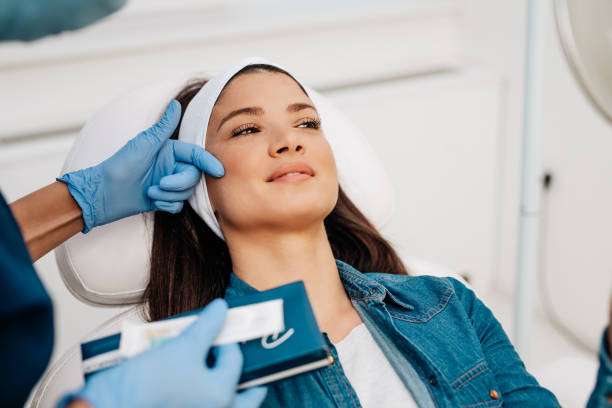
A consultation should begin with a careful skin and medical history review. The practitioner should explain what can realistically improve and whether filler is appropriate for the specific scar pattern.
The process may include:
-
Scar assessment: The practitioner identifies the main scar types and evaluates their depth and distribution.
-
Skin review: Active acne, inflammation, pigmentation, and healing history are considered.
-
Treatment discussion: Filler and alternative approaches are compared according to suitability.
-
Risk explanation: Potential complications, expected recovery, and limitations are reviewed.
-
Individual planning: The proposed treatment focuses on the patient’s priorities rather than attempting to treat every scar in the same way.
Patients should ask whether the proposed product is intended and suitable for the specific treatment area.
Recovery and Potential Risks
Temporary swelling, bruising, tenderness, and redness may occur after filler treatment. Results vary, and the appearance of scars may not improve uniformly across the face.
Possible complications include infection, persistent lumps, asymmetry, inflammatory reactions, and product displacement. Rarely, filler can obstruct a blood vessel and cause tissue injury or visual complications.
Seek urgent medical assessment if you develop severe or increasing pain, unusual skin whitening or mottling, cool skin, blistering, or skin breakdown. Visual symptoms following an injection require emergency medical care.
Frequently Asked Questions
Can dermal fillers remove acne scars permanently?
Fillers do not remove scar tissue. They may improve the appearance of selected depressed scars, but results are temporary or product-dependent and do not recreate normal skin completely.
Are fillers suitable for ice-pick scars?
Narrow, deep ice-pick scars may not respond well to filler alone. A practitioner can assess whether another scar-directed treatment is more suitable.
Can I have filler while I have active acne?
Active acne and inflammation should be discussed during the consultation. Treatment may need to be postponed or planned differently to reduce avoidable risks.
Will one session treat all my acne scars?
Not necessarily. Different scar types respond differently, and some patients need a staged or combined approach. The number of treatments depends on the clinical assessment and the intended outcome.
Personalised Acne Scar Assessment at Tajmeels Clinic
Acne scarring requires a treatment plan based on the structure of the scars and the condition of the surrounding skin. Tajmeels Clinic encourages individual assessment and clear discussion of realistic outcomes, alternatives, and safety considerations before treatment is selected.
Medical note: This article is for educational purposes only. A qualified medical professional should assess your skin and determine which treatment, if any, is appropriate.