
A container arrives at the port, but nobody knows exactly when it will be available for pickup. Every hour spent searching for an update can put delivery schedules and profit margins at risk.
For freight forwarders, moving cargo is only one part of the job. Knowing where shipments are, when they will arrive, and what needs attention is equally important.
Yet many freight forwarding teams still rely on carrier websites, emails, spreadsheets, and phone calls to track container movements.
When shipment information is scattered across different systems, delays become harder to manage, customers receive inconsistent updates, and unexpected costs can accumulate.
This is why freight forwarding software solutions are becoming essential for businesses seeking better container visibility, stronger operational control, and improved profitability.
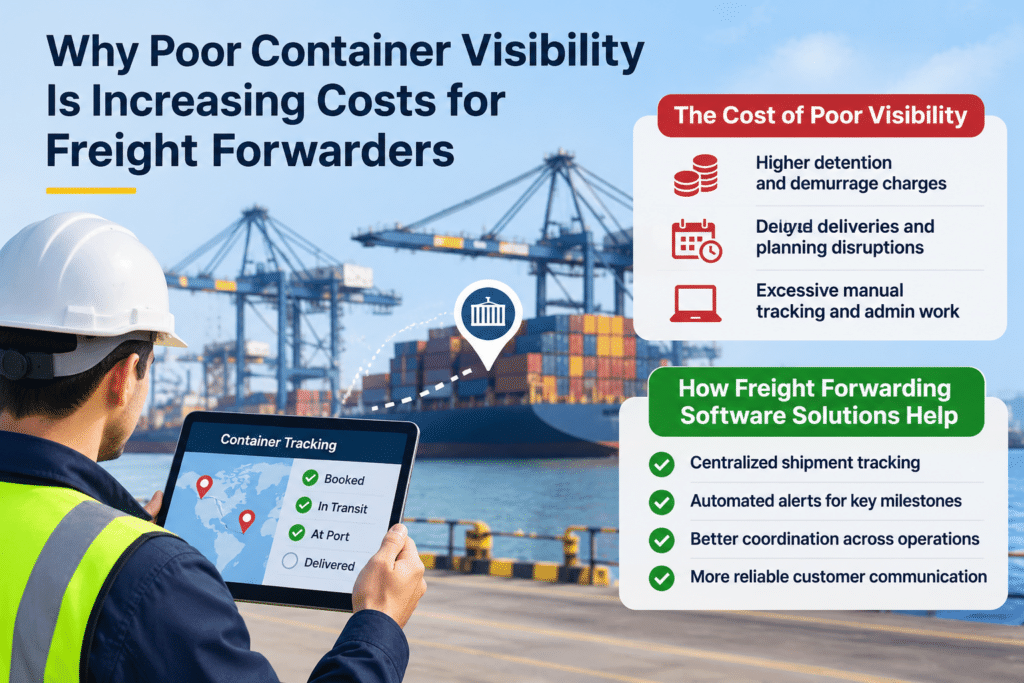
How Poor Container Visibility Increases Freight Costs
1. Unexpected Detention and Demurrage Charges
Detention and demurrage charges can become expensive when containers are not collected or returned within the permitted free time.
Demurrage generally relates to containers remaining at a terminal beyond free time, while detention concerns extended equipment use.
When freight forwarders lack timely container status updates, they may struggle to coordinate collection and returns.
For example, a container may already be available for pickup, but the operations team receives that information too late to arrange transportation efficiently.
Better visibility cannot eliminate every charge, but it can help teams act earlier and manage deadlines more effectively.
2. Delayed Deliveries and Poor Coordination
Container movement involves shipping lines, terminals, trucking companies, warehouses, and customers.
When these parties operate with disconnected information, even a small schedule change can disrupt multiple activities.
Imagine a vessel arriving later than expected while the trucking team is still working with the original delivery plan.
This can lead to unnecessary waiting, rescheduling, and additional administrative effort.
Without centralized shipment information, freight forwarders spend more time reacting to problems than preventing avoidable disruptions.
3. Excessive Manual Tracking
Checking individual carrier portals, contacting terminals, and updating spreadsheets consumes valuable employee time.
As shipment volumes increase, the workload becomes harder to manage.
Operations teams may spend hours collecting updates instead of handling customer requirements and shipment exceptions.
The problem is not necessarily a lack of information. It is that the information arrives through too many disconnected channels.
How Freight Forwarding Software Solutions Improve Container Visibility
1. Centralized Shipment Tracking
Modern freight platforms can consolidate supported carrier, terminal, and transport updates into a single dashboard.
Instead of switching between multiple systems, employees can review container milestones and available shipment statuses from one location.
This gives operations teams a clearer understanding of which shipments are progressing normally and which require attention.
2. Automated Alerts for Important Milestones
Connected systems can notify freight forwarders when relevant shipment events occur.
For example, an alert may highlight a container discharge, a change in availability, or an approaching free-time deadline.
These notifications help teams prioritize necessary actions without continuously checking every shipment manually.
Alert accuracy, however, depends on the quality and timeliness of incoming data.
3. Better Coordination Across Operations
Container visibility becomes more valuable when tracking data is integrated with freight management, transport planning, and customer communication systems.
For example, updated container availability information can help a transport coordinator review pickup arrangements and notify relevant teams.
This reduces unnecessary communication gaps and supports better operational planning.
4. More Reliable Customer Communication
Customers want clear information about their shipments, particularly when delays occur.
With centralized tracking, freight forwarders can provide updates based on the latest available milestones rather than manually collecting information from different sources.
This can reduce repetitive customer inquiries and create a more transparent service experience.
Why Connected Visibility Matters for Business Growth
Poor visibility affects more than individual shipments.
Repeated administrative work, avoidable waiting periods, unresolved exceptions, and billing disputes can place pressure on operating margins.
By implementing connected freight forwarding software solutions, businesses can potentially improve:
-
Container milestone visibility
-
Pickup and delivery coordination
-
Free-time and deadline monitoring
-
Operational exception management
-
Customer communication
-
Employee productivity
Freight forwarders should measure these improvements using practical indicators such as avoidable storage-related charges, time spent tracking shipments, and the percentage of exceptions resolved before they disrupt operations.
The Digital Container Shipping Association (DCSA) also promotes standardized Track & Trace data exchange to help shipping stakeholders share consistent container movement information.
For businesses integrating multiple carriers, common data standards can reduce the complexity of managing separate information formats.
Final Thoughts
Container visibility is no longer simply a tracking feature. It is an important part of cost management and operational efficiency.
When freight forwarders cannot access timely shipment information, they risk delayed decisions, unnecessary manual work, and additional logistics expenses.
Connected freight forwarding software solutions can help businesses move from fragmented tracking toward better-coordinated shipment operations.
Because in freight forwarding, knowing where a container is matters. But knowing what action to take next can make the bigger difference to your bottom line.