
Roofing machines have become an important part of modern metal roofing production. As demand grows for durable, accurately formed roofing systems, manufacturers and contractors need equipment that can produce consistent results while reducing material waste and production time.
From roll forming machines to cutting and bending equipment, roofing machines are designed to simplify different stages of the manufacturing process. Understanding how these machines work and what they offer can help roofing businesses choose equipment that fits their production requirements.
What Are Roofing Machines?
Roofing machines are specialized pieces of equipment used to manufacture, shape, cut, or process roofing materials. Many are designed specifically for metal roofing applications, including steel, aluminum, and other coated metal sheets.
A roofing machine can transform flat metal coils or sheets into finished roofing panels with precise dimensions and profiles. Depending on the equipment, manufacturers can produce standing seam panels, corrugated sheets, tile-profile panels, and other roofing products.
These machines are commonly used in:
-
Metal roofing manufacturing facilities
-
Roofing supply companies
-
Construction material production businesses
-
Commercial roofing operations
-
Custom panel manufacturing facilities
Common Types of Roofing Machines
Different roofing projects require different types of equipment. Choosing the right machine depends on the desired roofing profile, material, production volume, and level of automation.
Metal Roofing Roll Forming Machines
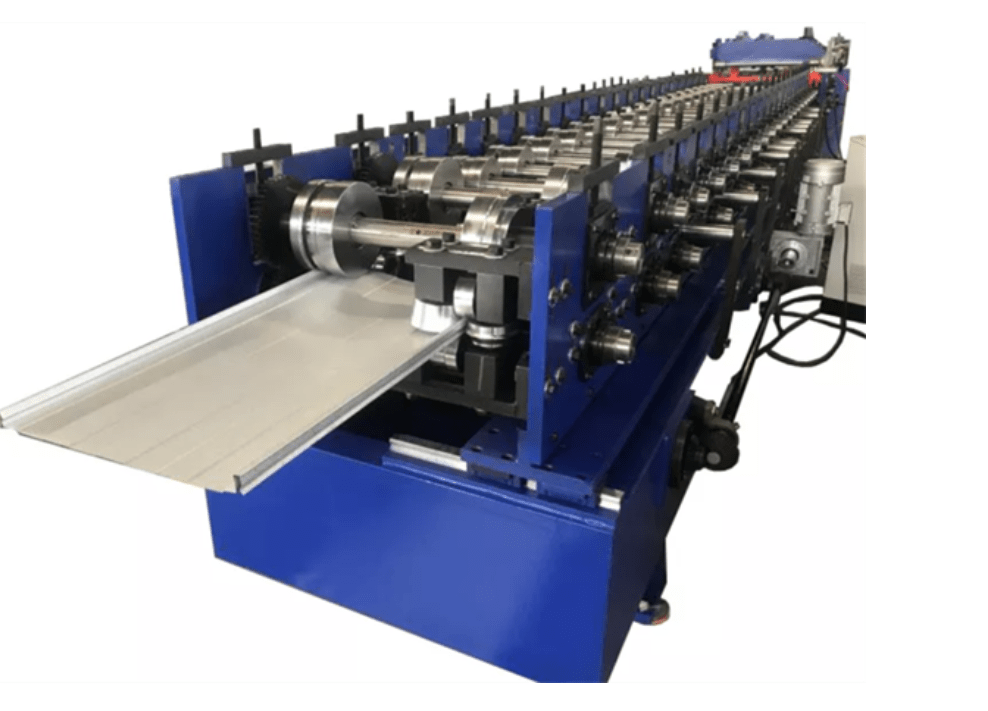
Roll forming machines are among the most widely used roofing machines. They gradually shape a continuous metal sheet through a series of rollers until it reaches the required roofing profile.
These machines are useful for producing consistent panels at relatively high production speeds. They can also be configured for different panel designs and specifications.
Roofing Panel Cutting Machines
Cutting systems are used to produce roofing panels at specific lengths. Automated cutting equipment can improve accuracy and reduce the amount of material lost during production.
Precise cutting is particularly important when panels are manufactured according to individual project measurements.
Seam Forming Equipment
Standing seam metal roofing requires accurately formed seams that connect adjacent panels. Specialized seam-forming equipment can help manufacturers create consistent profiles and improve the overall appearance of the finished roofing system.
Roof Panel Bending Machines
Some roofing projects require panels to be bent or shaped for particular architectural applications. Bending machines can help create customized components while maintaining consistent dimensions.
Benefits of Using Roofing Machines
Investing in appropriate roofing machinery can provide several advantages for manufacturers and roofing businesses.
Improved Production Efficiency
Manual production can take considerable time, especially when large quantities of roofing panels are required. Automated machinery can streamline forming, cutting, and other processes, allowing businesses to increase production without relying entirely on manual labor.
Consistent Panel Quality
Consistency is essential in roofing manufacturing. Machines can maintain uniform dimensions and profiles throughout a production run, helping reduce variations between individual panels.
Reduced Material Waste
Accurate measuring and automated cutting can help minimize unnecessary material waste. This can be especially valuable when working with expensive metal coils or producing custom-length panels.
Better Customization
Modern roofing machines can often be configured to manufacture different panel profiles, lengths, and dimensions. This flexibility allows businesses to serve a wider range of residential and commercial projects.
Lower Long-Term Labor Requirements
Automation can reduce the amount of repetitive manual work involved in roofing panel production. Employees can focus on machine operation, quality control, maintenance, and other higher-value tasks.
How to Choose the Right Roofing Machine
Selecting roofing equipment requires more than simply comparing machine prices. Businesses should consider how the equipment will be used over the long term.
Important factors include:
-
Material compatibility: Make sure the machine is suitable for the metal thickness and material types you plan to use.
-
Production capacity: Consider how many panels you need to manufacture per day or month.
-
Panel profile: The machine should be designed for the specific roofing profile you want to produce.
-
Automation level: Determine whether manual, semi-automatic, or fully automated equipment best suits your operation.
-
Machine durability: Look for robust construction and components designed for continuous production.
-
Maintenance requirements: Easy access to replacement parts and routine maintenance can reduce downtime.
-
Available workspace: Check the machine’s dimensions and installation requirements before purchasing.
Maintenance Matters
Even high-quality roofing machines require regular maintenance. Routine inspections can help identify worn components before they cause significant production problems.
Operators should follow the manufacturer’s maintenance recommendations and regularly check areas such as rollers, cutting systems, electrical components, lubrication points, and fasteners.
Keeping the machine clean and properly adjusted can also help maintain product quality and extend equipment life.
The Future of Roofing Manufacturing
As the construction industry continues to demand efficient and reliable building materials, roofing machinery is likely to become increasingly automated. Computer-controlled systems, digital measurements, automated cutting, and improved production monitoring can help manufacturers produce roofing panels with greater precision.
For businesses that manufacture metal roofing at scale, the right machinery can become an important part of maintaining productivity, quality, and competitiveness.
Final Thoughts
Roofing machines play an important role in modern roofing material production. Whether a business needs roll forming equipment, cutting systems, bending machines, or specialized seam-forming equipment, the right technology can improve consistency and production efficiency.
Before investing in a machine, manufacturers should evaluate their materials, production volume, roofing profiles, workspace, and long-term business needs. Choosing equipment based on these factors can help create a more efficient and dependable roofing manufacturing operation.