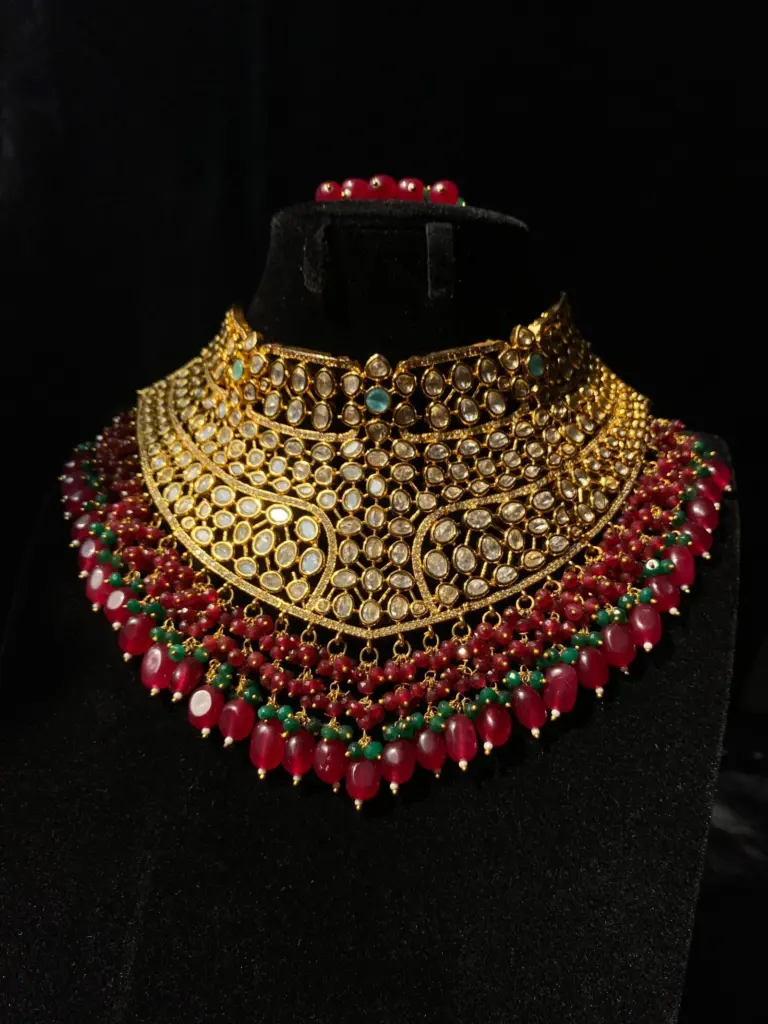

A bride rarely chooses her jewellery alone. Her mother, aunts, and grandmother all have opinions. Often, those opinions come from the region the family calls home. A Lahori bride may wear heavy, gold-toned pieces. A Sindhi bride may prefer layered necklaces in deep colours. Both can choose kundan, yet their sets look very different. This guide explains why. Bridal buyers rarely ask about trends first. They ask what their ancestors wore and what the community expects. That question shapes almost every purchase. Understanding regional habits helps you buy with confidence. It also saves money, because you avoid pieces that clash with your outfit or family customs. Let us look at what makes this craft special and how each region adapts it.
Kundan has a long royal history. Craftsmen in Mughal courts set uncut gems into thin gold foil. The foil gave each stone a glowing, liquid look. Artisans in Rajasthan and Gujarat refined the method over centuries. After 1947, many karigars carried the craft into Pakistan. Today, most pieces use gold-plated bases with glass or semi-precious stones. True gold kundan still exists, but it costs far more. Many sets also add meenakari on the back. This enamel work adds colour and shows careful finishing. Always flip a piece over before buying. Clean backs and even enamel signal good workmanship. Rough edges and uneven glue suggest rushed production. Knowing these details helps you judge value, whatever your budget.
Why Kundan Remains a Bridal Favourite
Demand for kundan bridal jewellery in Pakistan stays strong because the style suits almost every wedding function. Its warm glow looks rich under mehndi lights and daytime barat sunshine alike. The stones also pair well with red, maroon, ivory, and pastel outfits. Brides like the lighter weight compared with solid gold sets. A full necklace, tikka, and jhumkay can feel comfortable for hours. Prices stay flexible too. Families can choose gold-plated sets for occasional wear or heirloom-grade pieces for keepsakes. Emotion plays a part as well. Kundan reminds many women of their mothers’ weddings. That memory carries real weight in family decisions. Even modern brides often add one kundan statement piece to a minimalist look. It bridges tradition and personal taste with very little effort.
How Regional Traditions Shape the Look
Punjab: Grand and Layered
Punjabi weddings favour bold, layered statements. Brides often wear a broad choker with a long rani haar. A heavy matha patti and jhoomar finish the look. Gold tones dominate, usually with ruby-red and emerald-green stones. Families in Lahore and Faisalabad often want the set to match the lehenga’s embroidery. Bring a sample of your dupatta border to the jeweller. The stylist can then match the metal tone exactly. Check the weight before the wedding day, too. Punjabi sets can feel heavy after six hours of sitting and posing. Ask for soft backing on earrings and secure hooks on the necklace. These small checks prevent discomfort and keep your smile natural in every photograph.
Sindh and Balochistan: Colour and Craft
Sindhi families love rich craftsmanship. Ajrak patterns and mirror embroidery bring deep reds, blues, and greens into the wedding wardrobe. Brides often wear a large nath and layered necklaces. Kundan works well when its stones echo those bold shades. Many Karachi families with Hyderabadi roots add a passa, a decorative piece worn on the side of the head. Balochi brides traditionally lean toward heavy silver pieces. Some now add a lighter kundan necklace for comfort. Ask the jeweller to keep the stone colours close to your outfit’s palette. Too many competing shades can overwhelm detailed embroidery. One strong focal piece usually looks better than five equally loud ones.
Khyber Pakhtunkhwa: Bold and Textured
Pashtun bridal style often favours large, textured ornaments. Silver tones and coin-style details have long been popular. Modern brides now blend these with kundan by choosing oxidised or silver-finish bases. This keeps the traditional feel while adding sparkle. Peshawar families often prefer statement earrings and a broad forehead piece. Ask for smaller stones if your outfit has heavy tilla work. Otherwise, the jewellery and embroidery compete for attention. Try the complete set with your veil or dupatta before buying. Pashtun bridal dressing often involves a heavy, structured head covering. Earrings may brush against fabric and snag threads. A quick fitting reveals these problems early and saves stress on the wedding morning.
Practical Tips Before You Buy
Match Jewellery to Your Outfit
Start with your outfit, not the jewellery. Collect fabric swatches and a photo of the final design. Take them to the jeweller in daylight. Artificial shop lights can change how stones look. Choose one dominant colour from the dress and repeat it in the stones. Keep the metal tone consistent across all pieces. Mixing yellow gold and rose gold usually looks accidental. If your neckline is high, choose a choker. If it is low, a longer haar balances the space. Plan hairstyle and earrings together. A large jhoomar needs a secure bun, while open hair suits a smaller tikka.
Set a Smart Budget
Decide your budget before browsing. Then divide it between the necklace, earrings, tikka, and bangles. The necklace usually deserves the largest share. Ask whether the stones are glass or semi-precious. Request a written receipt that lists materials and plating. Plating thickness affects durability, so ask about it directly. Many brides also rent or reserve extra sets for walima and mehndi functions. This approach spreads cost without repeating looks. Store each piece in a soft pouch, away from perfume and moisture. Wipe stones gently with a dry cloth after wearing. Good care helps a set stay bright for the next family wedding.
Frequently Asked Questions
Does kundan suit a mehndi function as well as a barat?
Yes. Choose lighter, colourful pieces for mehndi. Save the heavy rani haar and matha patti for barat.
How do I tell real kundan craftsmanship from cheap imitation?
Check the back of the piece. Neat enamel, firm stone settings, and smooth edges indicate skilled work.
Can I wear kundan with a silver-toned bridal outfit?
You can, if the jeweller offers silver or oxidised finishes. Avoid mixing yellow gold with silver embroidery.
How should I store kundan after the wedding?
Keep each piece in a separate soft pouch. Use a dry box, and avoid contact with perfume.
Is a rental set a sensible option for a smaller budget?
Yes, for single functions. Inspect clasps and stones closely, and confirm the return conditions in writing.
Final Thoughts
Regional customs guide what brides wear, from Punjab’s layered grandeur to Pashtun silver textures. Kundan adapts well to each tradition. Start with your outfit, set a clear budget, and inspect the craftsmanship closely. Then choose pieces that honour your family while reflecting your own style.