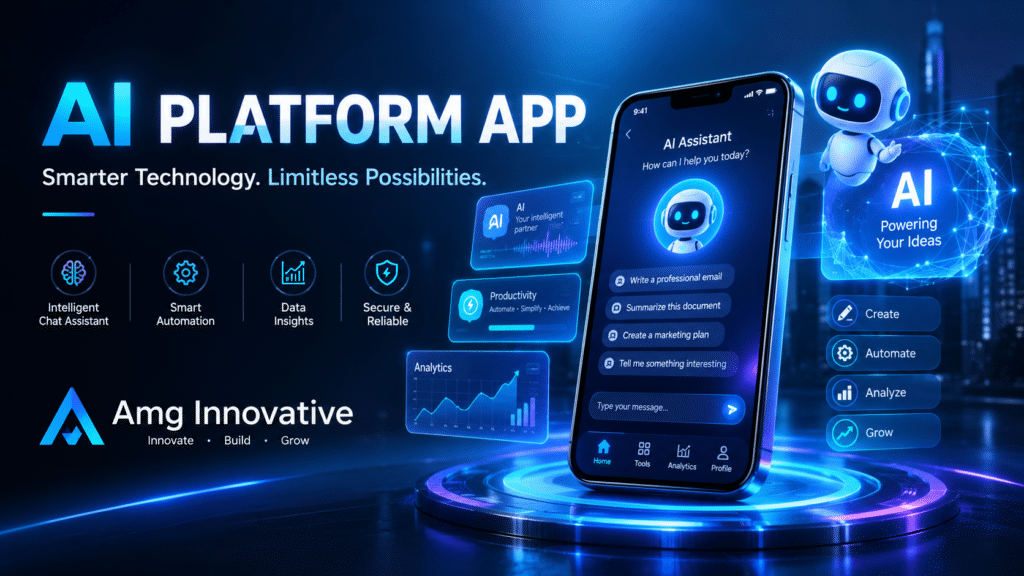

Artificial intelligence is becoming an important part of how modern businesses work. Companies are using AI tools to improve daily tasks, support customers, manage data, and make better decisions. An AI platform app brings different AI features into one place, allowing businesses to use smart tools to solve problems and improve their services.
The importance of these apps continues to grow as businesses look for ways to save time, reduce manual work, and meet customer needs. From small companies to large organizations, AI-powered platforms can help teams work more efficiently and manage tasks with greater ease. They can also support business growth by making information easier to access and helping employees focus on more valuable work.
Why AI Platform Apps Matter
AI platform apps matter because they help businesses handle many tasks through a single system. Without these tools, employees may need to switch between different applications to prepare reports, answer questions, review information, and manage daily work. A suitable AI platform can bring some of these activities together and make work easier to manage.
For example, a company may use an AI app to review customer messages, create content drafts, summarize documents, and organize information. These features can reduce the time needed to complete common tasks. Employees can then spend more time solving problems, building customer relationships, and planning business activities.
AI platforms can also support better teamwork. When employees have access to useful information and shared tools, they can communicate more clearly and complete tasks with fewer delays. This can improve work across departments and help businesses respond to changing needs.
Improving Business Productivity
One of the main reasons AI platform apps are important is their ability to improve productivity. Many business tasks are repeated every day, including data entry, email writing, report preparation, and customer support. AI tools can help complete parts of these tasks, allowing employees to finish their work faster.
For example, an AI platform can create a first draft of a business report from selected information. An employee can review the draft, correct mistakes, and prepare the final version. Similarly, a customer service team can use AI to sort incoming messages and suggest answers to common questions.
These tools do not remove the need for human skills. Employees still need to check results, make decisions, and handle situations that require care and experience. When AI and human knowledge work together, businesses can improve productivity while keeping quality in focus.
The Importance of Generative AI in Automation
Generative AI in Automation is important because it helps businesses create content and support work processes with less manual effort. Generative AI can produce text, summaries, ideas, and other useful material based on instructions and available information. When connected to business tasks, it can help teams move from one step to another more quickly.
Marketing teams can use this technology to prepare content ideas, draft emails, and create product descriptions. Customer support teams can use it to prepare replies to common questions. Managers can use it to summarize meeting notes, while technical teams may use AI tools to explain code or assist with software tasks.
The value of this technology goes beyond speed. It can help employees start tasks that would otherwise take a long time to prepare. However, AI-generated content may contain errors or outdated details. Businesses should review important results before sharing or using them. Human checks help protect accuracy, quality, and trust.
Supporting AI Automation for Business
AI automation for business helps companies reduce repeated work and improve how tasks move through their systems. Instead of asking employees to handle every step manually, businesses can use AI to support processes such as sorting requests, preparing updates, reviewing records, and directing work to the right team.
For example, an online store may use AI to sort customer questions about orders, delivery, and returns. Common questions can receive suggested answers, while more difficult cases can be sent to a support employee. This can reduce waiting times and help staff focus on problems that need personal attention.
AI automation can also support sales, finance, and human resources. Sales teams may use AI to organize customer information and prepare follow-up messages. Finance teams may use it to review documents and organize reports. Human resources teams may use AI to answer common questions about workplace rules and company services.
When businesses choose suitable tasks and set clear rules, automation can make daily operations more consistent. Companies should still review important actions, especially those involving money, personal data, or major business decisions.
Better Customer Service and Experience
Customer expectations continue to change. People often want quick answers, simple services, and support when they need it. AI platform apps can help businesses meet these needs by providing faster responses and making useful information easier to find.
AI chat tools can answer common questions about products, services, business hours, and order status. They can also guide users through basic steps or help them find the right support option. This allows customers to get help without always waiting for a staff member.
Businesses can also use AI to study customer feedback and find common problems. If many customers ask the same question, the company can improve its website, product details, or support process. Better service can increase customer satisfaction and help build long-term trust.
However, companies should make it easy for customers to reach a human employee when an AI tool cannot solve their problem. A balance between automated support and personal service creates a more helpful experience.
Helping Businesses Make Better Decisions
Business decisions often depend on large amounts of information. Reviewing this information manually can take time, especially when it comes from different systems. AI platform apps can help organize data, identify patterns, and create summaries that make information easier to understand.
For example, a retail company may review sales data to learn which products are popular. A marketing team may compare campaign results to understand which messages attract more interest. A service provider may study customer feedback to find areas that need improvement.
These insights can help managers ask better questions and plan their next steps. Still, AI results should not be treated as correct without review. Businesses need reliable data and human judgment to understand the full situation and make responsible choices.
Saving Time and Managing Costs
AI platform apps can help businesses use their time and resources more effectively. When employees spend less time on repeated tasks, they can focus on work that brings greater value to the company. This may reduce delays and improve the use of available staff and tools.
For small businesses, AI can offer support with tasks such as writing, customer communication, and basic data review without requiring a large team for every activity. Larger organizations may use AI to support work across several departments.
However, AI tools also come with costs, including software fees, staff training, system setup, and ongoing checks. Businesses should compare these costs with the value they gain. Starting with a small project can help them understand whether a tool meets their needs before expanding its use.
Building a Strong and Responsible AI Strategy
To gain lasting value from AI platform apps, businesses need a clear plan. They should first identify the problems they want to solve and choose tools that match their goals. The platform should be easy to use, work with existing systems, and provide suitable ways to protect company and customer information.
Employees also need training so they understand how to use AI tools and check their results. Businesses should create clear rules for handling private data and deciding when human approval is required. Regular reviews can help teams find errors, improve workflows, and measure progress.
A responsible approach helps businesses use AI with confidence. It also reduces the risk of relying too heavily on automated results that may be incomplete or incorrect.
Conclusion
AI platform apps are important because they help businesses improve productivity, support customers, manage information, and reduce repeated work. They can also help teams make better use of their time and respond more effectively to changing business needs.
By using Generative AI in Automation and applying AI automation for business to suitable tasks, companies can build more efficient work processes. Success depends on choosing the right tools, protecting data, training employees, and keeping human judgment involved. With careful planning, AI platform apps can support steady growth and help businesses prepare for the future.
More Info: Amg Innovative