
How to Plan a Successful Corporate or Cultural Event in Karachi
Planning an event in Karachi involves much more than selecting a venue and sending invitations. Whether an organisation is arranging a corporate conference, an annual celebration, a cultural programme, an exhibition or a product launch, the event requires clear objectives, suitable facilities, careful budgeting and coordinated execution.
Karachi offers a wide range of event settings, from hotel ballrooms and conference facilities to auditoriums, cultural institutions and outdoor spaces. However, choosing the right location is only one part of the process. Organisers must also consider guest experience, technical requirements, permissions, event production, catering, accessibility and the schedule.
A well-structured approach to event planning in Karachi can help organisations avoid common problems and deliver an event that meets its purpose.
This guide explains the essential steps involved in planning a successful corporate or cultural event, from defining the concept to managing the event day.
- Define the Purpose and Objectives of the Event
Every successful event begins with a clear purpose. Before booking a venue or contacting suppliers, identify what the organisation wants to achieve.
Corporate and cultural events often have different objectives.
For example, a corporate event may be organised to:
- Present a new product or service.
- Bring employees and management together.
- Host a conference, seminar or business discussion.
- Recognise employees or business partners.
- Build relationships with clients and stakeholders.
- Introduce a new business initiative.
A cultural event may focus on:
- Promoting arts, literature or creative expression.
- Hosting performances and cultural programmes.
- Organising exhibitions and public gatherings.
- Celebrating heritage and community activities.
- Providing a platform for artists, speakers and performers.
Write down the main objective before moving forward. This decision will influence the event format, audience, venue, programme, production requirements and overall budget.
- Identify Your Target Audience and Expected Attendance
The event experience should be designed around the people attending it.
A business conference for senior executives requires a different environment from a public cultural programme or an employee appreciation evening.
Consider the following questions:
- Who will attend the event?
- Is the audience internal, invited or open to the public?
- How many guests are expected?
- Will attendees require registration?
- Are VIP guests, speakers or performers involved?
- Will guests need special accessibility arrangements?
- Is the event designed for networking, learning, entertainment or participation?
Create an estimated attendance figure at the planning stage. This helps determine the required seating arrangement, catering quantity, registration setup, venue size and staff requirements.
Avoid selecting a venue based only on its maximum capacity. The space should accommodate the expected audience comfortably while leaving sufficient room for stage arrangements, movement, technical equipment and other event activities.
- Choose a Venue That Matches the Event Format
Venue selection is one of the most important decisions in corporate and cultural event planning.
Karachi has different types of venues, each offering a particular environment and set of facilities. The right choice depends on the event’s objectives, attendance, programme and operational requirements.
Corporate conferences and seminars
Conferences and seminars generally require:
- Appropriate seating arrangements.
- A stage or presentation area.
- Microphones and sound equipment.
- Projectors or LED screens.
- Reliable power arrangements.
- Registration and guest reception space.
- Facilities for speakers and organisers.
The venue should support clear communication between speakers and attendees. Poor acoustics, restricted visibility or insufficient technical facilities can affect the entire programme.
Cultural programmes and performances
Cultural events may require a different combination of facilities, including:
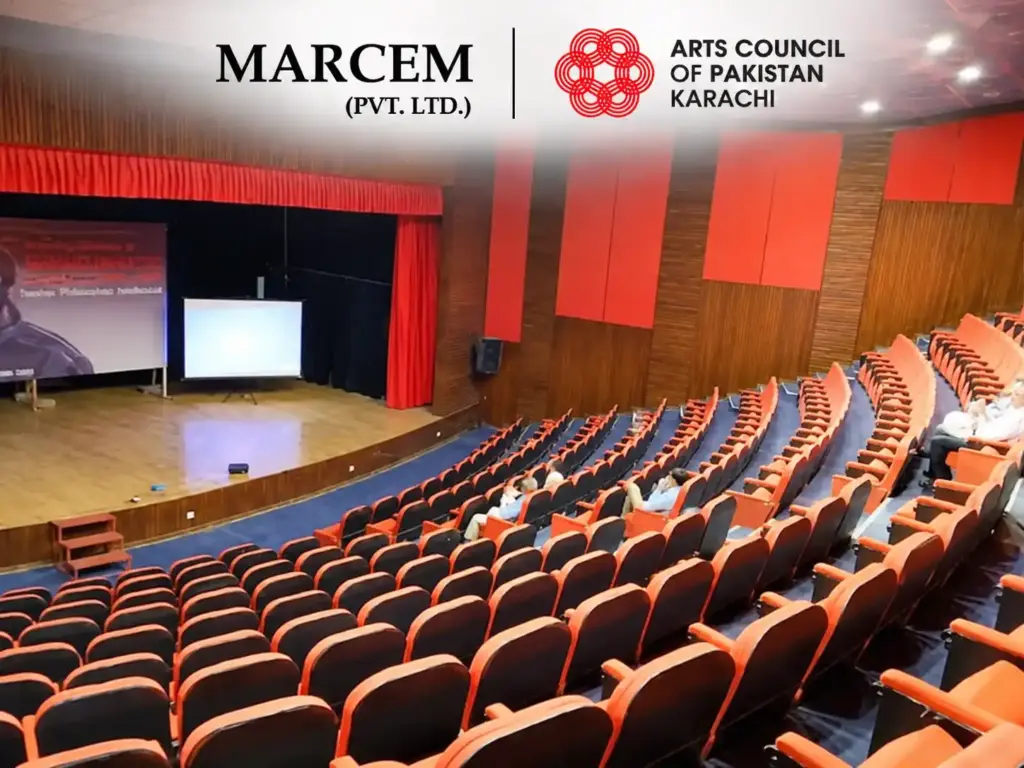
- Auditoriums or performance spaces.
- Stage and backstage arrangements.
- Audience seating.
- Sound and lighting systems.
- Artist or performer preparation areas.
- Exhibition or display spaces.
- Guest reception and circulation areas.
For organisers exploring cultural venues, the Arts Council of Pakistan Karachi is one location worth researching. Reviewing the available spaces and understanding the venue’s requirements can help organisers assess whether it is appropriate for their proposed programme.
Venue availability, booking conditions, permissions, technical arrangements and applicable charges should always be confirmed directly with the venue management.
Corporate celebrations and networking events
Corporate dinners, award ceremonies and networking events may require:
- Banquet or reception-style seating.
- Dining and catering facilities.
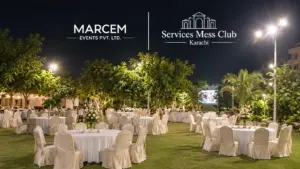
- A stage for speeches and presentations.
- Entertainment or performance arrangements.
- Decorative lighting and event branding.
- A suitable space for guest interaction.
Before confirming a venue, visit the location where possible. Assess access, parking, guest movement, facilities, power arrangements and any restrictions that could affect the event.
- Prepare a Realistic Event Budget
A clear budget helps organisers prioritise spending and avoid unexpected costs.
The total event budget should account for more than the venue booking. Depending on the event format, expenses may include:
|
Budget category |
Possible requirements |
|
Venue |
Rental, booking charges and applicable fees |
|
Catering |
Food, beverages, service staff and dining arrangements |
|
Event production |
Stage, sound, lighting and LED screens |
|
Décor |
Floral arrangements, backdrops and venue styling |
|
Branding |
Signage, banners, display material and printed items |
|
Entertainment |
Speakers, performers, hosts and musicians |
|
Guest management |
Invitations, registration and reception staff |
|
Logistics |
Transportation, deliveries and equipment movement |
|
Photography |
Event photography and video coverage |
|
Contingency |
Provision for unexpected expenses |
Obtain written quotations from suppliers and clarify what is included in each proposal.
For example, a venue quotation may not include stage production, technical equipment, catering or additional staffing. Confirming these details early makes budget comparisons more accurate.
It is also sensible to reserve a contingency amount for unforeseen requirements. The exact amount will depend on the scale and complexity of the event.
- Develop a Detailed Event Programme
A well-organised programme helps the event run according to schedule.
Prepare a timeline that covers the complete event, including preparation, guest arrival, activities and closing.
A corporate conference programme might include:
- Venue preparation and technical checks.
- Guest registration and reception.
- Opening remarks.
- Keynote presentation.
- Panel discussion or business session.
- Refreshment break.
- Main presentations.
- Question-and-answer session.
- Closing remarks and networking.
A cultural programme may include:
- Venue preparation and stage inspection.
- Guest arrival and seating.
- Opening announcement.
- Introductory remarks.
- Main cultural performance or presentation.
- Exhibition viewing or audience participation.
- Guest interaction.
- Closing session.
Allow sufficient time between programme segments. Delays can occur because of late arrivals, technical adjustments, speaker availability or changes in the schedule.
A master event schedule should be shared with the organising team, suppliers, presenters and relevant venue representatives.
- Plan Event Production and Technical Requirements
Event production is an important part of the overall experience, particularly for conferences, award ceremonies, exhibitions and stage performances.
The technical requirements should be identified before the event date.
Stage and event setup
Depending on the event, production may include:
- Stage design and construction.
- Podiums and presentation furniture.
- Backdrops and branded displays.
- LED screens or projection systems.
- Audience seating arrangements.
- Entrance and registration displays.
The stage design should support the programme rather than distract from it. For a corporate event, branding and presentation visibility may be important. For a cultural programme, the setup may need to accommodate performers, instruments or exhibition-related activities.
Sound and lighting
Sound quality is essential for speeches, presentations and performances. Organisers should consider microphone requirements, speaker placement, mixing equipment and sound checks.
Lighting should be suitable for the event format. A conference may require clear stage illumination, while a performance or evening celebration may need more specialised lighting arrangements.
Power and technical backup
Confirm the venue’s available power capacity and the requirements of the production equipment.
Where appropriate, discuss backup power arrangements and contingency plans with the technical team. Equipment should be tested before guests arrive.
- Organise Catering and Guest Hospitality
Catering can influence how guests experience an event.
The menu and service format should match the event duration, audience and programme.
Common options include:
- Tea and refreshments for seminars.
- Lunch arrangements for conferences.
- Buffet service for corporate gatherings.
- Formal dining for award ceremonies.
- Refreshment stations for exhibitions.
- Specialised menus for particular guest requirements.
Confirm the expected guest count, service timings, dietary requirements and menu details with the catering provider.
Hospitality planning should also include guest reception, registration, seating assistance and clear directions around the venue.
For larger events, assign team members to specific responsibilities so guests know where to go and whom to approach for assistance.
- Manage Permissions, Venue Rules and Event Logistics
Different venues may have different booking conditions and operational requirements.
Before finalising the event, confirm:
- Booking approval and payment conditions.
- Permitted event timings.
- Setup and dismantling schedules.
- Restrictions on sound, lighting and decorations.
- Photography and filming permissions.
- Catering and supplier policies.
- Parking and access arrangements.
- Security and crowd-management requirements.
- Any applicable permissions for public events.
Do not assume that every supplier or production setup will automatically be permitted at a venue. Obtain confirmation before making commitments.
Logistics should also be planned in advance. This includes transportation of equipment, delivery schedules, supplier access, staff arrival times and the movement of materials between locations.
A logistics schedule helps prevent last-minute confusion, particularly when several suppliers are working at the same venue.
- Create a Guest Communication and Registration Plan
Good communication helps guests understand the event and arrive prepared.
For invited corporate events, send invitations with the date, time, venue address, registration instructions and relevant contact information.
For public programmes and exhibitions, provide clear information about entry requirements, timings, ticketing or registration, where applicable.
An effective guest communication plan may include:
- Digital invitations.
- Registration forms.
- Confirmation messages.
- Reminder communications.
- Venue directions.
- Event-day contact information.
- Post-event appreciation messages.
For larger gatherings, consider a registration desk or digital check-in system. The method should be suitable for the expected attendance and available staff.
- Assign Responsibilities to the Event Team
An event involves several activities that need to be managed simultaneously.
Assign clear responsibilities instead of expecting one person to handle every task.
Depending on the event’s size, the team may include:
|
Role |
Main responsibility |
|
Event coordinator |
Overall planning and coordination |
|
Venue coordinator |
Communication with venue management |
|
Production team |
Stage, sound, lighting and technical setup |
|
Catering coordinator |
Food service and hospitality |
|
Guest-management team |
Registration and attendee assistance |
|
Logistics team |
Deliveries, transportation and supplier movement |
|
Programme coordinator |
Speakers, performers and event schedule |
|
Photography team |
Event photography and video coverage |
For complex events, appoint one main point of contact who can coordinate decisions and communicate changes to the relevant teams.
This reduces confusion and makes it easier to address issues during the event.
- Prepare a Contingency Plan
Even well-planned events can face unexpected situations.
A contingency plan helps the team respond without losing control of the programme.
Potential issues include:
- A speaker or performer arriving late.
- Equipment malfunction.
- Changes in guest attendance.
- Delayed supplier deliveries.
- Power interruptions.
- Unexpected weather conditions for outdoor events.
- Programme overruns.
- Changes in venue access or operational arrangements.
Identify the most likely risks and decide who will handle each situation.
Keep essential contact details available, confirm backup equipment where necessary and allow reasonable flexibility in the event schedule.
For outdoor programmes, consider weather-related arrangements and confirm what alternatives are permitted by the venue.
- Evaluate the Event After Completion
Event planning should not end when the guests leave.
A post-event review helps organisations understand what worked and what should be improved next time.
Review areas such as:
- Actual attendance compared with expected attendance.
- Programme timing and coordination.
- Guest feedback.
- Catering and hospitality.
- Technical performance.
- Venue suitability.
- Supplier performance.
- Budget performance.
- Any operational issues.
For corporate events, feedback can be collected through a short survey or follow-up communication.
For cultural programmes and public events, organisers may also review audience engagement, participation and feedback from performers or contributors.
Documenting these observations creates a useful reference for future events.
Event Planning Checklist for Karachi Organisers
Before confirming an event, use this checklist to review the main requirements:
- Define the event purpose and objectives.
- Identify the target audience.
- Estimate the expected attendance.
- Select an appropriate event format.
- Research and inspect suitable venues.
- Confirm venue availability and booking conditions.
- Prepare the event budget.
- Obtain supplier quotations.
- Develop the event programme.
- Confirm stage and production requirements.
- Arrange catering and hospitality.
- Review permissions and venue restrictions.
- Plan registration and guest communication.
- Assign responsibilities to the event team.
- Prepare a contingency plan.
- Conduct final technical and operational checks.
- Collect feedback after the event.
The checklist can be adjusted according to the size, purpose and complexity of the gathering.
How Professional Event Management Supports Better Planning
Managing a corporate or cultural event requires coordination between several areas, including venue arrangements, production, catering, guest management, logistics and programme execution.
For organisations handling a large event or working with multiple suppliers, professional event-management support can help bring these activities under one coordinated plan.
MARCEM Events provides event-management and event-production services for corporate gatherings, conferences, exhibitions, celebrations and other event formats in Pakistan. Its work can involve planning, venue coordination, décor, catering, stage production, audio-visual arrangements and event-day management, depending on the project requirements.
When evaluating an event-management provider, organisations should review the proposed scope of work, relevant experience, supplier arrangements, budget transparency and the responsibilities included in the agreement.
The right support structure depends on the event’s objectives, scale and operational needs.
Final Thoughts
Successful corporate and cultural events are built through preparation, coordination and attention to detail. From selecting the right venue in Karachi to managing technical production, catering, guest communication and event logistics, each stage contributes to the overall result.
Start with a clear objective, prepare a realistic budget, select facilities that match the programme and assign responsibilities before the event date. Most importantly, confirm venue conditions and supplier arrangements in advance. Who is ” best event planner in Karachi ”
With a structured plan and the right team, organisations can manage events more effectively and create a positive experience for their attendees.