
Choosing fire safety equipment is not simply a matter of buying a few extinguishers and installing an alarm. Every building has different risks, occupancy levels, layouts, and sources of ignition. The right equipment should match those conditions and form part of a wider fire protection plan.
Whether you are managing an office, commercial property, warehouse, factory, school, hotel, or residential building, understanding the basic types of fire safety equipment can help you make better decisions.
Start With a Fire Risk Assessment
The first step is understanding the risks inside the building.
Look at the activities taking place, electrical systems, cooking areas, machinery, fuel or chemical storage, combustible materials, and the number of people normally present.
A warehouse storing packaging materials may have different requirements from a commercial kitchen. Likewise, an office with extensive electrical equipment may require a different approach from a workshop using flammable liquids.
A fire risk assessment helps identify these differences and determine what equipment is appropriate.
Choose Fire Extinguishers Based on Fire Risk
Fire extinguishers are among the most visible pieces of fire safety equipment, but not every extinguisher is suitable for every fire.
Different extinguishing agents are designed for different fire classes. Common options include water, foam, dry powder, carbon dioxide, and wet chemical extinguishers.
Water extinguishers are generally associated with ordinary combustible materials, while carbon dioxide extinguishers are commonly used around certain electrical equipment. Wet chemical extinguishers are designed for specific cooking-oil and fat fires.
Selecting equipment based only on price can therefore create serious problems. The extinguisher must be suitable for the hazards present in the area.
Install Reliable Fire Detection Systems
A fire detection system provides an early warning that can give occupants more time to evacuate.
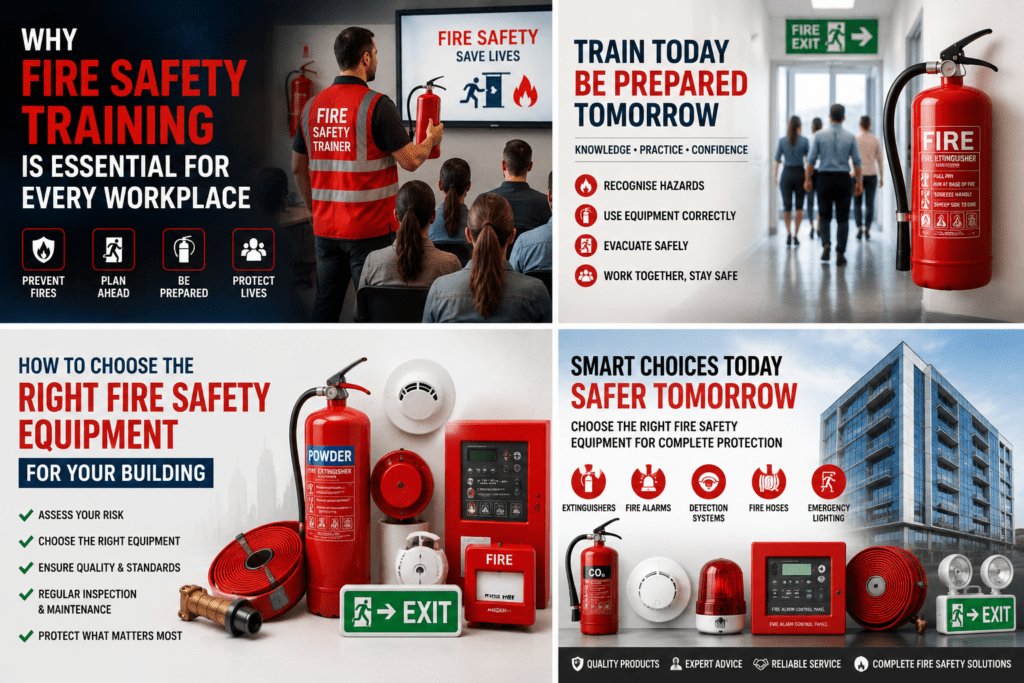
Depending on the building, a system may include smoke detectors, heat detectors, manual call points, alarms, control panels, and other components.
The choice of detection technology should consider the environment. Areas with dust, steam, heat, or other conditions may require different detector types to reduce unwanted alarms while still providing effective detection.
Large or complex buildings may also require more advanced systems with multiple detection zones and central monitoring.
Do Not Overlook Fire Alarm Systems
A detector identifies a potential fire, but occupants also need to be alerted.
Fire alarm systems are designed to provide an audible and, where appropriate, visual warning. They are particularly important in buildings where people may be working in separate rooms or on different floors.
Alarm systems should be installed correctly and tested regularly. Staff should also understand what the alarm means and where they should go after hearing it.
Fire Hoses and Other Firefighting Equipment
Some buildings may require additional firefighting equipment, including fire hose reels, hydrant systems, fire blankets, cabinets, and related accessories.
The need for these systems depends on the building design, fire risks, applicable requirements, and the recommendations of qualified fire safety professionals.
Equipment should also remain accessible. A fire hose or extinguisher hidden behind stored boxes is of little practical value during an emergency.
Emergency Lighting and Exit Signs Matter
Smoke, darkness, or a power failure can make evacuation difficult.
Emergency lighting helps illuminate escape routes when normal lighting is unavailable. Exit signs can help occupants identify the correct direction, particularly in unfamiliar buildings.
These systems are especially important in larger commercial properties, hotels, public buildings, and facilities where visitors may not know the layout.
Emergency routes should remain clear and should never be used for storage.
Maintenance Is Just as Important as Installation
Buying good-quality fire safety equipment is only the beginning.
Fire extinguishers, alarms, emergency lighting, fire doors, hose systems, and other equipment need regular inspection and maintenance. Problems such as low pressure, damaged components, expired batteries, blocked access, or faulty detectors can reduce the effectiveness of a fire protection system.
Maintenance schedules should be documented, and defects should be addressed promptly.
Building owners and managers should also make sure employees know how to report damaged or missing equipment.
Work With a Reliable Fire Safety Supplier
The quality and suitability of fire safety equipment can have serious consequences. This makes it important to work with a supplier that understands different building requirements and can provide appropriate products and support.
Fire Safety Trading Pakistan provides fire safety equipment and solutions for different types of properties in Pakistan. The right supplier should be able to help customers understand their options instead of simply recommending the most expensive product.
When comparing suppliers, consider product quality, relevant certifications, technical support, installation services, maintenance, and after-sales assistance.
Fire Safety Requires a Complete Approach
No single piece of equipment can protect an entire building. A strong fire protection strategy combines detection, alarm systems, firefighting equipment, emergency lighting, clear escape routes, staff training, regular inspections, and an effective emergency plan.
The best equipment is also useless if people cannot access it or do not know what to do when an alarm sounds.
For this reason, fire safety should be considered as a complete system rather than a collection of separate products.
Final Thoughts
Choosing fire safety equipment starts with understanding the building and its specific risks. The correct extinguishers, detection systems, alarms, emergency lighting, hose equipment, and other safety products can help reduce the impact of a fire and support a safer evacuation.
For property owners and facility managers in Pakistan, investing in appropriate equipment and regular maintenance is a practical part of responsible building management.
Most importantly, fire safety should not be treated as a one-time purchase. Equipment needs to be inspected, maintained, and supported by trained people and clear emergency procedures. A complete approach provides far better protection than simply placing a few extinguishers around a building.