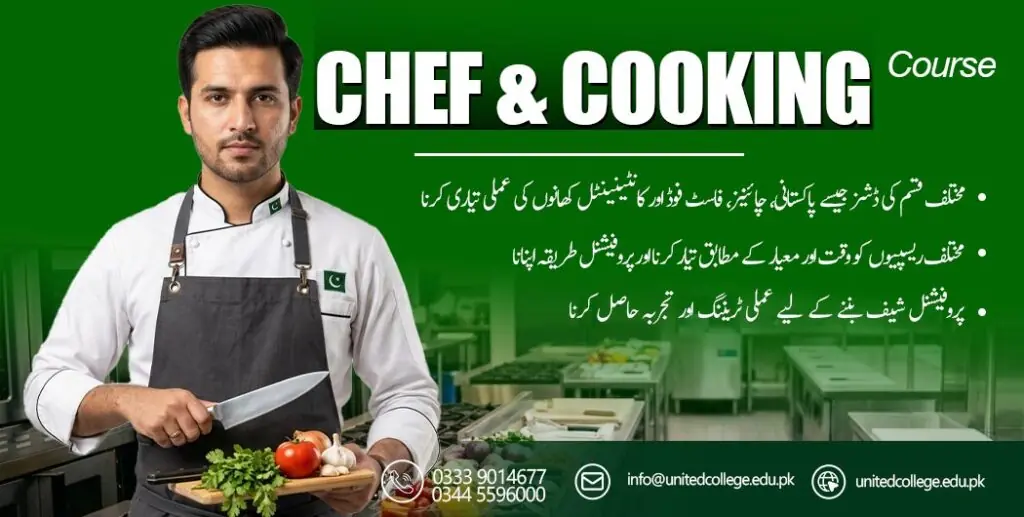

Learning professional cooking can be a useful step for people who enjoy preparing food and want to develop their culinary skills. However, choosing the right training programme is not always easy. Different institutes may offer different subjects, practical activities, course durations, and certificates. Some programmes focus on basic cooking, while others introduce students to restaurant kitchen operations, baking, and food preparation.
Before joining a Chef and Cooking Course in Rawalpindi, it is worth taking time to compare the available training options. A suitable course should match your learning goals and provide opportunities to understand cooking through practical activities. It should also explain what students will learn and what type of certificate they may receive after completing the programme.
1. Identify Your Cooking and Career Goals
Start by deciding why you want to learn cooking. Some people want to improve their everyday cooking skills, while others are interested in working in restaurants, hotels, cafés, or catering services.
Your goal can help you select the right type of programme.
For example, if you want to work as a professional cook, look for training that covers food preparation, cooking methods, kitchen hygiene, and teamwork. If you are more interested in baking, check whether the course includes cakes, bread, pastries, and desserts.
Having a clear goal makes it easier to compare different courses instead of choosing one only because its name sounds attractive.
2. Check the Course Syllabus Carefully
The syllabus explains which subjects and skills are included in a training programme. Before admission, ask the institute for a complete course outline.
A useful chef training syllabus may include:
-
Basic cooking methods and techniques
-
Food preparation and ingredient handling
-
Pakistani and international dishes
-
Baking and dessert preparation
-
Food hygiene and safety
-
Kitchen equipment and organisation
-
Food presentation and serving
-
Basic menu planning and portion control
Not every programme covers all these subjects. Therefore, check the actual syllabus rather than assuming that every chef course offers the same training.
A clear course outline also helps you understand what you can expect to learn by the end of the programme.
3. Give Importance to Practical Training
Cooking is a skill that improves through practice. Reading recipes and watching demonstrations can help, but students also need opportunities to prepare food themselves.
When comparing a Chef and Cooking Course in Rawalpindi, ask how practical lessons are arranged. Find out whether students regularly prepare dishes, practise different cooking methods, and use kitchen equipment under suitable supervision.
For example, a student learning baking should have opportunities to understand measurements, mixing, and oven use. Someone learning traditional cooking should be able to practise preparing ingredients and following recipes.
Practical training can help students become more familiar with kitchen tasks and understand how cooking knowledge is applied.
4. Learn About the Instructors
The quality of teaching can make a difference in your learning experience. A good instructor should explain cooking methods clearly, demonstrate techniques, and guide students when they make mistakes.
Ask about the instructors’ culinary qualifications and relevant kitchen experience. It is also useful to understand how students receive feedback during practical lessons.
For example, if a student struggles with food presentation or recipe measurements, the instructor should be able to explain how to improve.
A supportive learning environment can make it easier for students to ask questions and develop confidence.
5. Check Kitchen Facilities and Equipment
A cooking course should provide suitable facilities for the subjects being taught. Students need access to appropriate equipment to understand how food is prepared in a working kitchen.
Depending on the programme, useful facilities may include:
-
Cooking ranges and ovens
-
Food preparation workstations
-
Mixing and measuring equipment
-
Refrigeration and storage facilities
-
Cooking utensils and serving tools
-
Cleaning and hygiene supplies
If possible, visit the training institute and ask to see the practical learning area. Check whether the equipment is suitable for the course and whether students get enough opportunities to use it.
A clean and organised kitchen also helps students understand the importance of professional food hygiene.
6. Understand the Course Duration and Class Schedule
Course duration is another factor to consider. Some programmes are designed as short introductions, while others provide more time for practical learning and skill development.
Ask the institute how long the course lasts, how many classes take place each week, and how much time is reserved for practical activities.
You should also check whether the schedule fits your school, family, or other responsibilities. A course that matches your availability can make it easier to attend regularly and complete the training.
Do not choose a programme based on duration alone. A shorter course is not automatically better, and a longer course is not necessarily more suitable. Compare the syllabus and learning arrangements as well.
7. Ask About Fees and Additional Costs
Course fees are important, but the advertised amount may not always cover every expense. Before registering, ask the institute for a clear fee breakdown.
Find out whether the fee includes:
-
Admission or registration charges
-
Ingredients for practical lessons
-
Use of kitchen equipment
-
Study materials or recipe notes
-
Examination or assessment charges
-
Certificate charges
Also ask whether any additional payments may be required during the course.
Comparing the full cost helps you understand what you are paying for. It is better to get the details in writing before making an admission decision.
8. Check Certificate Details and Recognition
A certificate can document the training you have completed. However, certificates are not all the same, so students should understand exactly what an institute provides.
Ask these questions before enrolling:
-
What is the exact name of the certificate?
-
Which institute or organisation issues it?
-
Is the programme linked to an approved qualification or awarding body?
-
Are there any examination or assessment requirements?
-
Can the certificate details be verified?
Do not assume that a certificate is internationally recognised simply because an advertisement uses that phrase. If recognition matters for your plans, confirm it directly with the relevant awarding organisation.
9. Consider Location and Learning Support
The location of a training institute can affect your daily routine. Consider travel time, class timings, and whether you can attend lessons consistently.
You can also ask what support is available to students. For example, find out whether instructors answer questions outside demonstrations, provide recipe guidance, or explain areas where students need more practice.
If you are considering a Chef and Cooking Course in Rawalpindi, contact the institute to understand its current admission process and available class schedule.
How UCT Can Help You Explore Cooking Training
United College of Technology (UCT) offers chef and cooking training for people interested in developing culinary knowledge and practical skills. Before choosing the programme, students should contact the institute to confirm the latest syllabus, course duration, fees, practical training arrangements, admission requirements, and certificate details.
It is a good idea to ask which cooking methods and food categories are included in the training. You can also ask how practical sessions are conducted and what facilities students use during lessons.
Taking time to understand these details can help you make a more informed decision about your training.
Questions to Ask Before Joining a Cooking Course
Before paying admission fees, prepare a few questions for the institute. These can help you compare programmes more confidently.
-
What cooking skills are included in the syllabus?
-
How much time is spent on practical training?
-
Which dishes and cooking methods will students practise?
-
Who will teach the classes?
-
What kitchen facilities are available?
-
What is the complete fee, including additional charges?
-
What certificate will students receive after completion?
Clear answers can help you understand whether the programme matches your expectations.
Frequently Asked Questions
1. How do I choose the right chef and cooking training course?
Start by identifying your learning goals. Then compare the syllabus, practical training, instructors, kitchen facilities, fees, duration, and certificate details before enrolling.
2. Is practical training important in a cooking course?
Yes. Practical lessons allow students to prepare ingredients, follow recipes, use kitchen equipment, and practise cooking methods. These activities help connect classroom knowledge with real cooking tasks.
3. What should a good chef training syllabus include?
A useful syllabus may cover food preparation, cooking techniques, food hygiene, baking, food presentation, kitchen organisation, and basic menu planning. The exact subjects depend on the programme.
4. Should I check the certificate before admission?
Yes. Ask who issues the certificate, what qualification it represents, and whether any external recognition or approval can be verified. Do not rely only on promotional claims.
5. Can beginners join a chef and cooking training course?
Some introductory programmes accept students with little or no previous cooking experience. However, admission requirements differ between institutes, so confirm them before applying.
6. Why should I compare cooking course fees?
Comparing fees helps you understand the total cost of training. Ask whether ingredients, equipment use, study materials, assessments, and certificates are included in the advertised amount.
Final Thoughts: Make a Careful Choice Before Enrolling
Choosing the right cooking programme requires more than looking at its name or fee. Students should understand the syllabus, practical learning opportunities, instructor experience, kitchen facilities, and certificate details before making a decision.
A Chef and Cooking Course in Rawalpindi may help learners build a foundation in food preparation and professional cooking. However, the best choice is a programme that matches your goals and gives you enough opportunities to practise the skills being taught.
Take time to ask questions, compare the available information, and understand the course conditions. A well-informed choice can make your culinary learning experience more useful and rewarding.