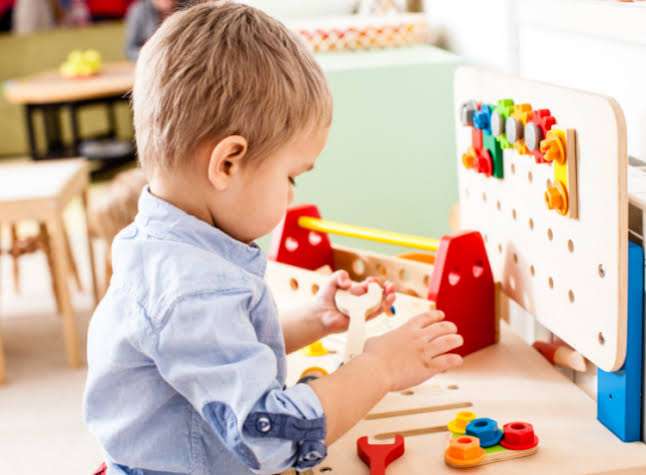

Childhood is an important stage for learning, discovery, and personal growth. During these early years, children develop essential skills through everyday activities, play, and interaction with their surroundings. Educational toys make learning enjoyable by combining fun with opportunities to explore new concepts, solve problems, and develop creativity. From colourful building blocks and puzzles to counting games and interactive learning sets, different toys support different areas of development. The right educational toys can encourage independent thinking, improve coordination, strengthen communication, and build confidence. Understanding these benefits helps parents and caregivers select suitable toys that support a child’s age, interests, and learning needs.
What Are Educational Toys?
Educational toys are play items designed to support learning while keeping children engaged and entertained. These toys introduce useful concepts such as numbers, letters, colours, shapes, patterns, and basic scientific principles through hands-on activities. Building blocks encourage spatial awareness, puzzles develop logical thinking, and pretend-play sets introduce social roles and everyday situations. Some educational toys focus on a single skill, while others support several areas of development at the same time. The most effective options match a child’s developmental stage and offer opportunities for exploration, repetition, and creative problem-solving without making learning feel like a formal lesson.
How Educational Toys Support Cognitive Development
Cognitive development involves the growth of memory, attention, reasoning, and problem-solving abilities. Educational toys encourage these skills by presenting challenges that require children to observe, compare, remember, and make decisions. Matching games help children recognise similarities, while puzzles encourage logical thinking and the understanding of how individual pieces form a complete picture. Building activities introduce basic concepts related to balance, size, and structure. Repeated play also gives children opportunities to learn from mistakes and try different approaches. These experiences can strengthen early thinking skills and prepare children for future learning in subjects such as mathematics, science, and reading.
Educational Toys Improve Fine Motor Skills
Fine motor skills involve the small muscles of the hands and fingers, which support activities such as writing, drawing, buttoning clothes, and handling everyday objects. Toys that require picking up small blocks, connecting pieces, threading beads, or fitting shapes into matching spaces provide opportunities to practise controlled movements. Art materials, age-appropriate construction sets, and shape sorters can also improve hand-eye coordination. These activities help children develop greater control, accuracy, and dexterity through regular practice. For younger children, larger pieces are generally more suitable because small parts can present choking hazards. Selecting toys according to age recommendations supports safer play and appropriate skill development.
How Educational Toys Encourage Creativity and Imagination
Creativity allows children to explore ideas, express feelings, and develop original solutions. Open-ended educational toys, such as building blocks, drawing supplies, play dough, and pretend-play sets, provide freedom to create without requiring a single correct result. A simple set of blocks can become a house, a bridge, or an imaginary city, depending on the child’s ideas. Pretend-play toys can encourage storytelling and imaginative thinking through activities such as running a pretend shop or caring for a toy animal. These experiences support flexible thinking and allow children to experiment with different possibilities. Toys that offer several ways to play often provide lasting interest and encourage independent exploration.
Educational Toys Build Language and Communication Skills
Language development grows through listening, speaking, asking questions, and learning new words. Educational toys can support these abilities by creating natural opportunities for conversation and storytelling. Picture cards introduce vocabulary, alphabet toys encourage letter recognition, and story-based play sets help children describe events and characters. Word games can also support early reading and spelling skills as children become familiar with sounds and letters. During shared play, adults can ask simple questions, describe actions, and encourage children to explain ideas. These interactions help build vocabulary, improve listening skills, and strengthen the ability to communicate thoughts clearly. Language-focused toys are particularly useful when activities remain enjoyable and appropriate for the child’s age.
The Role of Educational Toys in Social and Emotional Development
Social and emotional development helps children understand feelings, manage frustration, build relationships, and cooperate with others. Educational board games, building activities, and role-playing sets can introduce important social skills through shared experiences. Taking turns teaches patience, while cooperative games encourage teamwork and respectful communication. Some play activities also help children recognise emotions and understand different perspectives. For example, pretend-play scenarios involving family members, doctors, or shopkeepers can create opportunities to discuss kindness, responsibility, and helping others. Completing a challenging puzzle or building project may also strengthen confidence and persistence. Supportive play experiences help children practise emotional regulation and develop positive habits for everyday interactions.
Educational Toys Help Develop Early Mathematics and Science Skills
Early mathematics and science concepts become easier to explore when children can interact with physical objects. Counting blocks, number puzzles, sorting games, and shape toys introduce basic mathematical ideas through practical activities. Children can compare quantities, identify patterns, classify objects, and explore simple measurements. Science-based toys, such as age-appropriate experiment kits and construction sets, encourage curiosity about how things work. Activities involving magnets, water, simple machines, or building structures can introduce basic scientific principles under suitable supervision. These experiences develop observation and reasoning skills while encouraging questions about the surrounding world. Hands-on learning can also help connect abstract ideas with familiar objects and everyday experiences.
How to Choose the Right Educational Toys for Different Ages
Selecting suitable educational toys requires attention to a child’s age, abilities, interests, and safety needs. Toys designed for younger children should offer simple activities, clear visual features, and easy-to-handle pieces. Preschool children may benefit from puzzles, counting games, matching activities, and imaginative play sets. Older children may enjoy strategy games, science kits, construction challenges, and beginner coding toys. Age recommendations provide a useful starting point, but individual development also matters. Durable materials, non-toxic finishes, secure components, and clear cleaning instructions are important considerations. A balanced selection of toys can support different skills without overwhelming a child with too many choices.
Practical Tips for Making Playtime More Educational
Educational toys provide greater learning opportunities when children have enough time and freedom to explore. Play does not need to follow a strict schedule or produce a perfect result. Simple guidance can help children discover new ideas while maintaining enjoyment and independence.
- Follow individual interests: Select toys related to favourite animals, vehicles, colours, stories, or activities.
- Encourage exploration: Allow time to test ideas, make mistakes, and find different solutions.
- Introduce simple challenges: Suggest counting objects, sorting shapes, or building a taller structure.
- Include shared activities: Use puzzles, board games, and construction toys to practise cooperation.
- Rotate available toys: Store some toys temporarily and reintroduce them later to renew interest.
- Balance different types of play: Include creative, physical, social, and problem-solving activities.
Regular, enjoyable play can support learning without creating unnecessary pressure. Adult guidance is useful when needed, but independent exploration also helps children build confidence and decision-making skills.
Why Educational Toys Matter for Long-Term Learning
Educational toys can contribute to a strong foundation for lifelong learning by encouraging curiosity, persistence, and active participation. Children who regularly engage in suitable play activities gain opportunities to practise thinking, communication, coordination, and social interaction. These skills can support classroom learning and everyday problem-solving as children grow. However, toys alone cannot guarantee specific developmental outcomes. Learning also depends on individual needs, supportive relationships, varied experiences, and opportunities for rest and physical activity. A thoughtful combination of play materials and positive interaction creates a more balanced learning environment. The main goal is to make discovery enjoyable while allowing children to develop at a comfortable pace.
Discover Learning and Play Options at Bachaa Party
Bachaa Party provides a convenient destination for exploring children’s products, toys, and playtime essentials. For parents and caregivers seeking educational toys, browsing different categories can help identify options suited to a child’s age, interests, and developmental needs. Products such as puzzles, building blocks, pretend-play sets, and learning games can make thoughtful additions to a child’s play collection when available. Comparing product descriptions, age recommendations, materials, and safety information helps support informed decisions. Bachaa Party offers value by bringing a variety of children’s shopping options together in one place, making it easier to explore suitable gifts and everyday play essentials that combine enjoyment with opportunities for learning and development.