
Lead Generation Chatbot: 7 Proven Ways to 3x Website Leads
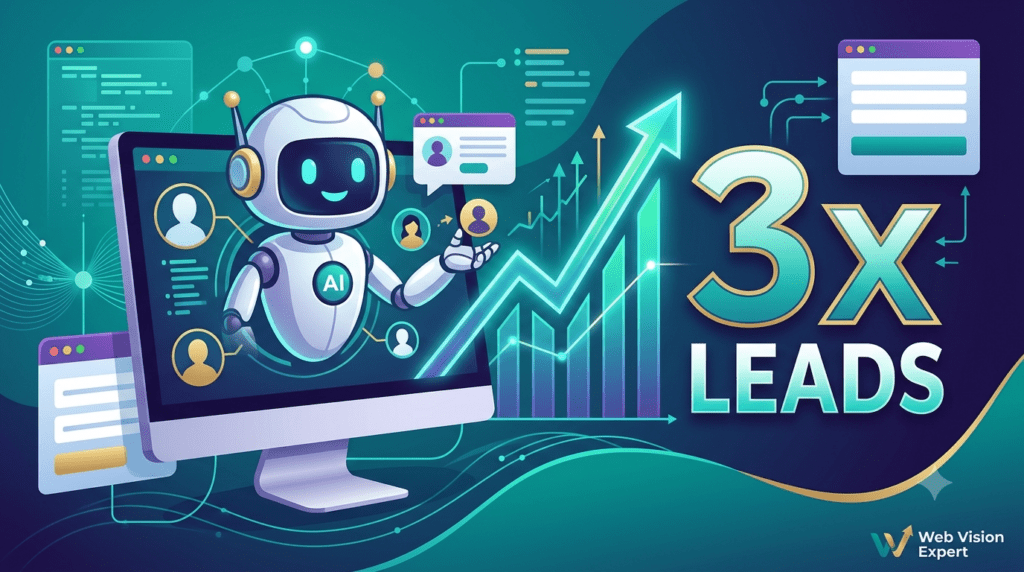
Static contact forms lose up to 98% of qualified website traffic because modern buyers refuse to wait hours for an email response. Deploying an interactive lead generation chatbot transforms your website from a passive brochure into an active, 24/7 sales engine. This guide reveals how conversational AI captures visitor intent, qualifies prospects automatically, and triples your qualified lead volume.
Static Web Forms vs. Conversational AI: The Conversion Gap
Traditional lead capture relies on static HTML forms that force users to type personal information without receiving immediate value. In contrast, conversational tools engage visitors in real-time dialog, answering questions while collecting qualifying criteria.
Why Traditional Contact Forms Fail Modern Buyers
Most website forms convert between 1% and 3% of total site visitors. Modern buyers suffer from form fatigue when confronted with eight required text boxes before getting pricing or service details. Every additional form field reduces submission completion rates by roughly 11%.
The Psychology of Conversational Lead Capture
A lead generation chatbot replaces static inputs with progressive disclosure. Asking one simple question at a time feels like a natural conversation rather than an interrogation. This low-friction interaction keeps prospects engaged through the entire qualification funnel.
| Feature Metric | Static Web Forms | Rule-Based Chatbots | Generative AI Lead Bots |
| Average Conversion Rate | 1.5% – 3% | 8% – 14% | 15% – 30%+ |
| Response Time | 2 to 24 Hours | Instant (< 1 Sec) | Instant (< 1 Sec) |
| User Experience | Static, One-Way | Rigid Decision Tree | Dynamic, Contextual |
| Data Qualification | Manual Review Needed | Basic Keyword Filtering | Full Intent & BANT Scoring |
| 24/7 Sales Capability | No (Delays Follow-up) | Partial (Fixed Script) | Full (Automated Meetings) |
How a Lead Generation Chatbot 3x Increases Website Conversions
Replacing passive forms with an intelligent chat workflow immediately impacts your bottom line. Three distinct operational advantages drive this dramatic conversion lift.
Instant Speed-to-Lead Response Architecture
Contacting a prospective buyer within five minutes increases conversion probability by over 21 times compared to a 30-minute delay. AI assistants respond in under one second, eliminating cold leads and capturing buyer interest at peak engagement. Instant engagement prevents prospects from jumping to a competitor’s website.
Behavior-Based Triggering at Key Intent Micro-Moments
Generic popups annoy users, but targeted chat triggers capture real buyer intent. An automated assistant can initiate a conversation when a visitor spends 45 seconds on your pricing page or exhibits exit intent on a product view. Reaching out during these decision moments lifts engagement rates significantly.
Frictionless Micro-Interactions over Long Input Fields
Clicking pre-formulated response buttons requires far less effort than typing long text strings on mobile keyboards. Chat interfaces utilize interactive chips, date pickers, and single-tap options to guide users through qualification smoothly. Higher completion rates directly yield three times more capture opportunities.
Web Vision Expert Insight: Positioning a chat assistant inside custom web applications allows you to pass user session data straight into conversational triggers. Combining clean custom web development services with tailored AI scripts ensures your chat interface loads instantly without degrading Core Web Vitals.
Step-by-Step Guide: Deploying a Lead Generation Chatbot in 7 Stages
Building a high-converting assistant requires structured planning, clear decision logic, and ongoing refinement. Follow these seven sequential steps to maximize lead quality and volume.
Stage 1: Mapping Buyer Persona Pathways and Conversion Intent
Identify the primary conversion goals for your website, such as booking a sales call, requesting a quote, or starting a trial. Audit top-visited landing pages to determine where user questions typically stall the buying decision. Map distinct conversation flows for first-time visitors versus returning prospects.
Stage 2: Defining Automated Qualification Logic (BANT Framework)
Program your assistant to filter leads using established criteria like Budget, Authority, Need, and Timeline (BANT). Ask targeted questions to separate high-intent buyers from casual researchers. Automatically direct qualified accounts to sales reps while guiding low-budget inquiries toward self-service resources.
Stage 3: Designing Frictionless Conversational UX and Quick Replies
Craft concise, friendly greeting messages that offer immediate assistance without sounding pushy. Use multi-choice response buttons so users can answer complex questions with a single tap. Maintain a helpful tone that reflects your core brand voice.
Stage 4: Configuring Behavioral Rules and Page-Specific Triggers
Set page-level display rules so the assistant delivers contextual support based on active URLs. Show service-specific prompts on high-intent service pages and technical support prompts on documentation sections. Implement time-on-page and scroll-depth triggers to engage visitors naturally.
Stage 5: Integrating Real-Time CRM Routing and Webhooks
Connect your conversational workflow to your CRM via API webhooks or native integrations. Automatically push captured contact data, chat transcripts, and qualification tags directly into contact profiles. Trigger instant Slack or SMS alerts to alert sales representatives when high-value accounts qualify.
Stage 6: Testing Fallback Scenarios and Live Agent Handoff
Establish fail-safe routing when the automated tool encounters complex or off-script questions. Configure smooth live chat handoffs during business hours so human reps can step into active conversations seamlessly. Provide fallback contact forms or ticket creation options when live agents are unavailable.
Stage 7: Continuous Optimization via Analytics and Drop-off Audits
Monitor conversation completion rates, qualification percentages, and specific step drop-offs weekly. Refine wording on friction points where visitors exit the dialogue early. Continuously expand knowledge bases using actual transcript queries to improve future automated accuracy.
Technical Architecture for High-Converting Chatbots
A successful chatbot strategy relies heavily on modern website architecture and search visibility. Deploying AI assistants on modern web apps provides sub-second rendering speeds that keep visitors engaged. Fast page execution ensures chat scripts execute instantly without slowing down initial page loads.
Integrating AI SEO services guarantees that your landing pages capture high-intent organic traffic in the first place. AI search optimization structures your site content so answer engines direct qualified visitors straight to your chat-enabled conversion pages.
Lead Generation Chatbot Deployment Checklist
Use this implementation checklist to ensure your conversational setup is complete before launching.
-
[ ] Clear conversion goals defined for primary buyer segments.
-
[ ] BANT qualification questions streamlined to under four steps.
-
[ ] Behavioral triggers configured for pricing, product, and contact pages.
-
[ ] Single-tap quick reply buttons built for mobile navigation.
-
[ ] Real-time calendar booking integrated directly inside the chat window.
-
[ ] Webhooks verified for seamless CRM pipeline sync.
-
[ ] Live agent transfer protocols established for human escalation.
-
[ ] Privacy policies and GDPR/TCPA compliance disclaimers active.
Expert Tips to Maximize Chatbot Lead Quality
Deploying a chat assistant is only the first step toward scaling your sales pipeline. Applying these advanced strategies guarantees higher lead qualification accuracy.
Web Vision Expert Insight: Use UTM parameters to pass ad campaign context directly into your chatbot’s opening greeting. When a prospect clicks a Google Ad for “Enterprise Software,” greeting them with “Looking for enterprise pricing?” instantly increases chat initiation rates by over 40%.
-
Pre-fill Known Visitor Information: If a returning contact opens a chat window, address them by name to build trust immediately.
-
Embed Video Demos Within Chat Steps: Show short 15-second product clips directly inside the dialogue to answer questions visually.
-
Offer Self-Scheduling Calendar Hooks: Allow qualified prospects to choose a calendar slot without leaving the chat window.
-
Set Up Unattended Lead Sequences: Send automated email or WhatsApp follow-ups if a user drops off halfway through qualification.
5 Common Lead Generation Chatbot Mistakes to Avoid
Avoiding operational pitfalls prevents user frustration and protects your site’s conversion rates.
Mistake 1: Launching Aggressive Popups Immediately Upon Page Load
Firing a chat window the instant a user arrives interrupts reading and causes immediate site bounces.
Better approach: Delay chat triggers by 10 to 15 seconds or tie activation to scroll depth.
Mistake 2: Forcing Open Text Inputs Without Guided Choice Buttons
Asking open-ended questions early forces users to type, creating friction on mobile screens.
Better approach: Provide pre-set response options for the first three interactions before requesting open text.
Mistake 3: Creating Conversational Dead Ends
Leaving a conversation hanging when the bot cannot answer a question causes visitors to leave disappointed.
Better approach: Always offer a secondary path, such as leaving a message or booking a meeting.
Mistake 4: Delayed or Broken CRM Integration Sync
Capturing leads without pushing data into your sales pipeline leads to delayed follow-ups.
Better approach: Test webhooks extensively to ensure lead records update inside your CRM instantaneously.
Mistake 5: Failing to Train Bots on Niche FAQs and Objections
Generic responses ruin credibility when prospects ask specific technical or pricing questions.
Better approach: Train your AI assistant using real sales transcripts, customer support logs, and technical documentation.
Frequently Asked Questions
How does a lead generation chatbot increase conversion rates?
A lead generation chatbot boosts conversion rates by replacing static forms with real-time conversations. It engages visitors instantly, answers objections, and collects contact details through simple micro-interactions. This immediate response captures interest while buyer intent is highest.
Can a lead generation chatbot replace standard website forms?
Yes, chatbots can completely replace traditional contact forms on key landing pages. Conversational interfaces yield higher completion rates by asking questions sequentially rather than showing overwhelming static fields. Combining forms with chat options offers maximum flexibility for different visitor preferences.
What is the average conversion rate of an AI chatbot?
While traditional web forms convert at 1% to 3%, AI lead generation chatbots achieve conversion rates between 15% and 30% on high-intent pages. Results vary based on industry, behavioral trigger setup, and personalization quality.
Do I need coding skills to launch a lead generation chatbot?
No, modern conversational platforms provide drag-and-drop flow builders and pre-built templates that require no code. However, custom API webhooks and advanced CRM integrations may benefit from professional web development setup.
How does a lead generation chatbot qualify leads automatically?
The assistant asks structured qualification questions based on criteria like budget, authority, timeline, and specific needs. Based on answers, it scores the prospect, routes high-priority leads to sales reps, and sends lower-fit leads to automated nurture sequences.
Conclusion
Transitioning from static contact forms to an intelligent lead generation chatbot is one of the fastest ways to scale website conversions. By providing instant speed-to-lead responses, automating qualification, and removing user friction, businesses consistently triple their qualified sales pipeline.
Optimizing your website architecture and AI search presence ensures steady streams of qualified traffic ready to engage. Partnering with Web Vision Expert provides full-stack web development and AI SEO strategies that turn anonymous web visitors into high-value clients.