
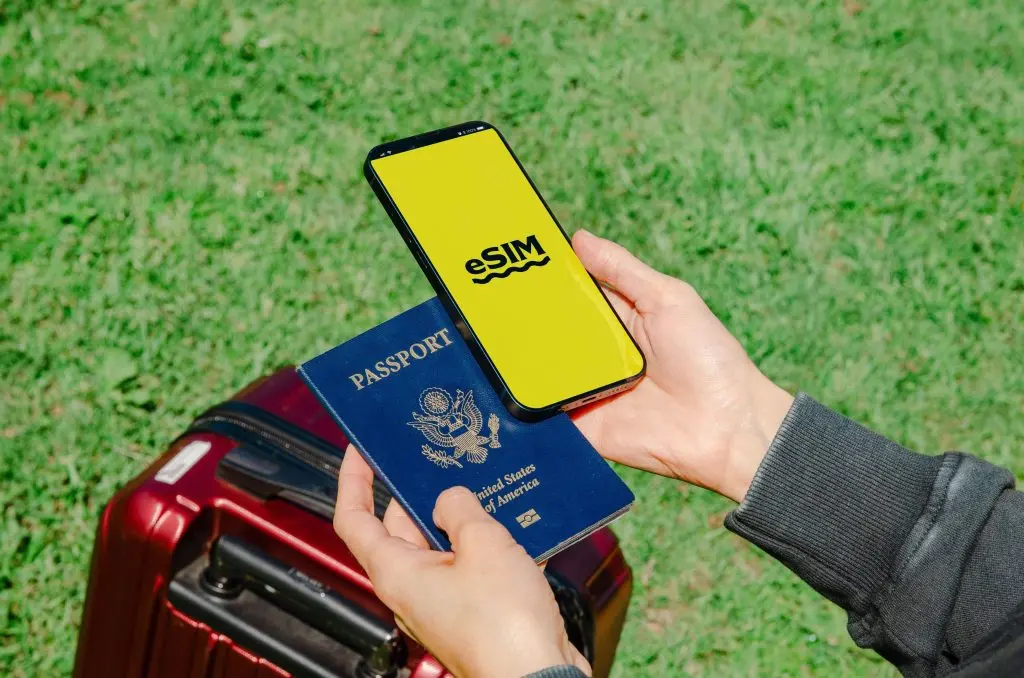

eSIM vs. International Roaming: Which Is Better for Frequent Travelers?
For frequent travelers, staying connected abroad is no longer a luxury. It is essential for navigating unfamiliar streets, booking transportation, joining work meetings, accessing travel documents, and keeping in touch with family. But every time you cross a border, an important question comes up: should you use international roaming through your regular mobile carrier, or switch to a travel eSIM?
The answer depends on how often you travel, how much mobile data you use, and whether you need to keep your regular phone number active. International roaming offers convenience because your existing mobile service can continue working abroad. A travel eSIM, on the other hand, can provide a separate data plan that may be more affordable and easier to manage.
For people who travel several times a year, understanding the difference between eSIM vs. international roaming can help prevent unexpected charges without sacrificing the convenience of a reliable connection.
What Is the Difference Between an eSIM and International Roaming?
An eSIM is a digital SIM built into a compatible device. Instead of inserting a physical SIM card, you download a mobile plan and activate it electronically. A travel eSIM typically provides prepaid data service in one country or across several destinations.
International roaming allows your existing mobile carrier to connect your phone to partner networks in other countries. Depending on your carrier and plan, you may pay a daily travel fee, purchase a roaming package, use an international allowance included in your plan, or incur pay-per-use charges.
One important distinction is that eSIM describes the technology used to connect to a mobile service, while roaming describes how your carrier provides service outside its home network. An eSIM can also roam internationally. The comparison most travelers are making is between their home carrier’s roaming plan and a separate travel eSIM.
eSIM vs. International Roaming at a Glance
| Feature | Travel eSIM | International roaming |
|---|---|---|
| Setup | Usually installed by QR code or app | Often works after roaming is enabled |
| Pricing | Commonly prepaid with a set data allowance | May involve daily fees or included allowances |
| Cost control | Usually easier to predict | Depends on the carrier’s plan and billing rules |
| Home number | Can often remain active with dual SIM | Usually remains active on the existing line |
| Calls and SMS | Many plans are data-only; some include voice and texts | Often supports calls and SMS under the carrier’s terms |
| Multiple destinations | Regional or global plans may cover several countries | Coverage depends on the home carrier’s roaming agreements |
| Best suited to | Frequent travelers who want flexible data costs | Travelers who prioritize simplicity or need their regular number |
Neither option is automatically better in every situation. The right choice comes down to the total cost, network availability, and the services you need while abroad.
1. Which Option Is More Affordable for Frequent Travelers?
For many frequent travelers, price is the biggest reason to compare a travel eSIM with international roaming.
Some mobile carriers charge a fixed daily fee when you use your phone abroad. Others offer international data allowances, monthly add-ons, or pay-per-use rates. Travel eSIM providers typically sell packages based on data volume, validity period, destination, or a combination of these factors.
Consider a traveler who takes four international trips a year, each lasting seven days. If their carrier charges $10 per day on every day of use, the roaming fees could reach $280 annually. A hypothetical $20 travel eSIM for each trip would cost $80, leaving a potential difference of $200.
These figures are an illustration, not a quote for any particular carrier or eSIM provider. Actual savings depend on destination, plan eligibility, taxes, data requirements, and whether the carrier charges for each calendar day or only for days of qualifying usage.
Before purchasing either option, compare:
-
The total price for the full trip, rather than just the advertised daily rate.
-
How much high-speed data is included.
-
Whether unused data expires or can be carried forward.
-
Any speed restrictions or fair-use limits.
-
Whether calls, texts, and incoming messages cost extra.
-
Whether your existing mobile plan already includes international coverage.
For destination-specific comparisons, the eSIM vs. roaming cost comparison guide is a useful starting point. It helps travelers explore available comparisons by country rather than assuming that one pricing model applies everywhere.
Practical tip: Estimate your data needs before choosing a plan. Messaging, email, maps, and browsing generally require less data than video streaming, frequent video calls, or uploading large files.
2. Convenience: Is Roaming Really Easier?
International roaming has a clear advantage: simplicity. If your existing plan includes suitable international coverage, you may be able to land at your destination and start using your phone without buying another plan.
That convenience can be valuable during a short business trip, a last-minute flight, or a brief stopover. It is especially useful when you need to receive calls on your usual number or cannot spend time configuring your phone.
A travel eSIM involves a little more preparation. You need a compatible, unlocked device, a suitable plan, and a connection to install or activate the eSIM when required. Once it is set up, however, connecting on arrival can be straightforward.
For someone visiting several countries each year, the initial setup quickly becomes part of their travel routine.
Before departure:
-
Confirm that your phone supports eSIM technology.
-
Check that the device is unlocked and can use another provider’s service.
-
Purchase a plan that covers your destination and travel dates.
-
Follow the provider’s installation instructions.
-
Check when the plan’s validity begins, because activation rules differ.
-
Save the activation instructions in case you need them while offline.
Some plans activate when installed; others start when they connect to a supported network or when you manually activate them. Check the provider’s terms before installing too early.
3. Coverage and Reliability: Which One Works Better Abroad?
A common misconception is that international roaming always provides a stronger connection than a travel eSIM. In reality, coverage and performance depend on the local network, the provider’s agreements, the plan’s technical restrictions, and your location.
Both services may use the same local mobile network. However, two plans can still differ in network selection, supported technologies, data priority, or access to 5G. A low-cost eSIM does not guarantee identical performance to every roaming plan, and a roaming connection does not guarantee better service.
A few questions can help you assess coverage before booking:
-
Which local networks does the plan support?
-
Is 4G or 5G access included?
-
Does coverage extend beyond major cities?
-
Are there speed caps or fair-use restrictions?
-
Can the provider switch networks if the first one has poor reception?
These details matter when traveling through rural areas, taking long train journeys, or working from locations where Wi-Fi is unreliable.
If you travel across borders frequently, a regional plan may be more convenient than buying a new eSIM in each country. However, always verify the list of included destinations. A plan described as European or global may exclude particular countries or territories.
4. Keeping Your Home Number While Using a Travel eSIM
One of the biggest concerns about switching to a travel eSIM is losing access to a regular phone number. In many cases, you do not have to choose between your home number and affordable travel data.
Compatible dual-SIM phones can often keep your home SIM active while using a separate eSIM for mobile data. This lets you use the travel plan for maps, email, messaging apps, and browsing while retaining access to services associated with your existing number.
However, keeping the home line active does not automatically eliminate roaming charges.
Your home carrier may charge for incoming or outgoing calls, SMS, voicemail access, or other usage, depending on your plan. Data roaming on the home line can also create charges if the phone selects it for mobile data.
To reduce the risk:
-
Set the travel eSIM as your mobile data line.
-
Turn off data roaming on your home line unless your carrier’s plan specifically requires otherwise.
-
Review the settings for automatic mobile-data switching.
-
Check your carrier’s rules for calls, texts, and Wi-Fi Calling abroad.
-
Confirm which line is selected before making calls or sending SMS messages.
Apple’s official guide to using an eSIM while traveling internationally explains how supported iPhones can use a travel eSIM alongside an existing line.
Remember that device capabilities vary. Android phones and iPhones differ by model, region, carrier, and software version, so check your own device’s instructions before traveling.
5. What About Calls, Text Messages, and Verification Codes?
A data-only eSIM can be excellent for internet access but may not replace every feature of your regular mobile service.
Messaging apps such as WhatsApp, Signal, and FaceTime can use an internet connection for supported communications. Traditional phone calls and SMS messages, however, depend on the services available on your active lines and the relevant carrier terms.
This distinction matters for frequent travelers who use their regular number for bank alerts, two-factor authentication, airline notifications, or business calls.
Before leaving home, check:
-
Whether your bank supports authentication through an app or another method.
-
Whether your eSIM includes a phone number or only mobile data.
-
Whether your home carrier charges for receiving SMS abroad.
-
Whether Wi-Fi Calling is supported and configured.
-
Whether you need to receive important calls on your regular number.
Do not assume every travel eSIM supports conventional voice calls or SMS. If your work or personal life depends on them, choose a plan that explicitly includes those services or keep your home line available under a suitable roaming arrangement.
6. Choosing an eSIM for Different Destinations
The best connectivity option can change depending on where you are going, how long you will stay, and whether you will visit more than one country.
Japan: Plan for Navigation and Transit
Japan-bound travelers often rely on mapping apps, translation tools, train information, and digital reservations. A travel eSIM can provide convenient mobile data as soon as the plan becomes active.
Before buying an eSIM Japan travel plan, check the supported local networks, data allowance, validity period, and coverage beyond major cities. If your carrier already includes Japan in an international package, compare the total price rather than assuming a separate eSIM will always be cheaper.
Pakistan: Compare Local and International Options
Travelers visiting Pakistan may need mobile data for ride-hailing, navigation, messaging, and keeping in touch with family. The right plan depends on the length of the stay and whether the traveler needs a local number.
An eSIM Pakistan option is worth comparing with your home carrier’s roaming rates and available local SIM plans. Check device compatibility, registration requirements, and coverage for the specific cities or regions you intend to visit.
Spain: Consider Your Entire Itinerary
Spain can be a single destination or one stop on a broader European itinerary. If you are spending a week in Barcelona or Madrid, a country-specific plan may be sufficient. If you will cross several borders, a regional plan may be easier to manage.
Compare an eSIM Spain plan with your carrier’s international offer, paying attention to data allowances and the countries included if you continue traveling elsewhere in Europe.
Europe: One Plan or Several?
A multi-country trip creates a different challenge: a plan that works in one destination may not cover the next.
An eSIM Europe regional plan can simplify connectivity across an itinerary, provided every country on your route is included. Travelers should also check whether Switzerland, the United Kingdom, or other non-EU destinations are covered, since regional plan boundaries vary by provider.
For travelers who want to avoid changing plans at each border, a regional eSIM can be a practical choice. Still, a home carrier’s existing European roaming allowance may offer better value in some cases.
USA: Match Your Data Plan to Your Travel Style
Travel in the United States can involve long driving distances, city exploration, domestic flights, and remote work. Coverage can differ substantially between urban centers and rural areas.
Before choosing an eSIM USA plan, check the supported network, hotspot rules, data limits, and the areas you plan to visit. If you need a local phone number for reservations or calls, verify whether the plan includes voice service.
These destination examples illustrate why comparing the actual plan matters more than choosing between eSIM and roaming based on the label alone.
7. Can You Use a Travel eSIM and International Roaming Together?
Yes. On compatible devices, travelers can often keep their home SIM active for selected calls or messages while routing mobile data through a travel eSIM.
This combination can be useful for people who travel regularly for work. It offers a way to keep an established phone number while controlling which connection handles data.
For example, imagine a consultant traveling from the United States to Spain for a ten-day assignment. They could use a travel eSIM for maps, email, video meetings, and messaging while retaining their home line for important calls. Their final setup would depend on their carrier, device, and Wi-Fi Calling eligibility.
The key is to configure the phone deliberately rather than leaving every setting on automatic.
Before departure, verify the default data line, data-roaming settings, automatic switching behavior, and charges for incoming calls and SMS. Also check whether your travel eSIM allows tethering if you intend to connect a laptop.
For further guidance, HelloRoam’s travel eSIM options are one place to explore when comparing international data plans. Review the specific plan’s supported countries, pricing, and usage rules before purchasing.
8. Security and Privacy While Traveling
Connectivity is not only about cost. Travelers also need to protect their accounts and personal information when using unfamiliar networks.
A cellular data connection through a reputable mobile provider can reduce the need to rely on public Wi-Fi, particularly in airports, hotels, and cafés. An eSIM also cannot be physically removed from a lost phone in the same way as a removable SIM card, although this does not replace device security or account protection.
Regardless of which connection you choose:
-
Use a strong screen lock and enable device tracking.
-
Install operating system and app updates before departure.
-
Enable multifactor authentication for important accounts.
-
Avoid entering sensitive information on suspicious websites.
-
Use a trusted VPN when appropriate for your security needs and local regulations.
-
Keep recovery codes and essential travel documents available securely offline.
Neither eSIM nor roaming makes every online activity automatically secure. Good account hygiene and careful network use remain important.
9. A Simple Checklist for Choosing the Right Option
Use this checklist before your next trip.
Choose a travel eSIM if:
-
You travel internationally several times a year.
-
You want a prepaid data allowance with predictable costs.
-
Your phone is compatible and unlocked.
-
You mostly need internet access rather than a new local phone number.
-
You want one regional plan for several destinations.
Choose international roaming if:
-
Your existing plan already includes the destinations you are visiting.
-
You need to keep your regular number working with minimal setup.
-
You are taking a short trip and the roaming fee is reasonable.
-
Your carrier provides an attractive travel pass or international allowance.
-
You prefer a single provider for billing and support.
Consider using both if:
-
You need your home number but want separate data pricing.
-
Your phone supports dual SIM.
-
Your carrier allows the arrangement without unwanted charges.
-
You are comfortable checking your line and data settings.
The smartest choice is the one that meets your connectivity needs at a price you understand before you board your flight.
Final Verdict: eSIM vs. International Roaming
For frequent travelers who mainly need mobile internet, a travel eSIM is often an attractive option because it offers prepaid pricing, flexible data allowances, and the ability to prepare before departure. Regional plans can be especially useful for multi-country itineraries.
International roaming remains a sensible option when it is included in an existing plan, competitively priced, or necessary to maintain familiar voice and messaging services with minimal configuration.
There is no universal winner. Compare the total trip cost, network coverage, data limits, voice and SMS support, and the possibility of additional home-carrier charges before deciding.
A few minutes of preparation can make the difference between a smooth arrival and an unexpectedly expensive phone bill. Start by checking the roaming rates for your destination, estimating your data use, and confirming that your phone supports the plan you want to use. That way, you can spend less time worrying about connectivity and more time enjoying the journey.
FAQs
Is an eSIM better than international roaming for frequent travelers?
A travel eSIM is often better for travelers who primarily need affordable mobile data and predictable prepaid pricing. International roaming may be preferable when a home plan already includes suitable coverage or when keeping the existing number working with minimal setup is the priority.
Can I use an eSIM without turning off my regular SIM?
Yes, if your device supports dual SIM and the plans are compatible. You can often keep your regular line active while selecting the travel eSIM for mobile data. Check your home carrier’s roaming charges before doing so.
Does a travel eSIM include calls and text messages?
Not always. Many travel eSIMs are data-only, while others include voice and SMS. Check the plan details if you need traditional calls, local phone numbers, or SMS verification.
Should I install my travel eSIM before leaving home?
Usually, yes. Installing it before departure gives you time to troubleshoot while connected to Wi-Fi. However, check the provider’s activation rules so that your validity period does not begin earlier than intended.
Will an eSIM work in every country?
No. Availability depends on your device, provider, plan, and destination. Confirm that your intended countries are covered and check any network or data restrictions before purchasing.
Suggested images and alt text
Traveler comparing mobile plans
Frequent traveler comparing eSIM and international roaming options at an airport.
Dual-SIM setup
Smartphone configured to use a travel eSIM for mobile data while retaining a home SIM.
Staying connected abroad
Traveler using mobile data and navigation while exploring a foreign city.