
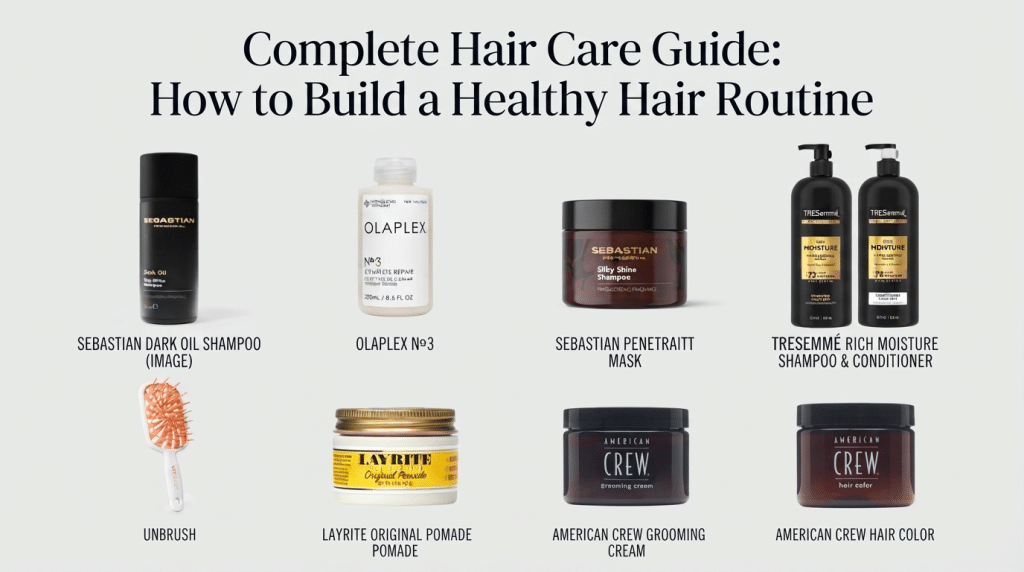

Healthy-looking hair does not usually come from one product or a complicated treatment. A consistent hair care routine that matches your hair type, scalp condition and daily habits can make a significant difference over time. Whether your hair is dry, oily, curly, straight, thinning, color treated or prone to frizz, the right approach starts with understanding what your hair and scalp actually need.
Good hair care is about more than simply washing your hair. Cleansing, conditioning, scalp care, protection from heat, proper product selection and gentle handling all contribute to stronger and healthier looking hair.
This complete guide explains how to build a practical healthy hair routine choose suitable products, avoid common mistakes and address some of the most common hair concerns.
What Is a Good Hair Care Routine?
A good hair care routine is a series of simple habits designed to keep your scalp clean and your hair conditioned, protected and manageable. The ideal routine is different for everyone because hair texture, scalp type, lifestyle, climate and styling habits all vary.
For some people washing the hair several times a week may be appropriate, while others may need less frequent cleansing. Similarly, someone with dry curly hair may benefit from richer conditioning than someone with fine oily hair.
The goal is not to use as many products as possible. Instead, focus on consistency and choose products that suit your specific needs.
Why Scalp Care Matters
The scalp is where your hair grows so maintaining a healthy scalp is an important part of overall hair maintenance. Excess oil, product buildup, sweat and dead skin can accumulate on the scalp if it is not cleansed properly.
Regular but gentle cleansing can help keep the scalp comfortable and remove buildup. Avoid aggressive scratching or excessive scrubbing because rough treatment can irritate the scalp.
If you experience persistent itching, redness, scaling, unusual hair loss or other ongoing scalp problems, consider speaking with a dermatologist or another qualified healthcare professional.
Hair Care Versus Simply Washing Your Hair
Washing your hair removes dirt, oil, sweat, and product buildup, but cleansing is only one part of a complete routine.
A broader approach can include:
· Cleansing the scalp and hair appropriately
· Conditioning the lengths and ends
· Using treatments when needed
· Protecting hair from excessive heat
· Detangling gently
· Limiting unnecessary chemical or mechanical damage
· Choosing products based on your hair and scalp type
Together these habits form a more effective approach to hair care.
Identify Your Hair and Scalp Type
Before choosing a routine, take some time to understand your hair. Your scalp may be oily while your hair lengths are dry so considering both factors is important.
Dry Hair
Dry hair may feel rough, look dull or become difficult to manage. Frequent heat styling, chemical treatments, environmental exposure and unsuitable cleansing products can contribute to dryness.
A moisturizing conditioner and occasional deep conditioning treatment may help improve manageability. Try to avoid excessive heat and handle dry hair gently.
Oily Hair
Oily hair occurs when the scalp produces more oil than you would like. Hair may appear greasy or lose volume quickly after washing.
People with oily scalps may need more frequent cleansing. However using very harsh products or repeatedly stripping the scalp can sometimes make the hair feel uncomfortable.
Choose a shampoo designed for your scalp needs and apply conditioner mainly to the lengths and ends if your roots become oily quickly.
Normal Hair
Normal hair is generally balanced and does not have significant problems with excessive oiliness or dryness. The main goal is to maintain that balance.
A simple routine involving appropriate cleansing, conditioning, gentle detangling and occasional treatment may be sufficient.
Curly, Wavy and Straight Hair
Hair texture also affects your routine.
Straight hair can often become oily more quickly because natural scalp oils can travel down the hair shaft easily. Wavy hair may need additional moisture while still requiring lightweight products to avoid weighing it down.
Curly hair often benefits from careful moisturizing and gentle handling because curls can be more susceptible to dryness and tangling.
Regardless of texture avoid assuming that a routine that works for someone else will automatically work for you.
Essential Steps in a Hair Care Routine
A practical daily hair care routine does not need to be complicated. The most important steps are cleansing, conditioning, appropriate treatment, scalp care and protection.
Cleansing
Shampoo helps remove oil, sweat, dirt, dead skin and styling-product residue.
How often you should shampoo depends on your scalp and lifestyle. Someone who exercises frequently or has an oily scalp may prefer more frequent washing while someone with dry or textured hair may wash less often.
When shampooing concentrate on the scalp rather than aggressively scrubbing the entire length of the hair. Let the cleansing action and rinse remove residue from the lengths.
Use lukewarm rather than very hot water as excessive heat can leave the hair and scalp feeling dry.
Conditioning
Conditioner helps improve softness, smoothness and manageability. It can also make detangling easier.
Apply conditioner primarily to the mid-lengths and ends, particularly if your roots become oily quickly. People with very dry or curly hair may choose richer conditioning formulas.
Allow the conditioner to sit according to the product instructions before rinsing thoroughly.
Hair Masks and Deep Conditioning
Hair masks and deep conditioners can provide additional conditioning when regular conditioner is not enough.
They may be particularly useful when hair feels dry, rough, tangled or damaged from frequent styling.
However using more treatment does not necessarily mean better results. Follow the product instructions and choose formulas appropriate for your hair type.
Scalp Care
Scalp care should be gentle and consistent. Keep the scalp clean without excessive scrubbing or scratching.
If you use oils, gels, sprays, dry shampoo or other styling products regularly, pay attention to potential buildup. A suitable cleansing routine can help remove residue.
Avoid applying heavy products directly to the scalp unless they are specifically intended for that purpose.
Protecting Hair from Heat
Frequent use of straighteners, curling irons and high temperature blow dryers can contribute to hair damage.
To support healthier looking hair:
· Use the lowest effective heat setting
· Avoid holding hot tools in one place for too long
· Allow hair to dry partially before using a blow dryer when appropriate
· Use a heat-protectant product according to its directions
· Avoid unnecessary daily heat styling
Heat protection is an important part of long-term hair maintenance especially for people who style their hair frequently.
How to Choose Hair Care Products
Choosing the right products is easier when you first identify your hair and scalp needs. A product designed for oily hair may not be ideal for very dry hair while a heavy moisturizing formula may make fine hair feel weighed down.
Shampoo
Look for a shampoo that matches your scalp rather than simply choosing one based on marketing claims.
For example, oily scalps may benefit from a cleansing formula designed to remove excess oil, while dry or textured hair may need a gentler cleansing approach.
If you have a specific scalp condition, consider professional advice when selecting treatment products.
Conditioner
Conditioner should support the needs of your hair lengths and ends. Lightweight formulas may suit fine hair while richer conditioners can be useful for dry, thick or curly hair.
If your hair becomes greasy quickly avoid applying excessive conditioner directly to the roots.
Hair Masks
Hair masks are optional treatments that can provide additional conditioning. They can be useful when hair feels particularly dry, rough or difficult to manage.
Select a mask based on your hair’s needs and use it according to the manufacturer’s directions.
Styling products include gels, creams, mousses, sprays, waxes, and serums. They can help with hold, definition, smoothness, volume or frizz control.
When choosing styling products consider both the desired result and your hair texture. Heavy products may not work well for fine hair, while very lightweight formulas may not provide enough control for thick or highly textured hair.
For readers looking to explore different options these hair care products can provide a useful starting point for building a suitable routine:
https://www.overshopping.pk/best-hair-care-items/
Remember that expensive products are not automatically better. Ingredients, formulation, hair type and consistent use are generally more important than price alone.
Common Hair Care Mistakes
Even a good routine can become ineffective when basic hair care mistakes are repeated.
Washing Too Frequently or Not Frequently Enough
There is no universal shampoo schedule. Washing too often may leave some hair types feeling dry, while insufficient cleansing can allow oil and product buildup to accumulate.
Adjust your washing frequency based on your scalp, hair type, activity level and personal needs.
Using Excessive Heat
Repeated high-temperature styling can contribute to dryness and breakage. Reduce heat exposure whenever possible and use appropriate heat protection.
Rough Towel Drying
Rubbing wet hair aggressively with a towel can create unnecessary friction. Instead gently squeeze excess water and handle wet hair carefully.
Brushing Too Aggressively
Forcefully pulling through knots can cause breakage. Start at the ends and gradually work upward when detangling.
Choose a brush or comb appropriate for your hair texture.
Ignoring the Scalp
Focusing only on the hair lengths can cause you to overlook scalp health. A balanced cleansing routine is an important foundation for good hair care.
Using Too Many Products
Layering numerous products can create buildup and make it difficult to identify what is actually helping your hair.
Start with a simple routine and introduce additional products only when you have a clear reason to use them.
Hair Care Routine for Different Hair Concerns
Different concerns may require different adjustments to your routine.
Dryness
For dry hair focus on gentle cleansing, regular conditioning and minimizing unnecessary heat exposure.
A moisturizing mask may also be useful when your hair needs additional conditioning. Avoid excessive washing if it makes your hair feel increasingly dry.
Breakage
Breakage can be associated with mechanical stress, chemical processing, heat, tight hairstyles and rough handling.
Handle wet hair gently, avoid excessive brushing, limit high heat and consider reducing hairstyles that place repeated tension on the same areas.
If you notice significant or persistent hair loss rather than simple breakage, seek professional medical advice.
Frizz
Frizz can be influenced by hair texture, humidity, dryness, damage and styling practices.
Conditioning can improve manageability, while styling creams or serums may help create a smoother appearance. Avoid excessive brushing particularly when working with naturally curly or wavy hair.
Thinning
Hair thinning can have many possible causes, including genetics, hormonal changes, nutritional factors, medications, stress and certain medical conditions.
A basic hair care routine can help minimize unnecessary damage but cosmetic products cannot address every cause of thinning. If you notice sudden significant or progressive hair loss a healthcare professional can help determine the underlying cause.
Color-Treated Hair
Color-treated hair may require additional care because chemical processing can affect the hair’s condition.
Use products intended for color-treated hair when appropriate, reduce unnecessary heat styling, and maintain regular conditioning.
Protecting your hair from excessive environmental and styling stress can help preserve its appearance between color treatments.
Frequently Asked Questions
How often should I wash my hair?
There is no single schedule that works for everyone. Washing frequency depends on scalp oiliness, hair texture, activity level, styling habits and personal preference. Oily scalps may need more frequent cleansing, while dry or curly hair may benefit from less frequent washing.
What is the most important part of a hair care routine?
Consistency is more important than having a large number of products. A suitable cleansing routine, conditioning, gentle handling, scalp care and protection from excessive heat provide a strong foundation.
Should I use conditioner every time I shampoo?
For many people regular conditioning after shampooing can improve softness and manageability. However, the amount and type of conditioner should depend on your hair type and how it responds.
Is a hair mask necessary?
A hair mask is not essential for everyone. It can be useful as an additional conditioning treatment when hair feels dry, rough or difficult to manage.
How can I reduce hair breakage?
Handle your hair gently, reduce excessive heat, avoid overly tight hairstyles, detangle carefully and keep the hair conditioned. If breakage is severe or accompanied by hair loss, professional advice may be appropriate.
Can the same hair care routine work for men and women?
Yes. The basic principles of hair care for men and hair care for women are largely the same. Hair type, scalp condition, styling habits and individual needs are more important than gender when creating a routine.
How long does it take to see improvements from a hair care routine?
The time varies depending on the concern. Improvements in softness and manageability may be noticed relatively quickly while reducing breakage or improving the appearance of damaged hair requires consistent care over time. Hair growth itself is a gradual process.
Final Thoughts
Building a healthy hair routine does not require dozens of products or complicated steps. Start by identifying your scalp and hair type, establish an appropriate cleansing and conditioning routine, protect your hair from excessive heat and handle it gently.
The best hair care tips are often simple: understand your hair choose products for your actual needs, avoid unnecessary damage and stay consistent.
Whether you need hair care for men, hair care for women or a routine for a particular hair texture or concern the foundation remains the same healthy scalp care, appropriate cleansing, conditioning, protection and thoughtful product selection.
If persistent scalp problems significant hair loss or sudden changes occur consider consulting a qualified healthcare professional rather than relying solely on cosmetic products.