
The “Clean but Not Really” Problem
A dish can look clean and still carry a thin layer of oil, protein or leftover soap. You cannot always see this layer, but you can smell it and feel it. Over time it also makes glasses look cloudy and plastic containers look dull and yellowish.
The good news is that every one of these problems has a simple cause, and once you know it, the fix takes seconds.
6 Reasons Your Dishes Stay Smelly or Slippery
1. Your Dish Soap Is Too Weak for Desi Cooking
Oil, ghee and masala are the base of most of our meals. When a dish soap is diluted or low in active cleaning agents, it foams on top of the grease instead of breaking it down. The result is a plate that looks shiny but still carries an oily film. The best dish wash liquid for greasy dishes is one that is genuinely concentrated, so it lifts oil off the surface rather than spreading it around.
2. Too Much Soap, Too Little Rinsing
Many people try to fix a weak soap by pouring more of it. That creates the opposite problem: thick suds that are hard to rinse off. Leftover soap is one of the most common reasons plates feel slippery after washing. With a concentrated product you need far less, which also makes rinsing faster and cleaner.
3. Your Sponge Is Working Against You
A kitchen sponge stays wet, warm and full of food particles all day. When it is not rinsed, squeezed and dried properly, it can start to smell and transfer that smell to everything it touches. Rinse your sponge thoroughly after every use, squeeze it out, leave it to dry upright, and replace it regularly.
4. Egg and Fish Smells Cling to Steel
Steel glasses and bowls are notorious for holding onto egg and fish smells. Protein residue sticks to metal and needs proper cleaning, not just a quick swirl of water. Rinse these items with cool water first to remove the residue, then wash them separately with a good dish wash liquid and rinse well.
5. Dishes Are Stacked While Still Wet
Stacking bowls and glasses before they dry traps moisture between them. That damp, closed space is exactly where musty smells develop. Let everything air dry on a rack, or wipe dry with a clean cloth before putting it away.
6. Plastic Containers Absorb Oil and Smell
Plastic tiffins and storage boxes are slightly porous, so oily curries left inside for hours can leave behind a lingering smell and a yellow tint. Empty and wash plastic containers as soon as possible after use instead of leaving them to sit overnight.
What a Good Dish Wash Liquid Should Actually Do
If you look at the six reasons above, a pattern appears. A good kitchen dish wash product should:
- Break through grease quickly, so no oily film is left behind
- Work with a small amount, so rinsing is quick and complete
- Not leave hands dry and rough after a long washing session
- Not release harsh chemical fumes in a small kitchen
- Be kind to the environment, since everything goes down the drain
This is the standard Washup was designed to meet.
Meet Washup: A Concentrated Dish Wash Liquid Made for Pakistani Kitchens
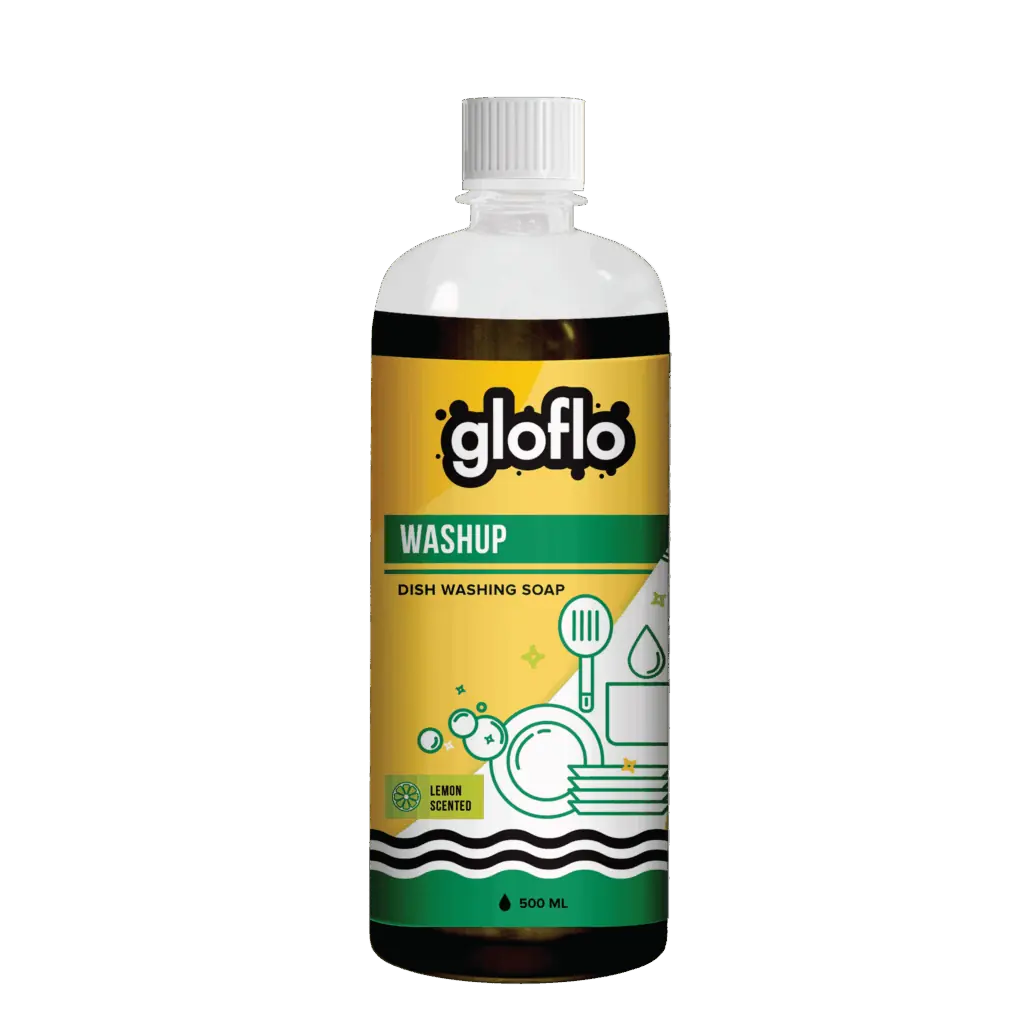
Washup is a concentrated dishwashing liquid by GloFlo, manufactured in Pakistan in collaboration with WVT Belgium. According to its technical data sheet (TDS), its concentrated formula cuts through grease instantly for a brilliantly clean dish, and only a drop is needed to clean dishes and utensils without effort.
Key Features from the TDS
- Highly concentrated and economical to use
- Efficient, effective and fast acting
- Does not dry the hands of the user
- Does not exude toxic fumes compared to other options
- Comes in a variety of natural scents that are long-lasting and pleasing
- Biodegradable
What Is Inside
Washup is a viscous liquid with a pH of 8 at 20°C. Its main cleaning agents are surfactants: dodecyl benzene sulphonic acid (ethanolamine salt) and sodium lauryl ether sulphate. Surfactants are the reason a good dishwash liquid works. They grab oil on one side and water on the other, so grease is lifted off the plate and carried away when you rinse.
A 2-Minute Routine for Odour-Free, Squeaky-Clean Dishes
- Scrape and pre-rinse. Remove leftover food and give oily or eggy items a quick rinse with cool water.
- Wet your sponge. Squeeze out excess water so it is damp, not dripping.
- Add one drop of Washup. The TDS recommends pouring one drop onto your sponge.
- Lather and rub the entire surface. Pay attention to rims of glasses, handles of pans and the corners of containers, where residue hides.
- Rinse until squeaky. Run each item under clean water until it no longer feels slippery.
- Air dry before stacking. Let dishes dry fully on a rack before putting them away.
- Rinse and dry your sponge. Finish by rinsing out the sponge and leaving it to dry.
Is Washup the Right Dish Wash Liquid for Your Kitchen?
Everyone wants the best cleaner in Pakistan, but the right choice depends on how you cook. If your kitchen sees daily bhunai, frying and oily curries, a concentrated formula that cuts grease quickly will make a visible difference. That is why many families comparing options for the best dishwashing liquid in Pakistan look for concentration, hand comfort and a fume-free experience.
Washup is also built for high volumes. Home users can find it in the GloFlo Kitchen Essentials collection, alongside other cleaning products for kitchen use. Bulk buyers can explore the Industrial range.
Frequently Asked Questions
Q) Why do my steel glasses smell like eggs after washing?
Egg protein clings to steel and a quick rinse does not remove it. Rinse the glass with cool water first, then wash it with a concentrated dish wash liquid like Washup and rinse thoroughly before drying.
Q) Why do my plates feel slippery even after washing?
Usually it is either leftover grease or leftover soap. A concentrated formula removes grease with less product, which also makes rinsing easier and more complete.
Q) How much Washup should I use?
The TDS recommends one drop on your sponge. Lather, rub the entire surface well, and add another drop only when needed.
Q) Will Washup dry out my hands?
According to its TDS, Washup does not dry the hands of the user. If you have sensitive skin, gloves are still a sensible choice for long sessions.
Q) Is there a citrus liquid dishwash option?
Washup comes in a variety of natural scents. Check gloflopakistan.com for the scents currently available, including any citrus variant.
Q) Is Washup environmentally friendly?
Yes. Washup is listed as biodegradable in its TDS.
Conclusion
Smelly glasses, slippery plates and oily tiffins are not a sign that you are washing badly. They are a sign that your routine or your cleaning liquid needs an upgrade. Fix the sponge, rinse properly, dry before stacking, and use a dish wash liquid strong enough for real Pakistani cooking.
With its concentrated grease-cutting formula, hand-friendly feel, fume-free use and biodegradable profile, Washup is a practical kitchen cleaning product in Pakistan for families and food businesses alike.
Say Goodbye to Smelly, Slippery Dishes
Your dishes should smell of nothing at all, just clean. Order Washup today from gloflopakistan.com and see what one drop can do.