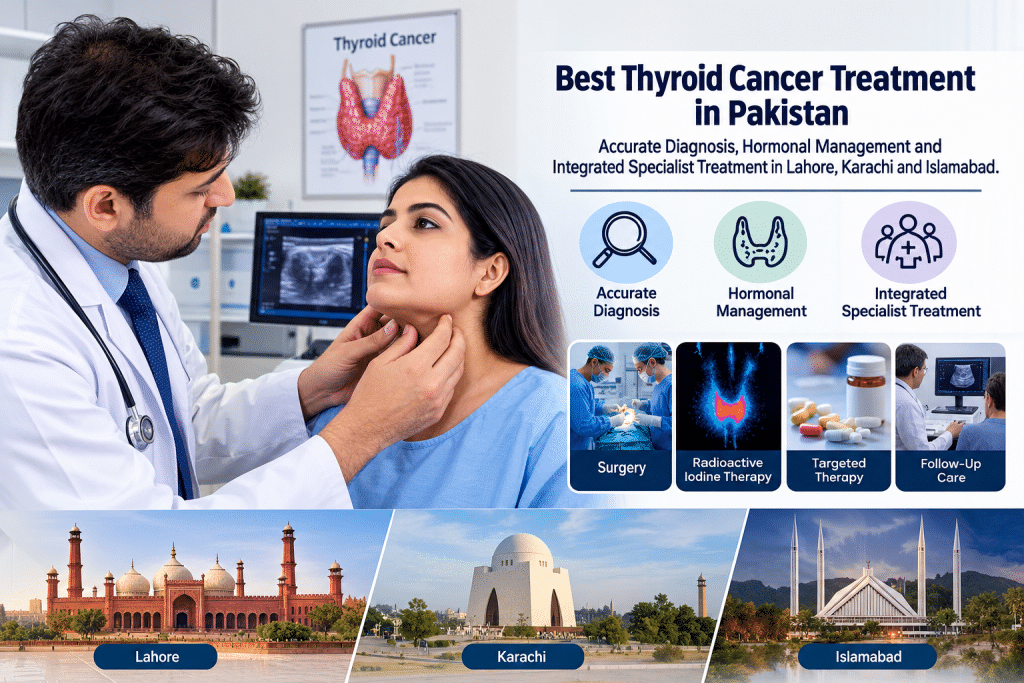
Best Thyroid Cancer Treatment in Pakistan – Accurate Diagnosis, Hormonal Management and Integrated Specialist Treatment in Lahore, Karachi and Islamabad.
Finding the Best Thyroid Cancer Treatment in Pakistan – Lahore, Karachi or Islamabad begins with understanding the diagnosis, available treatment options, and expertise of the medical team. Thyroid cancer develops when abnormal cells grow in the thyroid gland, a small, butterfly-shaped organ located at the front of the neck. Although many thyroid cancers have favourable treatment outcomes, the appropriate approach depends on the cancer type, tumour size, stage, and individual health circumstances.
Pakistan’s major cities offer access to specialist hospitals, diagnostic laboratories, endocrinologists, and surgeons who manage thyroid conditions. Patients can make more informed decisions by learning about modern diagnostic methods, treatment approaches, and the factors that distinguish a suitable thyroid cancer treatment centre.
Why Choose the Best Thyroid Cancer Treatment in Pakistan?
The best thyroid cancer treatment involves more than selecting a hospital or undergoing surgery. It requires an accurate diagnosis, careful assessment of cancer-related risks, an individualised treatment plan, and appropriate follow-up.
Thyroid cancer can occur in different forms, including papillary, follicular, medullary, and anaplastic thyroid cancer. These types differ in their biological behaviour and response to treatment. Papillary and follicular cancers are generally more differentiated and often have favourable outcomes, while medullary and anaplastic cancers may require different specialist approaches.
A qualified medical team evaluates the pathology report, imaging findings, thyroid function, medical history, and potential spread of the disease. Depending on the case, care may involve an endocrinologist, thyroid surgeon, nuclear medicine specialist, oncologist, radiologist, and pathologist.
Common Thyroid Cancer Symptoms and Diagnosis
Thyroid cancer does not always cause noticeable symptoms during its early stages. Some cases are identified when a thyroid nodule is discovered during a physical examination or imaging performed for another reason.
Potential warning signs include:
●A persistent lump or swelling in the neck
●Changes in the voice or persistent hoarseness
●Difficulty swallowing
●A sensation of pressure in the throat
●Enlarged lymph nodes in the neck
These symptoms do not necessarily indicate cancer, but they warrant medical evaluation when persistent or unexplained.
Diagnostic Tests for Thyroid Cancer
A specialist may recommend a combination of investigations to establish the diagnosis and determine the extent of disease.
Thyroid ultrasound. This imaging test evaluates the thyroid gland, identifies nodules, and assesses suspicious lymph nodes.
Fine-needle aspiration biopsy. A small sample of cells may be collected from a thyroid nodule to assess whether cancer is present.
Pathology examination. Tissue analysis helps identify the cancer type and relevant characteristics.
Additional imaging. CT, MRI, or other investigations may be appropriate when the clinical findings suggest more extensive disease.
Molecular testing. In selected cases, molecular analysis can help clarify an uncertain diagnosis or identify genetic alterations relevant to treatment selection.
Not every patient requires every test. Investigations should be chosen according to the clinical situation.
Best Thyroid Cancer Treatment in Lahore
Lahore is an important healthcare destination for patients seeking thyroid cancer diagnosis, surgery, and specialist oncology services. Patients searching for the best thyroid cancer treatment in Lahore should look for hospitals with experienced thyroid surgeons and access to appropriate pathology, radiology, endocrinology, and nuclear medicine services.
Treatment planning generally begins with reviewing the biopsy findings and determining whether the cancer is confined to the thyroid or has spread to nearby lymph nodes or other structures.
Depending on the diagnosis, treatment may involve thyroid surgery, radioactive iodine therapy, thyroid hormone replacement, or structured monitoring. Patients with advanced or unusual cancer types may require additional specialist assessment.
Before choosing a hospital, ask about the surgeon’s experience with thyroid procedures, available diagnostic facilities, expected treatment costs, and arrangements for postoperative care. Access to coordinated follow-up is particularly important because some patients require long-term monitoring.
Best Thyroid Cancer Treatment in Karachi
Karachi provides a range of healthcare facilities where patients can seek assessment and treatment for thyroid malignancies. Those looking for the best thyroid cancer treatment in Karachi should evaluate the medical team’s experience, the hospital’s available services, and the suitability of its treatment approach for the specific cancer type.
Surgery is an important treatment for many thyroid cancers. However, the extent of surgery varies. Some patients may be suitable for removal of one thyroid lobe, while others require removal of the entire thyroid gland. The decision depends on tumour characteristics, disease extent, and relevant clinical guidelines.
For selected differentiated thyroid cancers, radioactive iodine may be recommended after surgery. It is not necessary for every patient. A specialist should explain the expected benefits, possible side effects, and reasons for recommending or avoiding this treatment.
Patients travelling to Karachi from other areas should also consider accommodation, postoperative appointments, laboratory testing, and access to medication after discharge.
Best Thyroid Cancer Treatment in Islamabad
Islamabad provides access to specialist consultations and hospital facilities for diagnosing and treating thyroid cancer. When comparing options for the best thyroid cancer treatment in Islamabad, patients should consider whether the medical team can provide appropriate diagnosis, surgery, cancer staging, and long-term surveillance.
Some patients have small, low-risk papillary thyroid cancers that may be suitable for carefully supervised active surveillance rather than immediate surgery. This approach is appropriate only for selected cases following specialist assessment and requires reliable ultrasound monitoring and scheduled follow-up.
Patients with higher-risk disease may need surgery, radioactive iodine, or additional treatments based on pathology and staging. A specialist team can explain the available approaches and help patients understand the benefits and limitations of each option.
Modern Thyroid Cancer Treatment Options
Recent developments in thyroid cancer management have enabled more personalised treatment plans based on the tumour’s features, risk of recurrence, and extent of disease spread.
1. Thyroid Surgery
Surgical removal is a primary treatment option for many types of thyroid cancer. Depending on the diagnosis, the surgeon may remove one thyroid lobe or the entire gland. Lymph node removal may also be necessary when cancer has spread to specific lymph nodes.
Potential complications include changes in voice, bleeding, and low calcium levels, particularly following extensive surgery. Discussing the surgeon’s experience and the expected recovery process can help patients prepare for treatment.
2. Radioactive Iodine Therapy
Its suitability depends on the cancer type, recurrence risk, and treatment goals.This treatment is typically unsuitable for medullary and anaplastic thyroid cancer.
3. Thyroid Hormone Therapy
In selected differentiated thyroid cancers, doctors may also adjust thyroid-stimulating hormone levels to reduce stimulation of cancer cells.
The appropriate dose and monitoring schedule depend on the patient’s cancer risk, blood test results, age, and other health considerations.
4. Targeted Therapy and Advanced Cancer Care
For certain advanced or treatment-resistant thyroid cancers, molecular testing can identify alterations that may respond to targeted medicines. Other systemic treatments, including selected immunotherapies, may be considered in specific clinical circumstances.
These treatments are not appropriate for every patient. Eligibility depends on the cancer’s biology, previous treatment, overall health, and availability of suitable therapies.
How to Select the Right Thyroid Cancer Specialist
Choosing a treatment centre requires careful evaluation rather than relying solely on online rankings or promotional claims.
Consider these factors before booking a consultation:
●Professional credentials. Verify the specialist’s qualifications and registration.
●Relevant experience. Look for experience managing the specific type of thyroid cancer.
●Multidisciplinary care Confirm access to the specialists and diagnostic services required for your case.
●Clear treatment planning. The doctor should explain the diagnosis, available options, risks, and expected follow-up.
●Transparent costs. Ask about consultation fees, surgery, investigations, medication, and additional treatment expenses.
●Long-term monitoring. Ensure that postoperative assessments, thyroid blood tests, and imaging can be arranged when required.
Patients should also consider how easily they can attend repeat appointments and obtain prescribed medicines.
Conclusion
Finding the Best Thyroid Cancer Treatment in Pakistan – Lahore, Karachi or Islamabad requires accurate diagnosis, experienced specialists, and a treatment plan suited to the individual cancer type and stage. Each city offers potential healthcare options, but the most appropriate facility depends on the patient’s clinical needs and the services available.
Whether treatment involves surgery, radioactive iodine, thyroid hormone therapy, active surveillance, or targeted medicines, decisions should be guided by qualified specialists and current evidence-based recommendations.
Patients should review their diagnostic reports, ask questions about treatment alternatives, and establish a clear follow-up plan. With appropriate specialist care and consistent monitoring, many thyroid cancers can be managed successfully.
Posted inHealth & Fitness
Best Thyroid Cancer Treatment in Pakistan – Accurate Diagnosis, Hormonal Management and Integrated Specialist Treatment in Lahore, Karachi and Islamabad
Posted by
 No Comments
Post navigation
Previous Post
 Balcony Safety Nets in Bangalore: Prestige Safety Nets