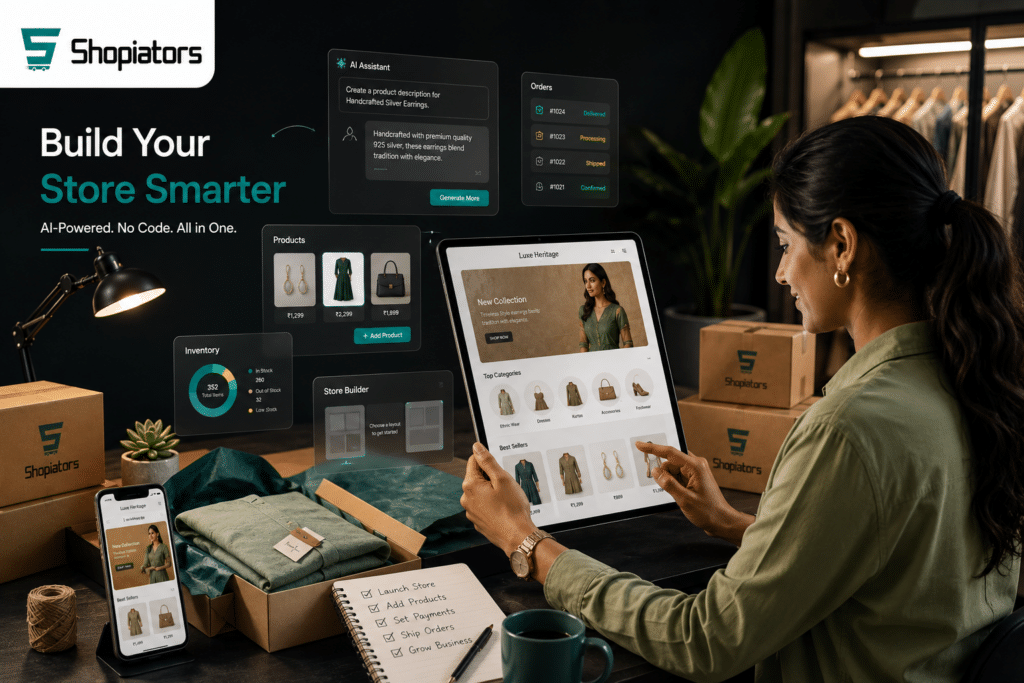

Starting an online business has become easier with modern ecommerce technology. Entrepreneurs no longer need advanced programming skills or a large development team to create a professional online store. AI-powered tools and visual website editors have simplified the process of building, customizing, and managing ecommerce websites.
An AI Ecommerce Website Builder combines artificial intelligence with ecommerce functionality to help businesses create storefronts, prepare product content, organize website sections, and simplify repetitive tasks. Whether you are a beginner, retailer, creator, or established business owner, choosing the right platform can make online selling easier to manage.
What Is an AI Ecommerce Website Builder?
An AI Ecommerce Website Builder is a platform that uses artificial intelligence to assist users in creating and managing online stores. Traditional website builders provide templates and visual editing tools, while AI-powered solutions add features that can speed up different website-building activities.
Depending on the available features, AI can help with:
- Generating initial website layouts
- Creating product descriptions
- Preparing website content
- Organizing product categories
- Suggesting website sections
- Assisting with basic SEO content
- Simplifying repetitive store-management tasks
These features help business owners spend less time on manual work and more time focusing on products, customers, and marketing.
How an Ecommerce Website Builder Helps Businesses
An ecommerce website builder provides the essential tools required to create an online store without developing everything from scratch.
A good platform should allow users to create product pages, organize categories, customize their storefront, and manage daily business activities.
Important features include:
Product Management: Add product names, images, descriptions, prices, and variants.
Inventory Management: Monitor available stock and update product availability.
Order Management: View customer orders and manage their processing.
Payment Integration: Provide convenient payment options for customers.
Website Customization: Modify layouts, colors, banners, and content according to your brand.
SEO Controls: Manage page titles, meta descriptions, URLs, and product content.
Having these tools together can make daily ecommerce operations more organized.
What Makes the Best Ecommerce Website Builder?
The best ecommerce website builder should offer a combination of simplicity, flexibility, and useful business features.
Before selecting a platform, consider the following factors:
- Easy website creation and editing
- Mobile-responsive storefronts
- Product and inventory management
- Secure payment options
- Custom domain support
- SEO-friendly website structure
- Customer and order management
- Transparent pricing
- Scalable functionality
A platform should also be easy to operate. Business owners should be able to update product information, change prices, and edit website sections without depending on developers for every small modification.
Online Store Site Builder: What Should Beginners Expect?
An online store site builder should make it possible for beginners to establish an online presence without unnecessary technical complications.
The website creation process should include simple steps such as choosing a design, adding products, creating categories, customizing pages, and configuring payments.
Beginners should also look for helpful dashboards and straightforward navigation.
Before selecting a platform, try performing everyday activities such as adding a product, editing a description, changing a price, and creating a new category. This helps determine whether the platform is suitable for long-term store management.
AI Store Builder and AI Online Store Builder: Understanding the Benefits
An AI store builder can assist with different parts of website creation by reducing repetitive manual tasks.
For example, a business launching a new collection may need product descriptions, category content, promotional sections, and website updates. AI can help prepare initial versions of this content.
An AI online store builder can also make certain website-building workflows faster by assisting with page structures and content organization.
However, AI-generated information should always be reviewed before publishing. Product specifications, prices, shipping details, and business policies must remain accurate.
AI should support business owners rather than replace their decisions.
Best Website Builder for Ecommerce: Features Worth Comparing
Finding the best website builder for ecommerce requires comparing more than website appearance.
A professional storefront is important, but businesses also need reliable tools for handling daily operations.
Consider these comparison points:
- Design flexibility: Can you customize the website according to your brand?
- Product functionality: Does it support product variants, categories, and images?
- Payments: Are suitable payment methods available?
- Inventory: Can you manage stock efficiently?
- SEO: Can you optimize product and category pages?
- Mobile experience: Does the store work properly on smartphones?
- Pricing: Are there additional transaction or feature charges?
- Scalability: Can the platform support future business growth?
Comparing these features can help businesses make a more informed decision.
AI Ecommerce Platform and Ecommerce Platform India
An AI ecommerce platform combines ecommerce infrastructure with AI-assisted capabilities to simplify different parts of online selling.
For businesses exploring an Ecommerce Platform India solution, local business requirements should also be considered.
Important considerations include:
- UPI and other relevant payment options
- GST-ready business workflows
- Shipping and delivery management
- Mobile-friendly shopping experiences
- Inventory and order management
- WhatsApp customer communication
- SEO and marketing functionality
The right combination of features depends on the business category, target customers, and operating requirements.
Shopify Alternatives India: Choosing the Right Platform
Businesses researching Shopify Alternatives India may be looking for different pricing options, easier store management, AI features, or no-code website creation.
When comparing platforms, examine the complete cost rather than just the starting subscription.
Check transaction fees, premium features, payment charges, integrations, customization options, and ongoing maintenance requirements.
Businesses should also evaluate whether the platform provides the ecommerce tools they need today and the flexibility to support future expansion.
How to Start an Online Store Without Technical Skills
If you are wondering how to start an online store, following a structured process can make the journey easier.
Step 1: Select Your Products
Decide what you want to sell and identify your target customers.
Step 2: Choose a Platform
Select an ecommerce solution that matches your budget, technical experience, and business requirements.
Step 3: Create Your Storefront
Choose a suitable design, customize website sections, and establish your brand identity.
Step 4: Add Products
Upload clear images, write useful descriptions, organize categories, and set prices.
Step 5: Configure Payments and Shipping
Set up suitable payment methods and define your shipping and delivery policies.
Step 6: Optimize for SEO
Prepare descriptive page titles, meta descriptions, product content, and search-friendly URLs.
Step 7: Test Before Launch
Check mobile layouts, product pages, cart functionality, checkout, and payment processing before making the store publicly available.
No Code Ecommerce Platform India for Growing Businesses
A no code ecommerce platform india solution allows entrepreneurs to build and manage online stores through visual tools instead of traditional programming.
This approach is particularly useful for small businesses without dedicated development teams.
Business owners can manage products, update website content, organize collections, and handle orders through dashboards.
Combining no-code functionality with AI assistance can further reduce the technical effort involved in running an online business.
Common Mistakes to Avoid When Building an Online Store
Businesses should avoid choosing a platform based only on its popularity or starting price.
Other common mistakes include ignoring mobile optimization, publishing incomplete product information, overlooking SEO settings, and failing to test checkout functionality.
Another mistake is assuming that AI automatically guarantees sales. A successful online store still requires quality products, effective marketing, accurate information, reliable delivery, and good customer support.
Conclusion
An AI Ecommerce Website Builder can simplify online store creation by combining artificial intelligence with practical ecommerce tools. From product descriptions and website sections to inventory and order management, the right platform can reduce repetitive work and make store management easier.
Businesses should compare the best ecommerce website builder options based on usability, pricing, customization, payments, SEO, and scalability.
For beginners and growing businesses, combining an AI store builder with a no code ecommerce platform india approach can make online selling more accessible.
Shopiators brings AI-assisted store creation and no-code ecommerce functionality together, helping entrepreneurs and businesses create, customize, and manage their online stores without unnecessary technical complexity.