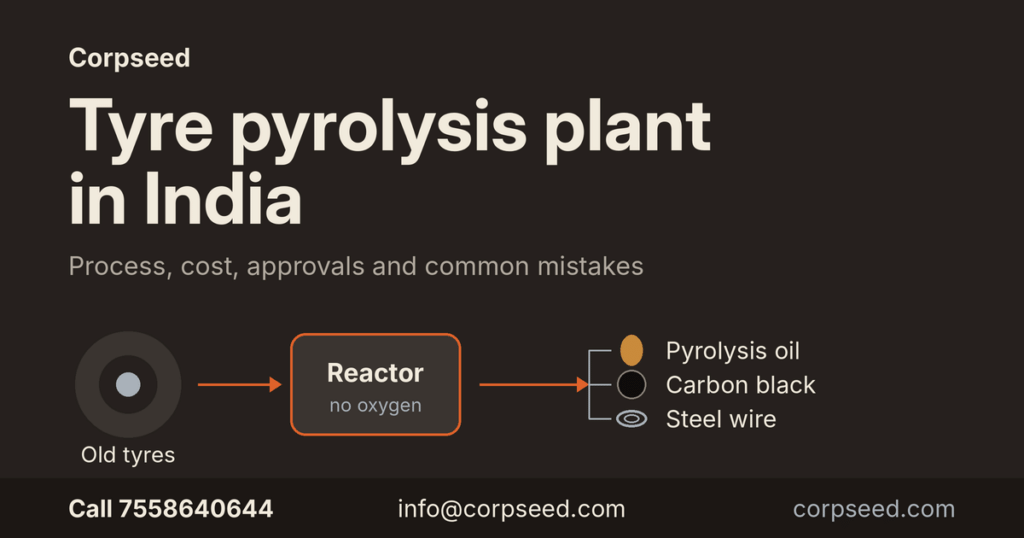

A tyre pyrolysis plant heats old tyres in a sealed reactor with no oxygen and turns them into pyrolysis oil, carbon black and steel wire. On paper it looks like a clean business. In practice, most of the difficulty sits in the details: the land, the approvals, the tyre supply and the people who run the reactor every day.
How the process actually works
Tyres go in whole or cut into pieces. Inside the reactor, heat breaks the rubber down into gas. That gas passes through a condenser, cools and turns into oil. Carbon black is left behind as a fine powder, and the steel belts come out separately.
The reactor is the heart of the plant, and it is also where rushed setups cause the most trouble. A small leak, uneven heating or a poorly sealed door can lead to smoke, fire risk and oil loss. Good operators watch temperatures closely, because a reactor that runs too hot or too cool wastes fuel and produces poor quality oil.
Picking the right size
Most new units start small. A 1 to 2 tonne a day plant needs less land, less money and fewer staff. Bigger units produce more, but they also bring bigger loans, tougher compliance and a longer list of things that can go wrong.
Choose capacity based on how many tyres you can collect every week, not on what looks good in a project report. Collection is where most owners struggle. Sign supply arrangements with tyre shops, fleet operators and scrap dealers before you buy any machinery.
Tyre pyrolysis plant cost in India
Cost depends mainly on capacity. Vendor estimates for 2026 put a 1 to 2 tonne a day unit at roughly ₹20 to 40 lakh, while a 10 tonne a day commercial plant sits between ₹2 and ₹3.8 crore. Prices move with machine make, automation level and location, so treat these as starting points and get written quotes.
The pyrolysis reactor is usually the biggest single machine cost, but shredders, condensers, a gas scrubber, oil storage tanks, land and the building add up fast.
Licences and approvals
This is where timelines slip. First, register the business as a sole proprietorship, partnership or company. Then get a Consent to Establish from your State Pollution Control Board before construction starts, and a Consent to Operate before production begins. You will also need a fire safety NOC, building plan approval and EPR authorization for tyre waste. Rules and fees vary from state to state, so call your state board early. A question asked in month one can save you months of waiting later.
Where the money comes from
A plant earns from three products. Pyrolysis oil sells as industrial fuel to furnaces, boilers and kilns. Carbon black goes to rubber, paint and ink makers. Steel wire goes to scrap buyers. Oil usually brings in the most money, but its price follows fuel rates, much like the plastic pyrolysis oil price follows the wider fuel market. So don’t build your numbers on one fixed rate.
Putting together a project report
A good tyre pyrolysis plant project report covers capacity, the machinery list, cost, raw material plan and cash flow. Keep every figure consistent with the vendor quotes you collect. Mismatched numbers are one of the quickest ways to slow down a loan.
Mistakes that cost the most
Three mistakes come up often. The first is underestimating tyre supply, which leaves a plant idle for weeks while the owner chases scrap. The second is cutting corners on emission control. A basic setup may pass a first look, but it can draw notices from the board and cost more to fix than it saved. The third is hiring operators without fire and handling training. Oil and gas are both flammable, and one untrained shift can undo months of planning.
Need help with your project?
Setup goes smoothly when approvals, machinery and paperwork move together. Our team can walk you through each step on our tyre pyrolysis plant setup page or help you check your approvals. Call 7558640644 or email [email protected].
Frequently asked questions
Is a tyre pyrolysis plant profitable in India?
It can be, but the margin depends on three things: a steady supply of tyres, oil that meets buyer quality needs, and buyers lined up before production starts. Plants that sell oil, carbon black and steel, rather than relying on one product, usually cope better with price swings.
What comes out of a tyre pyrolysis plant?
Most of the tyre turns into oil, with carbon black and steel wire as the other main outputs. The leftover gas is often fed back into the reactor as fuel, which helps keep running costs down.
Which type of pyrolysis plant should I choose, batch or continuous?
Most tire pyrolysis units in India use batch processes. Batch systems need less upfront money and are simpler to start with. Continuous plants suit higher volumes, but they need more automation and experienced operators.
How long does it take to set up a tyre pyrolysis plant?
Timelines depend on land, construction, machinery delivery and board approvals. Approvals often take longer than building the plant itself, so begin the paperwork early and avoid buying land before you know which approvals apply.