
Picking a brand name takes weeks of thought. Picking the trademark class, which decides where that name is actually protected, often takes five minutes and a guess. That gap causes more trouble in Indian trademark filings than almost anything else. A mark registered in the wrong class protects nothing that matters to the business, and the fee paid for it does not come back.
This guide explains how the class system works in India, where applicants usually go wrong, and how to shortlist the correct classes before the application is filed.
What Is a Trademark Class?
India follows the Nice Classification, an international system that sorts every product and service into 45 classes. Classes 1 to 34 cover goods, and Classes 35 to 45 cover services. Every trademark application filed with the Trade Marks Registry under the Trade Marks Act, 1999 has to name at least one class along with a description of the goods or services it covers.
Protection is limited to the classes named in the application. A registration for a biscuit brand in Class 30 does not stop someone from using the same name for a clothing line in Class 25, unless the mark is well known. So the class is not paperwork. It is the boundary of the right itself.
Why Class Selection Goes Wrong
Most mistakes fall into a few patterns:
- Filing only for the product, not the service. A clothing brand selling through its own website usually needs Class 25 for the garments and Class 35 for the retail and online store service.
- Confusing software classes. Downloadable software and mobile apps generally fall in Class 9, while software offered as a service (SaaS) falls in Class 42. Many tech startups file in one and need both.
- Mixing up cosmetics and medicines. Regular skincare and cosmetics sit in Class 3. Medicated or Ayurvedic preparations with therapeutic claims often belong in Class 5.
- Food businesses picking one side. Packaged coffee or tea is Class 30, but running a cafe or restaurant is Class 43. A brand doing both needs both.
- Vague descriptions. Writing “all goods in Class 25” or copying the class heading invites objections. The Registry expects a clear list of what is actually sold.
A Simple Way to Shortlist Classes
Before opening the TM-A form, it helps to work through three questions.
1. What is sold today?
List every product and service the business currently offers, in plain words. “Cotton t-shirts”, “online clothing store” and “fashion styling consultation” are three different things and may fall in three different classes.
2. What will be sold in the next two or three years?
A trademark application cannot be expanded to new classes after filing. If a skincare brand plans to launch a salon, or a software company plans training programmes, those classes are worth considering now rather than through a second application later.
3. Where would a copycat cause the most damage?
Not every possible class is worth the fee. The priority should be the classes where a competitor using the same name would genuinely confuse customers.
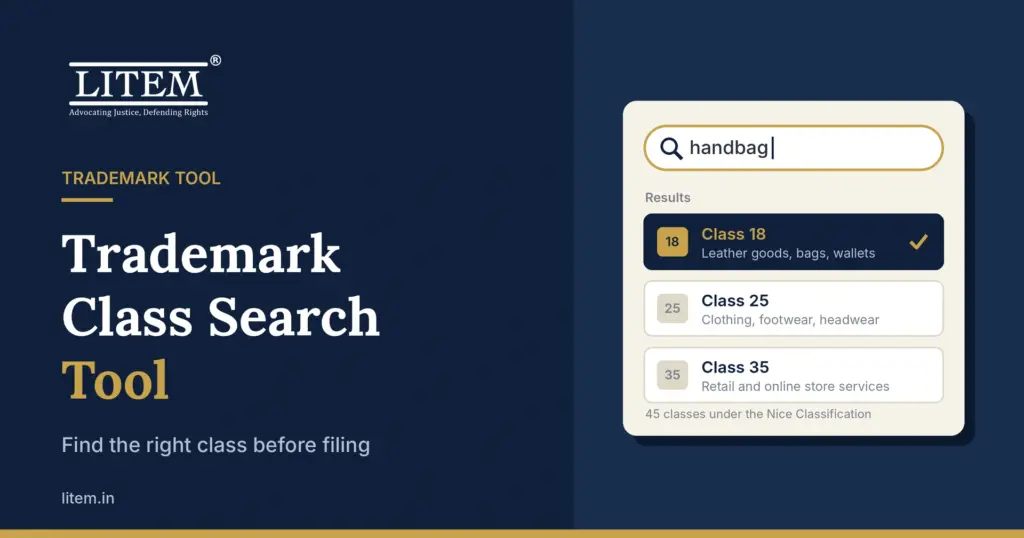
Once this list is ready, each item needs to be matched to its class. That matching step is where a search tool saves time. The free trademark class search tool by Litem Legalis lets applicants look up a product or service and see which of the 45 classes it falls under, which makes it easier to build an accurate list before filing.
Single Class or Multi-Class Application?
The Trade Marks Act, 1999 allows one application to cover several classes. The government fee is charged per class either way, so the choice is mostly practical.
- A single-class application moves through examination on its own. An objection in one class does not hold up another.
- A multi-class application keeps everything under one application number, which is simpler to track, but an objection or opposition can slow the whole application.
For a new brand covering two or three closely linked classes, either route works. For a brand covering unrelated areas, separate applications often give more control.
What It Costs Per Class
The official fee for filing Form TM-A online is ₹4,500 per class for individuals, DPIIT-recognised startups and small enterprises, and ₹9,000 per class for all other applicants. Physical filing costs slightly more. Because the fee multiplies with every class added, a well-reasoned shortlist keeps the cost in check without leaving gaps in protection. Fees should always be checked against the current schedule on the IP India website before filing.
Checking the Class Before Filing a Search
Class selection and the trademark search go hand in hand. A public search on the IP India portal is run class by class, so the search is only meaningful once the right classes are known. A name that is free in Class 9 may already be registered in Class 42, and that conflict will surface at examination if it is not caught early.
Final Checklist
- List every current and planned product or service in plain language.
- Match each item to its Nice class using a reliable class finder.
- Check both goods and service classes for the same business activity.
- Run a trademark search in each shortlisted class.
- Write a specific description of goods or services for each class.
- Confirm the current government fee per class before filing.
Getting the class right at the start costs a little extra thought. Getting it wrong costs a second application, a second fee and, sometimes, the brand name itself. A detailed walkthrough of the full filing process is available in this guide on trademark registration in India.