
Women consider breast enhancement for many reasons, including increasing breast volume, improving proportions, or restoring fullness after pregnancy or weight changes. When researching Breast Implants in Dubai, understanding implant materials, sizing, surgical techniques, and long-term care can help patients make informed decisions.
Breast implant surgery is a personalized procedure. The most suitable approach depends on existing breast tissue, chest dimensions, skin elasticity, medical history, and the outcome a patient hopes to achieve. A consultation with a qualified plastic surgeon helps establish realistic expectations and determine whether implants are appropriate.
Understanding Breast Implants in Dubai
Breast implants are medical devices placed inside the breast to increase volume or change its contour. They may be used for cosmetic enhancement or, in certain circumstances, breast reconstruction.
The final appearance depends on several factors, not just the implant itself. Natural breast tissue, implant dimensions, placement, and healing all influence the result. An implant that suits one person’s body may not be appropriate for someone with a different chest width or tissue structure.
At Tajmeels Clinic, patients exploring breast enhancement can discuss their goals and available options as part of an individualized treatment assessment.
Types of Breast Implants Available
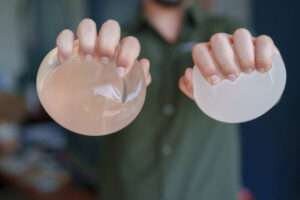
Implants differ in their filling material, shape, profile, and surface. Each characteristic can affect how the implant feels, fits the breast, and contributes to the overall contour.
Silicone Gel Implants
Silicone implants have a silicone outer shell filled with silicone gel. Many patients consider them because the gel can provide a feel similar to natural breast tissue, although the result varies with the implant design and the amount of tissue covering it.
Silicone implants come in different sizes and profiles. Some are round, while others have an anatomical shape. Patients should discuss the characteristics of specific products with their surgeon rather than assuming that one design is suitable for everyone.
Silicone implants also require appropriate long-term monitoring. Some ruptures may occur without obvious symptoms, so patients should follow the recommended clinical and imaging guidance for their implant type.
Saline Implants
Saline implants have a silicone outer shell filled with sterile saltwater. Depending on the device, the implant may be filled during surgery, allowing some adjustment within its approved range.
Saline implants may suit certain patients, but they can feel different from silicone gel implants. Visible rippling may be more noticeable in people with limited breast tissue.
A surgeon can explain the advantages, limitations, and potential risks of each material based on the patient’s anatomy and preferences.
Round and Anatomical Implants
Round implants can provide fullness across the upper portion of the breast, depending on their profile and placement. Anatomical implants are shaped to provide a more tapered upper contour and greater fullness toward the lower portion.
Neither shape guarantees a more natural result. Implant dimensions, existing breast tissue, skin characteristics, and surgical technique all contribute to the final appearance.
Choosing Breast Implants in Dubai for Your Body Frame
Implant selection involves more than choosing a preferred cup size. Surgeons consider the width of the chest, the dimensions of the existing breast, tissue coverage, and the patient’s expectations.
Implant Size and Volume
Implant volume is commonly measured in cubic centimetres (cc). However, the same volume can look different on two people because their chest widths and breast proportions differ.
During a consultation, the surgeon may take measurements and use sizing tools to help patients compare potential outcomes. The objective is to identify an implant that fits the patient’s anatomy while supporting realistic aesthetic goals.
Implant Profile and Projection
An implant’s profile describes how far it projects forward relative to its base width. Moderate-, high-, and extra-high-profile implants may create different contours even when their volumes are similar.
A higher profile does not automatically produce a better outcome. The appropriate choice depends on the patient’s anatomy, desired appearance, and the surgeon’s assessment of what can be achieved safely.
Skin Elasticity and Existing Breast Tissue
Skin elasticity and the amount of natural breast tissue influence how an implant may sit and how clearly its edges may be visible. Limited tissue coverage can affect the appearance of rippling, while skin that has stretched may influence breast shape.
If there is significant sagging, implants alone may not address every concern. A surgeon may discuss whether a breast lift or another approach would better match the patient’s goals.
Understanding Breast Implant Placement
Implants can be positioned in different tissue planes. The choice depends on anatomy, implant characteristics, surgical history, and the surgeon’s preferred technique.
Placement Beneath the Breast Tissue
Subglandular placement positions the implant beneath the breast gland but above the pectoral muscle. It may be suitable for selected patients with adequate soft-tissue coverage.
Potential considerations include how visible the implant edges may be, the risk of rippling, and how the implant interacts with the natural breast tissue.
Placement Beneath or Partly Beneath the Muscle
Submuscular or dual-plane techniques position the implant beneath the pectoral muscle or use a combination of tissue planes. These approaches may provide additional upper-pole coverage for certain patients.
They can also involve different recovery considerations, including temporary muscle tightness or movement-related changes in the breast contour. The surgeon should explain why a specific placement method is recommended.
For more information about the procedure and available options, explore breast implants in Dubai at Tajmeels Clinic.
What Happens During Breast Implant Surgery?
Although the details vary, the process generally includes a consultation, preoperative assessment, surgical planning, implant placement, and postoperative follow-up.
Step 1: Consultation and Assessment
The surgeon reviews the patient’s medical history, current medications, allergies, previous breast procedures, and aesthetic goals. A physical examination helps assess breast dimensions, tissue quality, skin elasticity, and any existing asymmetry.
Patients should use this appointment to ask about implant options, incision locations, placement techniques, potential complications, and future monitoring requirements.
Step 2: Preoperative Preparation
Before surgery, the clinical team provides instructions about medications, eating and drinking, smoking, and other factors that may affect anesthesia or healing.
Patients should disclose all prescription medicines, over-the-counter products, and supplements. Medication changes should only be made according to the treating clinician’s instructions.
Step 3: Implant Placement
Breast implant surgery is commonly performed under general anesthesia. The surgeon makes an incision at the planned location, creates a pocket for the implant, and positions the device according to the agreed surgical plan.
The incision is then closed and dressed. The patient receives instructions covering wound care, activity restrictions, medication, and follow-up appointments.
Recovery After Breast Implant Surgery
Recovery varies according to the surgical technique, implant placement, individual healing, and whether another procedure is performed at the same time.
Swelling, bruising, tightness, and discomfort can occur during the initial recovery period. These symptoms should generally improve, although the pace of healing differs between patients.
Supporting a Comfortable Recovery
Patients should follow their surgeon’s instructions rather than relying on a general timeline. Common recommendations may include:
Wearing the prescribed support garment or surgical bra.
Taking medication as directed.
Keeping incisions clean and following wound-care instructions.
Avoiding heavy lifting and strenuous exercise until cleared.
Attending scheduled postoperative appointments.
Asking when it is safe to drive, return to work, and resume usual activities.
Seek prompt medical advice if you develop fever, increasing redness, worsening pain, unusual discharge, sudden swelling, or other concerning symptoms. Severe or rapidly worsening symptoms require urgent assessment.
Risks and Long-Term Considerations
Breast implant surgery carries potential risks, including infection, bleeding, scarring, changes in nipple or breast sensation, implant displacement, rupture, and capsular contracture. Capsular contracture occurs when scar tissue surrounding an implant becomes unusually tight and may affect the breast’s feel or shape.
Breast implants are not lifetime devices. Some patients eventually require additional surgery because of complications, changes in breast tissue, or a decision to change or remove their implants.
Patients should also understand that breast implants can affect the planning of future breast imaging. It is important to inform the radiology team about implants before mammography or other breast examinations.
A long-term care plan should include appropriate clinical follow-up and implant-specific monitoring. The recommended schedule depends on the device, manufacturer guidance, individual health, and any symptoms.
What Influences the Cost of Breast Implants in Dubai?
The total cost depends on the treatment plan and the services included. Patients should request a clear breakdown rather than comparing headline prices alone.
Common cost factors include:
Implant type, brand, and design.
Surgeon and surgical facility fees.
Anesthesia and operating-room costs.
Preoperative consultations and assessments.
Postoperative appointments and prescribed supplies.
Whether a breast lift or another procedure is also required.
During a consultation at Tajmeels Clinic, patients can discuss the proposed treatment plan and ask which services are included in the estimate.
Frequently Asked Questions About Breast Implants in Dubai
How do I choose the right breast implant size?
The appropriate size depends on chest width, existing breast tissue, skin elasticity, and desired proportions. A plastic surgeon can take measurements and explain which options are suitable for your anatomy.
Do breast implants look and feel natural?
Results vary according to implant material, size, placement, tissue coverage, and individual anatomy. No particular implant can guarantee a specific appearance or feel.
How long do breast implants last?
There is no guaranteed lifespan. Implants may remain in place for many years, but they are not considered lifetime devices. Follow-up care and additional surgery may eventually be necessary.
Can I breastfeed after breast implant surgery?
Some patients can breastfeed after surgery, but the ability to do so may depend on the surgical technique, incision location, and individual anatomy. Discuss future breastfeeding plans with your surgeon before the procedure.
Will I need scans after receiving silicone implants?
Patients with silicone implants should follow current recommendations for implant monitoring, which may include ultrasound or MRI at specified intervals. Your clinician can explain the guidance applicable to your device and medical circumstances.
Can breast implants correct sagging breasts?
Implants can add volume, but they do not always correct significant sagging. Depending on the degree of skin laxity and nipple position, a breast lift may be discussed as a separate or combined procedure.
Making an Informed Breast Enhancement Decision
Choosing breast implants involves weighing aesthetic goals against surgical risks, recovery needs, and long-term responsibilities. Learning about implant materials, dimensions, placement techniques, and monitoring requirements helps patients prepare for a more productive consultation.
Tajmeels Clinic provides consultations for patients considering breast enhancement in Dubai. A discussion with a qualified plastic surgeon can help clarify the available options, address individual concerns, and determine whether breast implant surgery is appropriate for your needs.