
When considering breast augmentation, many patients want additional volume without losing the proportions that make their appearance feel balanced. Achieving this outcome involves careful planning rather than simply choosing a larger implant. Existing breast tissue, chest dimensions, skin elasticity and implant design all influence the result.
Modern silicone breast implants are available in a range of designs intended to accommodate different anatomical requirements. Understanding how these features work can help patients discuss their options more confidently with a qualified plastic surgeon.
What Makes a Breast Augmentation Result Look Natural?
A natural-looking result is subjective. One patient may prefer a subtle increase in volume, while another may want more noticeable fullness. The important consideration is how the proposed change relates to the individual’s anatomy and personal goals.
Several factors contribute to the overall appearance.
Chest proportions: The width and shape of the chest help determine which implant dimensions may be appropriate.
Existing breast tissue: Natural tissue influences implant coverage and how the edges or contours may appear beneath the skin.
Skin elasticity: Skin quality affects how the breast accommodates additional volume and may influence the surgical plan.
Breast asymmetry: Differences in breast size, position or shape can affect implant selection and the expected degree of symmetry.
Implant position: Placement relative to the breast tissue and chest muscle influences contour and may affect recovery.
No implant can guarantee a particular appearance. A careful assessment helps establish realistic expectations based on the patient’s individual characteristics.
The Role of Silicone Gel
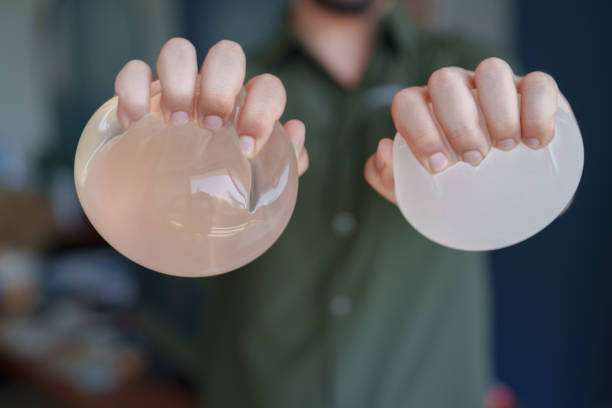
Silicone breast implants contain gel within a flexible outer shell. The gel’s consistency varies between implant models, and these differences can influence how an implant behaves when pressure is applied.
Cohesive silicone gel is designed to maintain its consistency rather than behaving like a freely flowing liquid. However, the term cohesive covers different formulations, so it should not be interpreted as meaning that all implants have identical firmness or properties.
When discussing silicone implants, patients should ask about the specific model being considered and how its characteristics relate to their goals.
The surgeon should also explain the limitations of the available options. A particular gel consistency cannot compensate for unsuitable implant dimensions, inadequate tissue coverage or other anatomical constraints.
Why Implant Dimensions Matter More Than Volume Alone
Implant volume is an important part of surgical planning, but it does not tell the whole story.
Two implants with the same volume can have different base widths and projections. One may distribute volume across a wider area, while another may project further forward from a narrower base.
The appropriate dimensions depend on the patient’s chest measurements, breast footprint, existing tissue and desired contour.
During a consultation, the surgeon may use measurements, examination findings and suitable sizing methods to discuss the options. These tools help guide decisions, but they cannot guarantee the exact final appearance.
Choosing an implant solely because a particular volume looks appealing in a photograph can lead to unrealistic expectations. The same implant may produce different results in patients with different body proportions.
Round and Anatomical Implant Designs
Breast implants are available in different shapes, including round and anatomical designs.
Round implants distribute volume around a circular base and may provide a fuller appearance in some patients. Anatomical implants have a more tapered shape intended to resemble the natural breast contour, although the appearance depends on the individual device and surgical plan.
Neither design is automatically superior.
The surgeon considers breast anatomy, the patient’s preferences, the available implant models and relevant risks before recommending a shape. Device-specific considerations, including the possibility of rotation with certain anatomical implants, should also be discussed.
Patients should evaluate implant choices in the context of their own anatomy rather than assuming that a particular shape will produce the same result for everyone.
How Implant Placement Influences the Final Contour
Implant placement affects how the implant interacts with the breast tissue and chest muscle.
Depending on the patient’s anatomy and the surgical approach, placement may be beneath the breast gland, beneath the chest muscle or in a dual-plane position.
Each approach has potential advantages and limitations. Tissue coverage, implant visibility, movement during muscle contraction and recovery requirements may differ.
For example, patients with limited natural breast tissue may need particular attention to implant coverage. Other patients may have anatomical or functional considerations that influence the preferred placement.
The decision should be based on a clinical examination, not a general claim that one technique always produces the most natural result.
How Silicone Breast Augmentation Planning Works in Dubai
Patients researching silicone breast augmentation in Dubai should look for a consultation process that gives adequate attention to anatomy, implant selection, surgical planning and aftercare.
A useful consultation should cover:
-
The patient’s preferred outcome and reasons for considering surgery.
-
Breast and chest measurements.
-
Suitable implant dimensions, profiles and models.
-
Possible incision locations and implant placement.
-
Risks, limitations and potential complications.
-
Recovery expectations and activity restrictions.
-
Follow-up appointments and long-term implant monitoring.
Patients should also verify the surgeon’s qualifications, relevant licensing and experience with the proposed procedure. Clear communication is particularly important when discussing what surgery can and cannot achieve.
Can Natural-Looking Results Be Maintained Over Time?
Breast appearance can change as the body ages. Pregnancy, breastfeeding, weight fluctuations, skin elasticity and natural tissue changes may influence breast shape after augmentation.
Implants can also develop complications over time, including rupture or capsular contracture. These changes may require medical evaluation and, in some circumstances, additional surgery.
Patients should understand that maintaining a particular appearance cannot be guaranteed. Long-term care involves following medical advice, attending recommended assessments and seeking evaluation if new symptoms or changes occur.
People with silicone implants should ask their healthcare professional about current recommendations for monitoring implant integrity. The appropriate follow-up plan depends on the implant, medical history and applicable guidance.
Frequently Asked Questions
Do larger implants produce a more natural result?
Not necessarily. Natural-looking proportions depend on implant dimensions, existing tissue, skin characteristics and chest anatomy. A larger implant may not suit every patient’s body proportions.
Is silicone gel the only factor that affects how an implant feels?
No. Gel characteristics matter, but implant placement, tissue coverage and individual anatomy also influence the result.
Are round implants less natural than anatomical implants?
Not universally. Both designs may be appropriate in selected patients. The result depends on the implant’s characteristics, surgical technique and individual anatomy.
Can breast augmentation correct existing asymmetry?
It may improve some differences in breast volume or contour, but perfect symmetry cannot be guaranteed. The surgeon should explain what changes are realistic in each case.
Will implants maintain the same appearance permanently?
No. Natural ageing, changes in body weight, pregnancy and implant-related complications can affect appearance over time.
Personalised Planning Is the Foundation of a Balanced Result
Modern implant designs give surgeons different options for addressing individual anatomical needs, but technology alone does not determine the outcome. Careful measurements, suitable implant selection, appropriate surgical technique and realistic expectations remain central to treatment planning.
Patients benefit from discussing their goals openly and understanding the trade-offs associated with each option. An informed decision should consider both the desired appearance and the long-term responsibilities of having breast implants.