
A workplace can become dangerous within minutes when a fire starts. What begins as a small electrical fault, overheated machine, or kitchen accident can quickly turn into a serious emergency. Employees may have only a few minutes to react, raise the alarm, leave the building, and help others reach safety.
This is why fire safety training should not be treated as a one-time formality. It gives employees the knowledge and confidence they need to respond correctly when an emergency occurs.
Fire Emergencies Can Happen in Any Workplace
Fire risks are not limited to factories, warehouses, or construction sites. Offices, retail stores, restaurants, schools, hospitals, hotels, and residential buildings can all face fire hazards.
Electrical equipment, cooking appliances, combustible materials, heating systems, chemicals, and poor housekeeping can all contribute to a fire. In many cases, the biggest danger is not the initial fire but the confusion that follows.
Employees who have never practised an evacuation may not know which exit to use. Some may try to collect personal belongings, while others may use lifts or return to look for colleagues. Proper training helps prevent these mistakes.
Training Helps Employees Recognise Fire Hazards
Good fire safety training begins before an emergency happens.
Employees should understand the common hazards found in their workplace. They should know how overloaded electrical sockets, damaged cables, blocked exits, flammable materials, and unsafe storage practices can increase fire risk.
When workers know what to look for, they can report problems before they become serious. This creates a stronger safety culture where fire prevention becomes part of everyday work rather than something considered only during an annual inspection.
Knowing How to Use a Fire Extinguisher
Fire extinguishers can be useful during the early stages of a fire, but employees need to understand when and how they should be used.
Training should explain the different types of extinguishers and the kinds of fires they are designed to tackle. For example, an extinguisher suitable for ordinary combustible materials may not be appropriate for an electrical or flammable-liquid fire.
Employees should also understand that fighting a fire is not always the safest option. If the fire is spreading quickly, smoke is heavy, the correct extinguisher is unavailable, or there is a clear escape route at risk, evacuation should take priority.
Practical training can make employees more comfortable with this decision.
Evacuation Training Can Save Valuable Time
When a fire alarm sounds, every second matters. Employees should know their designated escape routes, emergency exits, assembly points, and the procedures that apply to their workplace.
Regular evacuation drills help turn this information into familiar actions. Workers become more aware of where they need to go instead of trying to figure it out during a real emergency.
Drills can also reveal problems that may otherwise remain unnoticed. An emergency exit might be blocked, an assembly area may be too small, or employees may not clearly understand who is responsible for checking specific areas.
These issues can then be corrected before an actual incident occurs.
Fire Safety Training Supports Emergency Preparedness
A strong workplace fire safety plan involves more than extinguishers and alarms. Employees should understand the complete emergency procedure.
This can include raising the alarm, contacting emergency services, assisting people who may need additional support, shutting down equipment where appropriate, evacuating safely, and reporting to the designated assembly point.
Certain employees may also have additional responsibilities as fire wardens or emergency coordinators. They need more detailed training so they can support evacuation procedures and help maintain order during an emergency.
Training Should Be Regular, Not a One-Time Event
Employees can forget procedures if they are not practised regularly. New workers may also join the organisation after the original training has taken place.
For this reason, workplaces should provide fire safety information during employee induction and refresh it periodically. Training should also be reviewed when there are major changes to the workplace, equipment, layout, staff responsibilities, or emergency procedures.
Regular drills are equally important. They help employees understand what is expected and give management an opportunity to evaluate the effectiveness of the emergency plan.
A Safer Workplace Starts With Prepared Employees
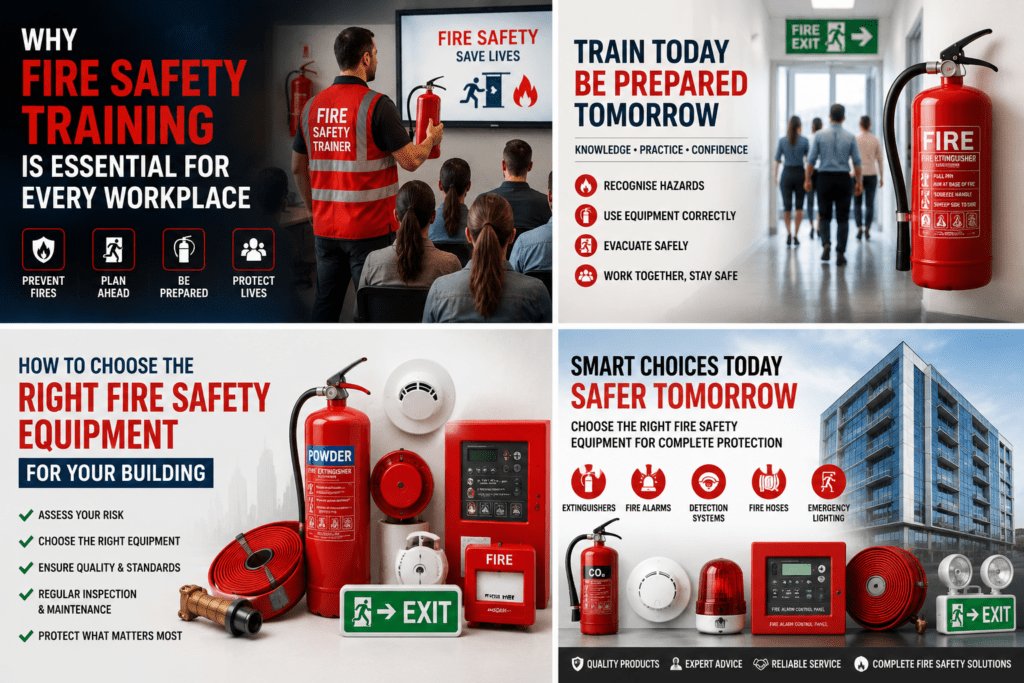
Fire safety equipment is essential, but equipment alone cannot guarantee a safe response. Employees need to know how to recognise hazards, raise an alarm, evacuate, and make sensible decisions under pressure.
This is where professional fire safety training can make a meaningful difference. At Flame Defender, the focus is on helping workplaces develop practical awareness and preparedness rather than treating fire safety as paperwork.
A well-trained workforce is better prepared to respond calmly and responsibly when something goes wrong.
Final Thoughts
Every workplace has its own fire risks, but the need for preparedness is universal. Effective fire safety training gives employees the knowledge to prevent hazards and the confidence to respond appropriately during an emergency.
Regular training, evacuation drills, clear procedures, and properly maintained fire safety equipment should work together as part of a complete workplace safety strategy.
The goal is simple: prevent fires wherever possible and make sure people know what to do if one occurs.