
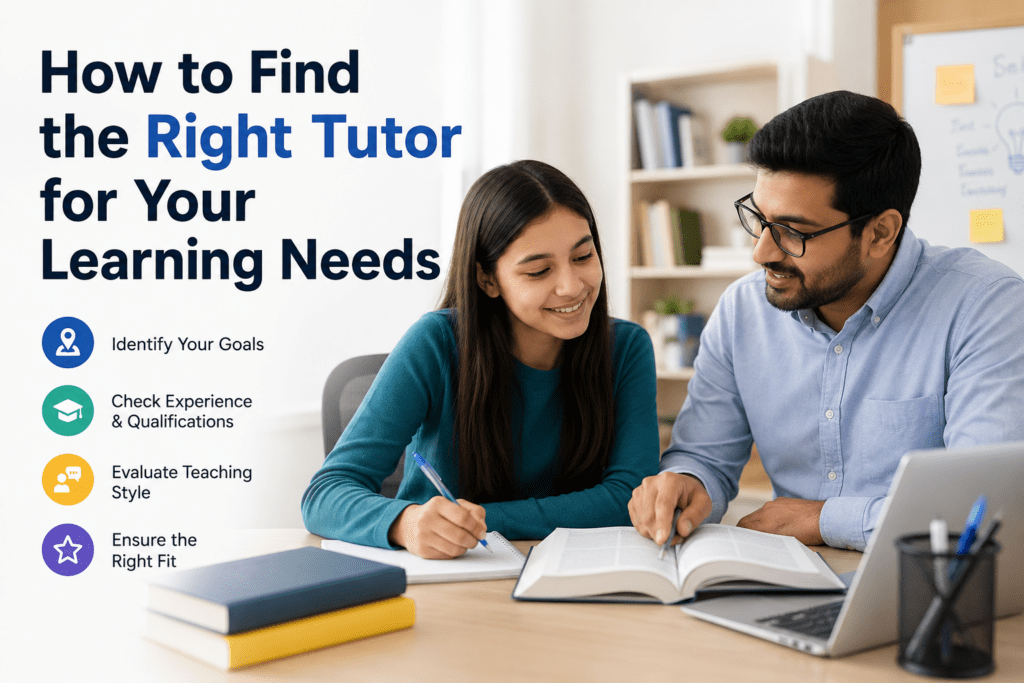

How to Find the Right Tutor for Your Learning Needs
A practical guide to choosing tutoring support that actually works — for students, parents, and lifelong learners alike.
Many students and parents turn to tutors each year, hoping for extra support that can turn confusion into confidence. But with so many options — in-person, online, one-to-one, group sessions, apps, and tutoring platforms — finding the right fit can feel overwhelming.
The good news is that a clear process can make the search easier. Here is a step-by-step guide to what really matters when choosing a tutor.
1. Define the Real Problem First
Before searching for a tutor, get specific about what you need help with. “Struggling with maths” is vague. “Struggling with algebra word problems and test anxiety” is much more specific.
Ask yourself:
– Is this a knowledge gap, a confidence issue, or a study-skills problem?
– Is it one subject, or a broader challenge across several classes?
– Is the goal to catch up, keep pace, or get ahead — such as preparing for exams or university admissions?
A clear understanding of the problem helps you find tutors with relevant experience instead of choosing based only on price or availability.
2. Decide on the Format: In-Person, Online, or Hybrid
Each format has its own advantages and challenges:
In-person tutoring can work well for younger learners, hands-on subjects, and students who focus better away from screens.
- Online tutoring offers access to a wider pool of tutors and greater scheduling flexibility, but it requires self-discipline and reliable technology.
- Hybrid tutoring combines online sessions with occasional in-person support, offering a balance between flexibility and personal interaction.
There is no universally “better” option. The right format depends on the learner’s age, learning style, schedule, and personal preferences.
3. Look Beyond Qualifications to Teaching Style
A strong subject background matters, but it is not the whole picture. The best tutors are skilled at explaining ideas, not just knowing the subject.
When evaluating a tutor, consider:
- Communication style — Can they explain a concept in different ways if the first explanation does not work?
- Patience and adaptability — Do they adjust their pace based on the learner’s needs?
- Problem-solving ability — Do they identify the reason behind a student’s mistake rather than simply correcting the answer?
A trial or introductory session, when available, is a useful way to see a tutor’s teaching style in practice.
4. Check Reviews and Track Record Carefully
Testimonials and ratings can be useful, but they should be considered carefully.
- Look for specific feedback rather than general praise.
- Check whether reviews mention the subject and academic level you need.
- If you use a tutoring platform or agency, check how tutors are selected and verified — through qualifications, experience, or other screening steps.
Reviews can provide useful insight, but they should be weighed alongside the tutor’s experience and teaching approach.
5. Align on Goals and Measure Progress
A good tutor-student relationship starts with a shared understanding of what success looks like.
Before beginning regular sessions, agree on:
- Specific, measurable goals, such as improving test results over a set period.
- How often progress will be reviewed.
- Whether the support is intended to be short-term or ongoing.
Regular check-ins help keep tutoring focused and prevent sessions from becoming unfocused or ineffective.
6. Consider Personality Fit — It Matters
Even a highly qualified tutor may not be the right match if the learner feels uncomfortable or uninterested during lessons. Personality, patience, and communication style all affect whether a student participates actively and retains what they learn.
For younger students, it can help to ask directly: “Did you feel comfortable asking questions?” The answer often reveals more about the learning experience than a tutor’s qualifications alone.
7. Budget Wisely — Value Over Price
Tutoring costs vary depending on the subject, the tutor’s experience, and the format. Instead of automatically choosing the cheapest or most expensive option, consider overall value:
- Compare the cost of sessions against the learning outcomes you expect.
- Ask about session length, cancellation policies, and package discounts.
- Consider consistency — regular sessions over time are often more effective than occasional intensive lessons.
The goal is not simply to find the cheapest tutor. It is to find a tutor who provides meaningful support within your budget.
Finding Tutors Through Modern Platforms
Finding the right tutor does not always have to rely on personal recommendations. A growing number of online platforms, such as GoTutify, let students and parents compare tutors by subject, experience, price, and availability in one place — making it easier to shortlist a few good options before committing to a trial session.
That said, technology is only part of the process. Students should still evaluate a tutor’s experience, teaching style, communication, and ability to meet their individual needs before making a final decision.
The Bottom Line
The “best” tutor is not necessarily the most qualified or the most expensive. It is the one who understands the student’s specific needs, communicates in a way that works for them, and helps them make real progress.
Take time to define your learning goals, compare different options, and monitor progress over time. The right tutor can do more than help a student improve grades — they can build confidence, encourage curiosity, and make learning a more positive experience.
Ultimately, finding the right tutor is about finding the right match between the learner and the person who can help them move forward.