

Introduction
Have you ever tried to fill an irregular gap with cement or plaster? The material falls out, cracks appear, and air continues to leak through. Have you tried to insulate a cavity that is too small for fiberglass batts? The insulation compresses and loses its effectiveness. Have you tried to seal around a pipe penetration where the hole is larger than the pipe? Water and pests find their way through no matter what you use.
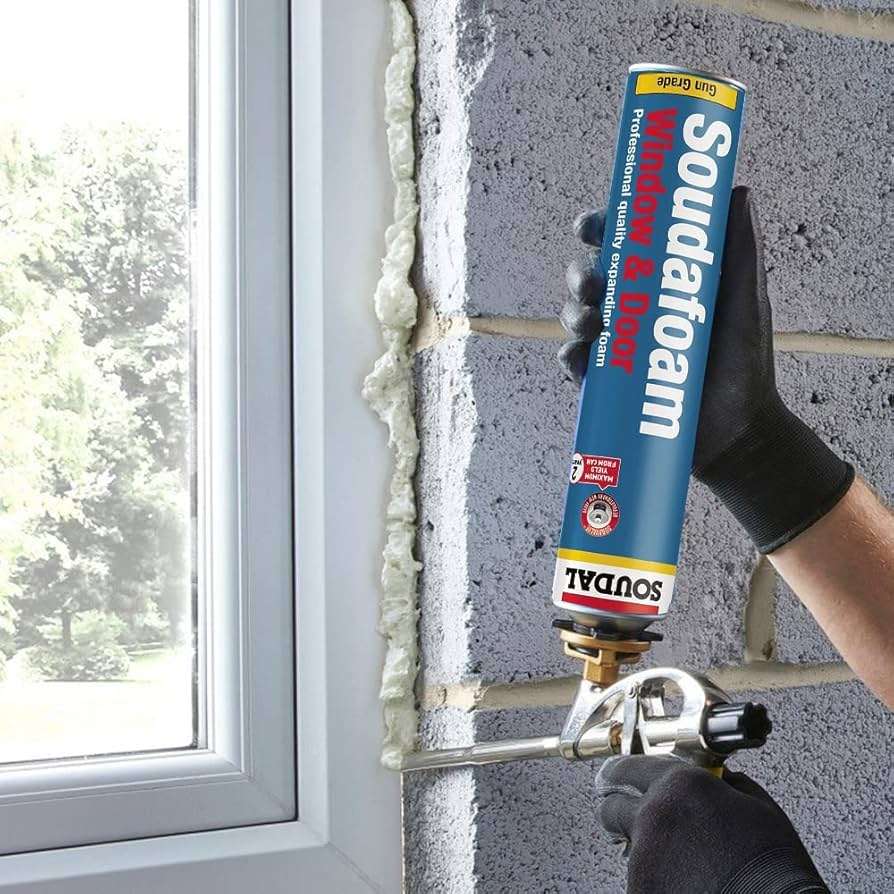
These problems have frustrated builders and homeowners for generations. The solution arrived with modern polyurethane foam technology. Soudafoam represents the culmination of decades of development in this field, offering a product that expands to fill any cavity, adheres to almost any surface, and provides insulation that traditional materials cannot match.
Available across Pakistan through PATSA Pakistan, this one-component, moisture-curing foam has transformed how professionals approach gap filling, insulation, and sealing. This article examines the product based on its official technical data sheet, explaining the science behind its performance and providing practical guidance for successful application.
The Problem with Traditional Gap Fillers
Before understanding why Soudafoam is different, it helps to understand why traditional materials fail in cavity filling applications.
Cement mortar is rigid. When the building moves and all buildings move the mortar cracks. Water enters through the cracks, freezes and expands in winter, widening the cracks further. Within a few years, the mortar falls out completely.
Fiberglass insulation settles over time. What starts as a full cavity becomes empty at the top as gravity pulls the material downward. Air flows freely through the empty space, carrying heat and sound with it.
Caulk and putty only work for small gaps. They cannot fill deep cavities. They shrink as they dry, pulling away from the surfaces they were meant to seal.
Soudafoam overcomes every one of these limitations through its unique combination of expansion, adhesion, and stability.
How Moisture-Curing Polyurethane Foam Works
Soudafoam belongs to a class of materials called moisture-curing polyurethanes. The chemistry is elegant in its simplicity.
The liquid foam inside the can contains reactive polymers that are stable in the absence of water. The can is sealed, so no moisture enters. As long as the can remains sealed, the foam stays liquid.
When the foam is dispensed, it contacts moisture in two places: moisture already present on the surfaces being filled, and moisture in the surrounding air. The water molecules trigger a chemical reaction. The polymers link together, forming long chains called polymers. This process is called polymerization.
As the polymerization proceeds, two things happen simultaneously. First, the material expands to many times its original volume. Second, it transforms from a liquid to a solid foam. The expansion pushes the foam into every corner of the cavity. The solidification locks it in place.
The reaction continues until all the available moisture is consumed or until all the polymer chains are linked. Properly formulated foam leaves no unreacted chemicals behind.
Technical Properties from the TDS
The technical data sheet provides specific numbers that define Soudafoam’s performance envelope.
The density of the cured foam is approximately 27 kilograms per cubic meter. This low density explains why a 750 ml can produces 28 liters of expanded foam a volume expansion of nearly 40 times.
The thermal conductivity is 0.037 W/m·K. This number places Soudafoam among the best insulating materials available. For comparison, still air has a thermal conductivity of approximately 0.026 W/m·K. Fiberglass insulation ranges from 0.035 to 0.045 W/m·K. Concrete is about 1.5 W/m·K 40 times higher.
The sound insulation value is 58 dB. This is measured according to EN ISO 717–1, which tests how well a material blocks airborne sound. A 58 dB reduction means that loud speech on one side of a wall becomes inaudible on the other side.
The foam demonstrates useful mechanical strength. Compression strength is approximately 21 kPa, meaning it can withstand moderate pressure without crushing. Tensile strength is approximately 79 kPa, meaning it resists being pulled apart quite well. Shear strength is approximately 33 kPa.
Dimensional Stability: Why It Matters
Two numbers in the TDS are particularly important for long-term performance: shrinkage after curing is less than 2 percent, and post-expansion is none.
Shrinkage has ruined many sealant and filler applications. A material that shrinks pulls away from the surfaces it was supposed to seal, creating gaps exactly where gaps should not exist. Water finds these gaps. Air finds these gaps. Pests find these gaps.
Soudafoam’s shrinkage of less than 2 percent is excellent. A 100 millimeter thick fill will shrink by less than 2 millimeters. For typical applications of 20 to 50 millimeters, the shrinkage is barely measurable.
Post-expansion is equally important. Some foams continue expanding after they have cured, putting pressure on window frames, door jambs, or surrounding structures. This pressure can distort frames, cause windows to stick, or crack plaster. Soudafoam’s zero post-expansion means installers can fill with confidence.
Yield Calculations for Project Planning
The TDS specifies that one 750 ml can produces approximately 22 linear meters of bead or 28 liters of expanded foam.
These numbers allow accurate material estimation for any project. For standard window and door installations, where gaps typically measure 10 to 20 millimeters wide by 30 to 50 millimeters deep, one can typically fills 8 to 12 windows depending on frame size and gap dimensions.
For pipe penetration sealing, where a 100 millimeter pipe passes through a 150 millimeter hole, the annular volume is approximately 1 liter per 100 millimeters of wall thickness. One can would fill approximately 28 such penetrations assuming standard wall thickness.
For cavity wall insulation, where the cavity might be 50 to 100 millimeters wide, one can fills approximately 0.5 to 1 square meter of wall area depending on cavity dimensions.
The Critical Role of Moisture
The curing reaction requires moisture. Without adequate moisture, the foam will not cure properly. It may remain soft and sticky for days or may never cure at all.
The TDS addresses this directly: “Moisten surfaces with a water sprayer prior to application.” This is not optional. Even in Pakistan’s humid climate, surfaces in air-conditioned buildings can be very dry. A quick spray of water ensures that the reaction starts immediately.
For deep cavities requiring multiple layers, the TDS instructs: “If you have to work in layers repeat moistening after each layer.” Each layer needs its own moisture supply.
The moisture requirement explains why foam applied in very dry conditions sometimes fails to cure. The solution is simple: spray water on the surfaces before applying foam.
Temperature Effects on Performance
The TDS provides three separate temperature ranges for successful application.
The can itself must be between 5°C and 30°C. If the can has been stored in cold conditions, the foam will be too thick to dispense properly. Warm the can to room temperature before use never use an open flame or direct heat.
The ambient temperature the air temperature in the work area must be between 5°C and 35°C. Cold air slows the curing reaction dramatically. Hot air accelerates it, which may reduce working time.
The surface temperature must also be between 5°C and 35°C. Cold surfaces can cause the foam to cure from the outside in, leaving a soft core. Hot surfaces can cause the foam to expand too rapidly.
The cured foam withstands temperatures from -40°C to +90°C, covering every practical condition in Pakistan.
UV Vulnerability and Protection
One limitation in the TDS is critical: Soudafoam is not UV-resistant. Direct sunlight causes the foam to degrade, turning yellow, becoming brittle, and eventually crumbling.
This does not mean the foam cannot be used outdoors. It means that any foam exposed to sunlight must be protected. The TDS lists three acceptable protection methods: overpainting, sealing with a weatherproof sealant, or covering with a physical barrier.
In window and door installations, the foam is typically covered by trim, casing, or plaster, so no additional protection is needed. The foam never sees sunlight.
For exposed applications roof gaps, exterior wall cavities, or anywhere the foam will be visible from outside protection is essential. A coat of exterior-grade paint is usually sufficient.
Common Application Mistakes to Avoid
Through years of field experience, several common mistakes have been identified.
The first mistake is not shaking the can enough. The TDS specifies at least 20 seconds of shaking. The propellant and foam components separate in the can. Inadequate shaking produces foam that is inconsistent, with poor expansion and weak cell structure.
The second mistake is overfilling cavities. The TDS instructs to fill only two-thirds of the cavity. The foam expands to fill the remaining space. Overfilling leads to excessive waste and messy cleanup.
The third mistake is trimming foam too early. Cutting before the specified 25 minutes can disturb the internal structure. The foam may collapse or cure improperly.
The fourth mistake is neglecting UV protection for exposed foam. Foam that looks fine after installation may crumble within months of sun exposure if not protected.
The fifth mistake is using the foam on surfaces it will not stick to. The TDS specifically notes no adhesion on polyethylene, polypropylene, or PTFE. Testing on unknown surfaces is always recommended.
Storage Best Practices
The TDS specifies a shelf life of 24 months for unopened cans stored between 5°C and 25°C in a cool, dry location.
Heat is the enemy. Storage in a hot warehouse, vehicle trunk, or sunny location can reduce shelf life by months or even years. The propellant pressure increases with temperature, stressing the can seal.
Cold is less damaging but still problematic. Cold storage slows chemical aging but the foam becomes too thick to dispense. If cans become cold, warm them to room temperature before use.
The Duravalve system allows cans to be stored in any orientation, but upright storage is still recommended for convenience.
Frequently Asked Questions (FAQs)
Q1: What is the chemical composition of Soudafoam?
A: Soudafoam is a one-component polyurethane foam that cures by reacting with atmospheric moisture.
Q2: How long after application can I trim the foam?
A: The cutting time is 25 minutes according to EN 17333–3 testing. Wait at least this long before trimming.
Q3: What is the thermal conductivity value?
A: The thermal conductivity is 0.037 W/m·K, which is excellent for insulation purposes.
Q4: How much sound does the foam block?
A: The sound insulation rating is 58 dB per EN ISO 717–1 testing.
Q5: What is the density of cured foam?
A: The density is approximately 27 kilograms per cubic meter.
Conclusion
Soudafoam has revolutionized how professionals approach gap filling, cavity sealing, and insulation. Its ability to expand into irregular spaces, adhere to common building materials, and provide both thermal and acoustic insulation makes it invaluable for modern construction.
The technical data sheet confirms that this product delivers consistent, reliable performance when applied correctly. Proper surface moistening, appropriate temperature conditions, and UV protection for exposed foam are the keys to success.
For construction professionals working with PATSA Pakistan, Soudafoam offers quality and dependability that has made it the industry standard.
Call to Action
For more information about Soudafoam or to locate an authorized dealer and professional foam supplier in your area, contact PATSA Pakistan directly.
