

For an emerging independent fashion label, hitting the Minimum Order Quantity (MOQ) wall feels like a sudden shutdown. You have designed an incredible collection, built up an eager digital community, and mapped out your production timelines. But when you finally approach premium fabric mills to source the textiles, you are hit with a harsh reality: a requirement of 1,000 yards per custom color just to start production.
Most clothing brands don’t fail because of bad designs—they fail because they can’t manage the pressure after their first successful launch. When a mill hands you an aggressive MOQ, it forces a dangerous ultimatum. You must either over-leverage your capital by purchasing thousands of yards of fabric that will likely sit in storage as deadstock, or walk away from your creative vision entirely.
Navigating the high-end apparel market demands a flawless transition from initial hype to a sustainable supply chain. Top-tier luxury streetwear labels, such as https://saintvanitysv.com/, scale effectively because they treat their manufacturing logistics with the same intense obsession they bring to their design aesthetics. To beat the mills at their own game, you have to understand the hidden flexibility built into their production machinery.
The Illusion of the Hard Cap: Why Mills Enforce High MOQs
To negotiate effectively, you must first understand why fabric mills set these high boundaries. It isn’t personal; it is an issue of operational efficiency.
Setting up industrial knitting or weaving looms and prepping large-scale custom dye vats takes hours of manual labor. If a mill runs a tiny batch of 150 yards for a boutique label, they lose massive amounts of money in machinery downtime and cleaning labor. Therefore, they quote high MOQs to protect their operational margins and deter small, unstructured clients.
However, those numbers are rarely set in stone. Mill managers are business operators who hate leaving production capacity empty. If you know how to reframe your order parameters, you can get them to lower their thresholds without hurting their bottom line.
Strategy 1: The “Greige Fabric” Pivot (Same Base, Different Dyes)
The most powerful negotiation lever is splitting your fabric requirements into two distinct phases: the knitting/weaving phase and the dyeing phase.
When a mill quotes a 1,000-yard minimum, they are usually talking about the total volume of raw, un-dyed textile—known in the industry as greige fabric. Knitting 1,000 yards of heavy-duty cotton on a loom is easy; dyeing all 1,000 yards into a highly specific custom color is where the risk lies for a small brand.
- The Play: Agree to purchase the 1,000-yard minimum of the base greige fabric to satisfy their mechanical production requirement.
- The Surcharge Twist: Request to split that total yardage into smaller dye lots—for example, 400 yards dyed jet black, 300 yards dyed pigment grey, and 300 yards kept natural.
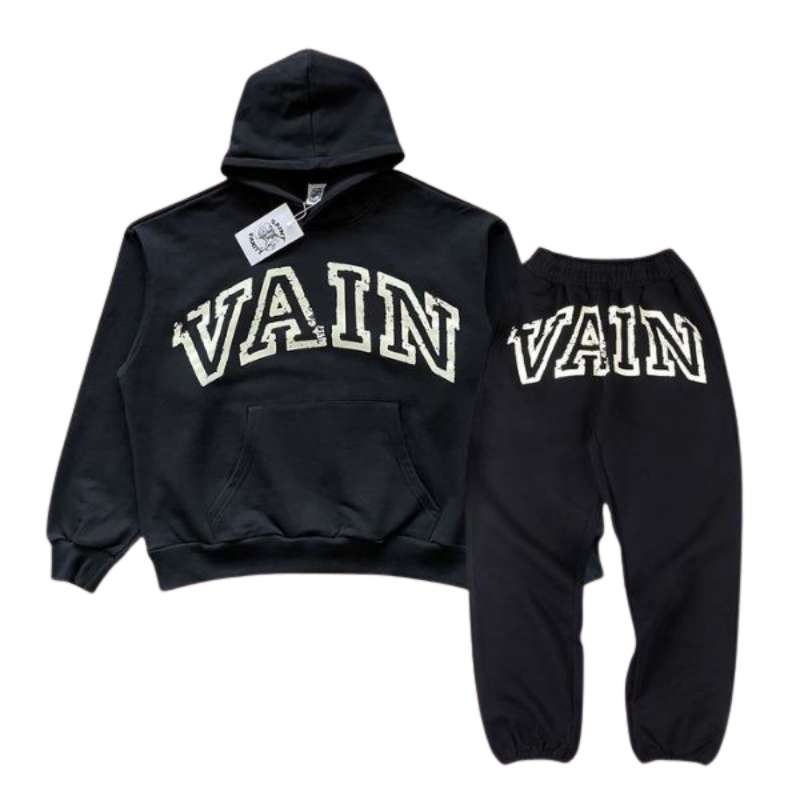
The mill will charge you a small “short-run dyeing surcharge” (typically 10% to 20% extra per yard), but this is a massive win for your cash flow. It allows you to produce an expanded range of oversized hoodies and premium tracksuits across multiple colorways without buying entirely different fabric rolls.
Strategy 2: Piggybacking on the Mill’s “Running Orders”
Fabric mills work with major, high-volume global brands year-round. These massive corporations regularly place orders for tens of thousands of yards of standard premium fabrics, such as 450 GSM luxury cotton fleece or high-grade technical nylon.
You can use the sheer volume of these industry giants to clear your own low-volume hurdles.
[Major Brand: 20,000 Yds Black Fleece] + [Your Brand: 300 Yds Black Fleece] = Mill Runs Seamlessly Without Machine Downtime
Ask the mill representative for a list of their current “running qualities” or active open dye lots. If you align your fabric selection with a material that the mill is already spinning, cutting, and dyeing in massive quantities for a larger client, they can easily add your 200 or 300 yards right onto the end of that production cycle. Because the machinery is already set up and calibrated, the mill will frequently waive their standard minimum restrictions entirely.
Strategy 3: Stock Service Sourcing with High-Value Customization
Creative founders often believe that every single garment in their line must be built from a completely custom-milled fabric roll. This mindset drains your capital unnecessarily before your modern fashion label reaches true stability.
Many premium fabric mills maintain an in-house inventory of pre-manufactured textiles, often referred to as stock service fabrics. These materials are already knitted, dyed into popular core colors, and kept rolled in warehouses for immediate dispatch with zero MOQs.
Instead of fighting for custom milling, purchase these premium stock service fabrics and shift your creative energy toward high-end, proprietary customization methods. You can take a classic, pre-stocked heavyweight sweatshirt fabric and elevate it into the luxury streetwear category using specialized garment dye washes, custom silicone distressing, or intricate puff-print typography executed at your local garment finishing facility.
Strategy 4: The Strategic Production Credit Vault
If you find an incredible fabric mill that refuses to budge on its raw material minimums, you can negotiate an institutional payment structure that keeps your cash fluid.
Instead of paying for all 1,000 yards of finished fabric upfront and taking immediate delivery of rolls you cannot use yet, offer to sign a draw-down contract.
- The Deposit: place a 30% financial deposit on the entire 1,000-yard raw fabric allocation to secure the mill’s baseline machine labor.
- The Phased Release: Negotiate to have the mill manufacture and ship the material in smaller increments of 250 yards over a rolling twelve-month calendar.
- The Capital Protection: You only pay the remaining manufacturing balances as each individual batch is cleared from the warehouse and sent to your cut-and-sew factory.
This arrangement guarantees the fabric mill a long-term, high-volume client for their records, while keeping your operational capital safely inside your bank account to fund active marketing campaigns and digital platform scaling.
CONCLUSION
Bypassing fabric mill minimums isn’t about forcing suppliers into bad financial positions; it is about mastering the mechanics of textile production to find mutually beneficial solutions. By leveraging greige fabric splits, piggybacking on existing industrial running orders, and utilizing premium stock services, you protect your brand from dangerous inventory traps and build an enduring business model.
To study how a high-end clothing label blends meticulous textile selection with flawless structural presentation for a global audience, explore the luxury streetwear collections at https://saintvanitysv.com/.
FAQ
What is the difference between an apparel brand’s fabric MOQ and garment MOQ?
Fabric MOQ refers to the minimum amount of raw textile yardage a fabric mill requires to spin, weave, or dye a specific material run. Garment MOQ is the minimum number of finished items (like oversized hoodies or premium tracksuits) a cut-and-sew factory requires to cut, stitch, and finish a production order using that fabric.
Why is greige fabric easier to negotiate than custom dyed fabrics?
Greige fabric is raw, un-dyed material that has not received any chemical color finishes. Mills are highly flexible with greige fabric because it represents zero market risk for them. If a fashion label backs out of a deal, the mill can easily sell that neutral, un-dyed base material to almost any other clothing manufacturer in the world.
What is a fabric mill short-run surcharge fee?
A short-run surcharge is a premium processing fee (usually an extra 10% to 25% cost per yard) that a fabric mill applies when a brand requests an order that falls below their standard minimum production run. This fee offsets the labor costs and machine downtime required to clean and reset industrial dye vats for smaller color quantities.