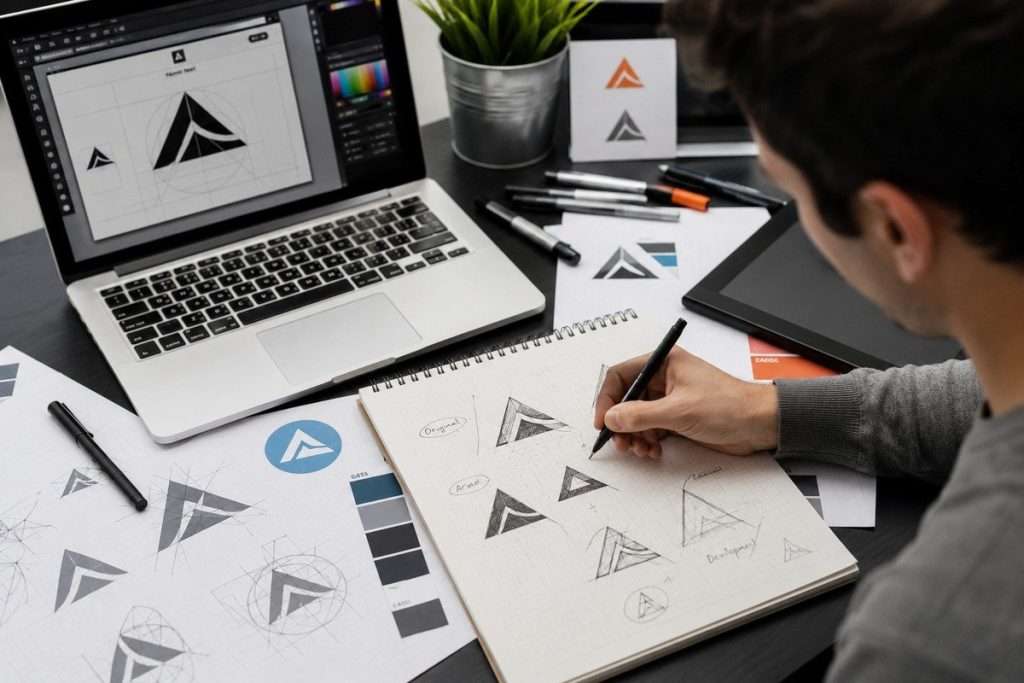

A professional logo rarely appears from a single idea or a quick sketch. Behind an effective visual identity is a structured process that combines research, creativity, strategy, typography, color, and refinement. Understanding the logo design process can help business owners know what to expect when creating a new identity and make better decisions throughout the project.
Whether a company is launching for the first time, updating an existing identity, or expanding into a new market, a well-planned design process can produce a logo that is recognizable, versatile, and relevant to its audience. Each stage has a specific purpose, from understanding the business to preparing the final files for real-world use.
1. Understanding the Business
The first stage of the logo design process is learning about the business behind the logo. A designer needs to understand what the company does, who it serves, and what makes it different from competitors.
Important questions may include:
- What products or services does the company provide?
- Who is the target audience?
- What personality should the brand communicate?
- What values are important to the business?
- Where will the logo be used?
- Who are the company’s main competitors?
This information provides the foundation for later creative decisions. Without understanding the business, a designer may create something attractive but unrelated to the company’s actual identity.
2. Researching the Target Audience
A logo should not be designed only according to the owner’s personal preferences. It also needs to communicate effectively with the people the business wants to reach.
Audience research can reveal expectations regarding colors, typography, imagery, and overall visual style. A design intended for a professional corporate audience may need a different personality from one created for a children’s brand or creative startup.
Understanding the audience helps designers create an identity that feels appropriate and meaningful rather than generic.
3. Analyzing Competitors
Competitive research is another important stage. Designers examine how businesses in the same industry present themselves visually.
This can reveal common colors, symbols, typography styles, and design patterns. The goal is not to copy competitors but to understand the visual environment in which the new logo will compete.
If most businesses in a particular market use similar symbols, the designer may look for an alternative concept that still feels relevant while providing greater differentiation.
A strong identity should help customers distinguish one company from another.
4. Developing the Creative Direction
After research, the designer can establish a creative direction. This stage connects the business strategy with potential visual ideas.
The creative direction may determine whether the logo should feel modern, elegant, professional, playful, bold, minimal, traditional, or innovative.
Mood boards, sketches, references, and visual exploration can help establish this direction before detailed logo concepts are created.
This step reduces random experimentation and gives the design work a clear purpose.
5. Creating Initial Concepts
Once the direction has been established, designers begin developing logo concepts.
This is where research and strategy are transformed into visual ideas. Designers may experiment with symbols, wordmarks, letterforms, shapes, layouts, and compositions.
Not every idea will become the final logo. Exploring several possibilities allows the designer to compare different approaches and identify the concept with the strongest potential.
The best concept is not necessarily the most complicated or visually impressive. It should communicate the right message while remaining recognizable and practical.
6. Selecting Typography
Typography can significantly influence the personality of a logo. A typeface can make a business appear sophisticated, modern, friendly, traditional, or energetic.
During the logo design process, designers evaluate fonts according to readability, personality, proportions, spacing, and compatibility with the other visual elements.
Some logos may use standard typefaces with careful adjustments, while others may benefit from custom lettering. Small changes to letter spacing or individual characters can make a wordmark more distinctive.
Typography should also remain readable when the logo is displayed at smaller sizes.
7. Choosing the Color Palette
Color is another major design decision. Different colors can create different visual impressions and can contribute to brand recognition when used consistently.
The color palette should reflect the company’s personality while considering the target audience and competitive environment.
Designers also need to consider practical usage. A logo should remain effective on light and dark backgrounds and should have a version that works without color when necessary.
Limiting the palette can also make the identity easier to reproduce consistently across websites, printed materials, packaging, and social media.
8. Refining the Strongest Concept
After selecting a promising direction, the designer begins refining the details.
This may include adjusting proportions, spacing, alignment, typography, colors, shapes, and other visual elements. Even small changes can significantly improve the balance and readability of a logo.
The goal is to remove unnecessary details while strengthening the elements that make the identity distinctive.
At this stage, designers may also test different arrangements to determine whether a horizontal, vertical, stacked, or icon-based version is most appropriate.
9. Gathering Client Feedback
Client feedback is an important part of the process. The business owner understands the company from an internal perspective, while the designer contributes professional visual and branding expertise.
Clear feedback can help identify areas that need adjustment. Businesses should focus on whether the design communicates the intended personality and serves the brand’s goals rather than making changes based only on personal taste.
A structured revision process keeps the project moving efficiently while providing opportunities to improve the selected concept.
10. Testing the Logo in Different Applications
A logo should be tested outside the design workspace before it is finalized.
Designers may place the logo on:
- Websites
- Social media profiles
- Business cards
- Packaging
- Advertisements
- Signage
- Merchandise
- Documents
- Mobile screens
Testing reveals whether the design remains recognizable and balanced in different environments.
A logo that looks excellent on a large screen may lose clarity when reduced to a small icon. Testing allows these issues to be identified before final delivery.
11. Creating Logo Variations
Businesses often need more than one version of their logo. A complete identity may include a primary logo, secondary arrangement, icon, monochrome version, and variations for different backgrounds.
These versions should not look like unrelated designs. They should share the same core visual characteristics so customers can recognize them as part of the same brand.
Creating flexible variations also makes it easier to use the identity across different marketing channels.
12. Preparing Final Files
The final stage of the logo design process involves preparing the approved design for practical use.
Businesses may require different file formats for digital and print applications. Vector files are especially valuable because they can be scaled without losing quality. High-resolution raster files can also be useful for specific applications.
A professional delivery package may include different color versions, transparent-background files, and variations suitable for different sizes and backgrounds.
Providing properly organized files makes it easier for businesses to use their new identity consistently.
Why Professional Design Can Be Valuable
Creating a logo involves much more than choosing a symbol and font. Research, strategy, concept development, typography, color selection, refinement, testing, and technical preparation all contribute to the final result.
For businesses that want expert guidance, custom logo design services can provide a structured approach to developing a unique identity. Professional designers can help transform a business’s ideas into a visual system that works across multiple applications.
Logo Outlets can help businesses develop professional logo concepts by considering both creative requirements and practical branding needs.
A structured design process can also reduce common problems such as poor scalability, weak typography, inconsistent colors, or overly complicated concepts.
How Long Does Logo Design Take?
The time required depends on the project’s complexity, number of concepts, revisions, research requirements, and final deliverables.
A simple project may move relatively quickly, while a comprehensive identity project may require more research and refinement.
Businesses should avoid rushing the process simply to receive a finished file. Taking enough time to evaluate concepts and test the identity can help produce a stronger result.
The goal should be quality and suitability rather than completing the project as quickly as possible.
When Should a Business Consider Professional Help?
Businesses may benefit from custom logo design services when they need a completely original identity, are entering a competitive market, are launching a new company, or are updating an outdated visual identity.
Professional support can be particularly useful when the logo needs to work across numerous platforms and marketing materials.
Logo Outlets approaches logo creation as more than a simple graphic exercise. Considering the business, audience, visual direction, and practical applications can help create a more useful and consistent identity.
Final Thoughts
The logo design process involves several connected stages, including business research, audience analysis, competitor research, creative development, typography, color selection, refinement, feedback, testing, and final file preparation.
Each stage contributes to the effectiveness of the finished identity. Skipping important steps can result in a logo that looks attractive but does not communicate the right message or function properly across different applications.
For businesses that want professional guidance, custom logo design services can provide the expertise needed to develop and refine a complete visual identity.
Logo Outlets can help businesses turn ideas into professional logo concepts designed for practical use across digital and print platforms.
Ultimately, understanding the logo design process makes it easier to appreciate the work behind an effective logo. A successful identity is not simply drawn; it is researched, developed, tested, refined, and prepared to represent a business consistently as it grows.