
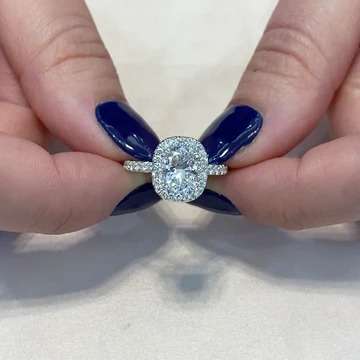

How to Find the Right Cushion Cut Diamond for an Engagement Ring
Choosing a diamond for an engagement ring involves more than selecting a shape that catches your eye. The stone needs to suit your personal style, work well with the setting, and offer the right balance of size, proportions, and visual appeal. Cushion cut diamonds are a popular choice because they combine a soft outline with a distinctive faceting pattern, giving them a look that can work across different jewelry styles.
However, not every cushion cut diamond looks the same. Two stones with identical carat weights can appear noticeably different because of their length-to-width ratio, depth, faceting style, and overall cut quality. Understanding these details before buying can make the selection process much easier and help you choose a stone that feels right for the person wearing it.
Start With the Shape and Proportions
The first step is deciding what type of cushion shape you prefer. Cushion cut diamonds generally have four rounded corners and a broad outline, but their proportions can vary considerably. Some appear nearly square, while others have a noticeably longer shape.
A square cushion has a balanced outline that works well for people who prefer a compact and symmetrical appearance. An elongated version stretches the shape vertically, creating a more lengthened look on the finger. Neither option is automatically better. The choice depends largely on personal taste and the style of the engagement ring.
The length-to-width ratio is particularly useful when comparing different stones. A ratio close to 1.00 usually produces a more square appearance. As the ratio increases, the diamond becomes longer. Looking at the actual measurements rather than relying only on the carat weight can help you understand how large the stone will appear from the top.
This matters because carat weight describes how much a diamond weighs, not exactly how much surface area it shows when viewed from above. A well-proportioned stone may look larger or more visually balanced than another diamond with the same weight.
Pay Attention to Cut Quality
Once you have decided on the general shape, examine the diamond’s cut. Cut quality affects how the stone handles light and can have a significant impact on its appearance.
Cushion cut diamonds can display different faceting patterns. Some have larger, more defined facets, while others feature a finer pattern. The appearance may also vary between stones with different pavilion and crown proportions.
When comparing diamonds, look for a stone that has good light performance without distracting areas that appear noticeably dark or dull. Photographs and videos can be helpful, but they should not be the only basis for your decision. Viewing the stone from several angles gives you a better idea of how it behaves in different lighting conditions.
The outline should also be considered. The corners should look smooth and intentional rather than uneven. A cushion cut is defined partly by its softened corners, so the overall outline should appear balanced when viewed from above.
If you are shopping online, compare multiple images of the same stone whenever possible. A straight-on image can help you evaluate the shape, while angled photographs and videos may reveal how the facets interact with light.
Choose a Carat Weight That Fits the Design
Carat weight is another important consideration, but it should not be the only factor determining your choice. A larger diamond may attract attention, but size needs to work with the proportions of the setting and the wearer’s preferences.
Instead of choosing a carat weight first and trying to fit everything else around it, consider the complete design. Think about how much finger coverage you want, whether the center stone will be surrounded by smaller diamonds, and how substantial the band should be.
For someone who prefers a longer visual appearance, an elongated cushion can provide noticeable finger coverage without requiring an extremely high carat weight. The shape can create a sense of length while maintaining the rounded corners associated with a cushion cut.
It is also useful to compare measurements between stones of similar carat weights. One diamond may have a larger face-up area than another because of differences in its proportions. Looking at length and width together with carat weight gives you a more complete picture.
Budget should also be considered at this stage. Rather than spending most of the budget on carat weight alone, it can be worthwhile to balance size with cut quality, color, clarity, and the overall design of the engagement ring.
Consider Color, Clarity, and Setting
After narrowing down the shape and size, look at the diamond’s color and clarity. These characteristics can affect both appearance and price, but the ideal grade depends on the individual stone and the setting.
Color refers to how much body color is visible in a diamond. Cushion cuts can sometimes show color differently depending on their faceting pattern and proportions. If you are selecting a stone for a white-metal setting, you may want to compare diamonds carefully to see whether any noticeable warmth is visible.
Clarity concerns the presence of internal or external characteristics. A higher clarity grade does not always mean that a diamond will look visibly better to the naked eye. Some inclusions may be difficult to see without magnification, while others can be more noticeable depending on their location and appearance.
This is why reviewing the actual stone is important rather than choosing a clarity grade based solely on its label.
The setting also influences the final appearance. A simple solitaire setting places most of the attention on the center stone. A halo design can increase the visual presence around the center, while a pavé band can add additional detail along the sides.
Metal color can change the overall impression as well. White metals can create a bright, neutral frame, while yellow or rose-toned metals introduce more contrast around the center diamond.
When all of these elements work together, the finished engagement ring can feel more intentional and personal.
Compare Diamonds Before Making a Decision
One of the most useful habits when shopping for a cushion cut diamond is to compare several options side by side. Looking at a single stone can make it difficult to judge whether its proportions and appearance are genuinely suitable.
Create a short list based on your preferred shape, approximate carat weight, budget, and desired color and clarity range. Then compare the actual measurements, proportions, images, videos, and certification details.
Pay attention to the following points:
-
Length and width measurements
-
Length-to-width ratio
-
Face-up appearance
-
Faceting pattern
-
Light performance
-
Visible inclusions
-
Body color
-
Setting compatibility
-
Certification
-
Overall price
A diamond certificate can provide important information about the stone’s graded characteristics, but it does not replace your visual assessment. Two diamonds with similar grades can still look different because of their individual cutting and proportions.
It is also worth considering how the diamond will look once placed in the finished setting. A center stone that looks attractive on its own should still complement the band, prongs, and overall proportions of the design.
For shoppers who prefer a longer cushion shape, you can browse elongated cushion engagment ring designs to see how this proportion works as part of a complete engagement ring rather than evaluating the diamond by itself.
Think About Everyday Wear
An engagement ring is generally worn frequently, so practical considerations should be part of the buying process. Cushion cut diamonds have rounded corners, which can make their outline feel softer than shapes with sharper points.
Still, the setting needs to provide appropriate protection and support for the center stone. Prongs should hold the diamond securely while allowing enough of the stone to remain visible.
Consider your daily routine as well. Someone who works frequently with their hands may prefer a setting with a lower profile, while someone looking for a statement design may be comfortable with a more prominent center stone.
Maintenance should also be considered. Any engagement ring can collect dirt around the setting, particularly in areas beneath the center diamond and between smaller stones. Regular cleaning and periodic professional inspections can help maintain the condition of the jewelry.
Make the Final Choice Based on the Whole Ring
The best cushion cut diamond is not necessarily the largest, highest-graded, or most expensive option. It is the stone whose shape, proportions, appearance, and specifications fit the complete design and the preferences of the person who will wear it.
Start by deciding whether you prefer a square or elongated outline. Then compare proportions, cut quality, carat weight, color, clarity, and certification. Once you have narrowed down the center stone, consider the setting and metal that will complete the design.
It can also help to step away from specifications for a moment and look at the diamond as a piece of jewelry. Ask whether the shape feels balanced, whether the size suits the hand, and whether the setting complements the center stone.
For an engagement ring, personal preference should remain at the center of the decision. Trends can provide inspiration, but they should not determine the final choice. A well-selected cushion cut diamond can offer a distinctive combination of rounded contours, appealing proportions, and varied faceting, making it suitable for many different engagement ring styles.
Final Thoughts
Finding the right cushion cut diamond requires looking beyond carat weight and focusing on how several characteristics work together. Shape, proportions, cut quality, color, clarity, measurements, and setting all contribute to the final appearance.
Take time to compare different stones and consider how each one fits the intended design. Pay particular attention to the length-to-width ratio if you prefer a longer silhouette, and always evaluate the diamond’s actual appearance rather than relying only on its grading information.
With careful comparison and a clear idea of your priorities, choosing a cushion cut diamond becomes a more straightforward process. The goal is not simply to find a diamond with impressive specifications, but to select one that looks right, fits the design, and feels meaningful for the person who will wear it.
Antiquecut offers designs that can help shoppers explore different proportions and styles when considering a cushion-shaped engagement piece. Ultimately, the right choice is the one that brings together the desired look, practical needs, and available budget without compromising the personal significance of the engagement ring.