
Bladder control problems can affect people of different ages and lifestyles, often interfering with daily comfort and confidence. Many individuals experience symptoms such as leaking urine when coughing or sneezing, frequent urges to use the bathroom, or difficulty fully controlling bladder function. While these concerns can feel frustrating, support is available through Pelvic Floor Therapy and targeted rehabilitation techniques.
Understanding how the pelvic floor works can help explain why bladder issues happen and how physiotherapy may help improve control and comfort.
Understanding the Connection Between Pelvic Floor Muscles and Bladder Control
The pelvic floor consists of muscles and connective tissues that support the bladder, bowel, and reproductive organs. These muscles also help control urination by providing proper support and coordination.
When pelvic floor muscles become weak, tight, or unbalanced, bladder function may be affected. Some people may experience leakage during movement or exercise, while others may notice sudden urges to urinate or difficulty reaching the bathroom in time.
Common factors linked to bladder control concerns include:
- Pregnancy and postpartum recovery
- Aging-related muscle changes
- Pelvic surgery
- Chronic coughing or heavy lifting
- High-impact exercise or physical strain
- Muscle tension or pelvic floor dysfunction
In many cases, Pelvic Floor Physiotherapy in Edmonton can help address these concerns through personalized treatment.
Common Types of Bladder Control Problems
Stress Incontinence
This occurs when urine leaks during activities that place pressure on the bladder, such as laughing, sneezing, running, or lifting heavy objects. Weak pelvic muscles are often a contributing factor.
Urge Incontinence
Some individuals experience a sudden, strong urge to urinate that may be difficult to control. This may be linked to bladder sensitivity or poor muscle coordination.
Mixed Incontinence
A combination of stress and urge incontinence can happen, where people experience both leakage and sudden urgency.
How Pelvic Floor Physiotherapy Can Help
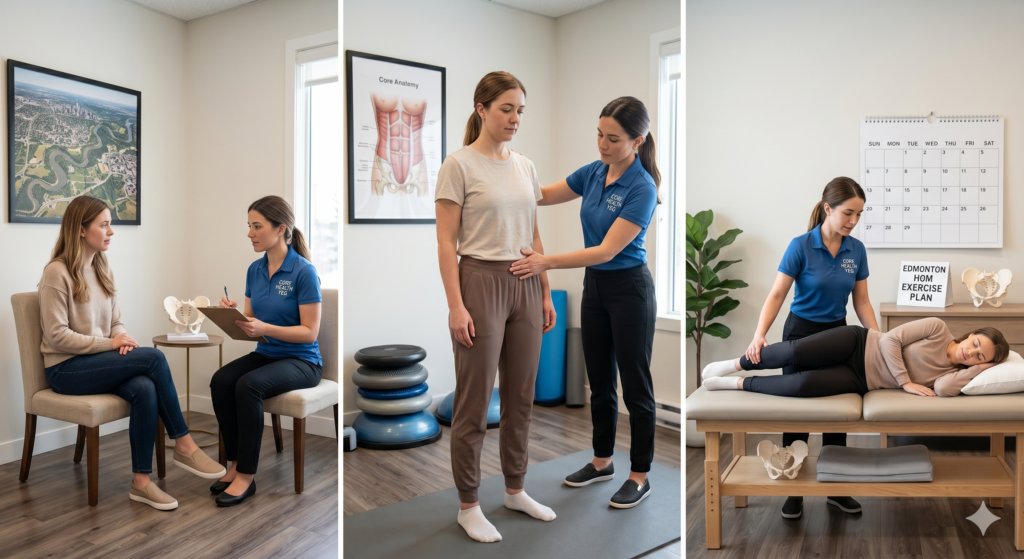
Pelvic Floor Therapy focuses on improving muscle function, coordination, and support to help manage bladder symptoms. During treatment, a physiotherapist may assess muscle strength, movement patterns, posture, and breathing techniques to understand contributing factors.
A personalized pelvic floor treatment plan may include:
Pelvic Floor Exercises
Targeted exercises may help strengthen or relax pelvic muscles depending on individual needs.
Bladder Retraining Strategies
Therapists may guide patients through techniques that help improve bladder habits and reduce urgency.
Breathing and Core Coordination
The pelvic floor works closely with core muscles and breathing patterns. Improving coordination can support bladder control and reduce pressure on the pelvic region.
Education and Lifestyle Guidance
Simple adjustments in posture, movement, hydration habits, and physical activity can sometimes improve symptoms over time.
When to Consider Physiotherapy for Bladder Control
If bladder leakage, urgency, or discomfort begins affecting daily life, it may be time to explore Pelvic Floor Physiotherapy in Edmonton. Many people delay treatment because they feel embarrassed or assume symptoms are normal after childbirth or aging. However, bladder control concerns are common and often manageable with the right support.
Seeking help early can make it easier to address symptoms and improve confidence in everyday activities.
Improving Comfort and Confidence
Bladder control problems can feel isolating, but they are more common than many people realize. Through personalized pelvic floor treatment, individuals may improve muscle support, bladder function, and overall daily comfort. Understanding the cause of symptoms is often the first step toward better control and long-term pelvic health.