
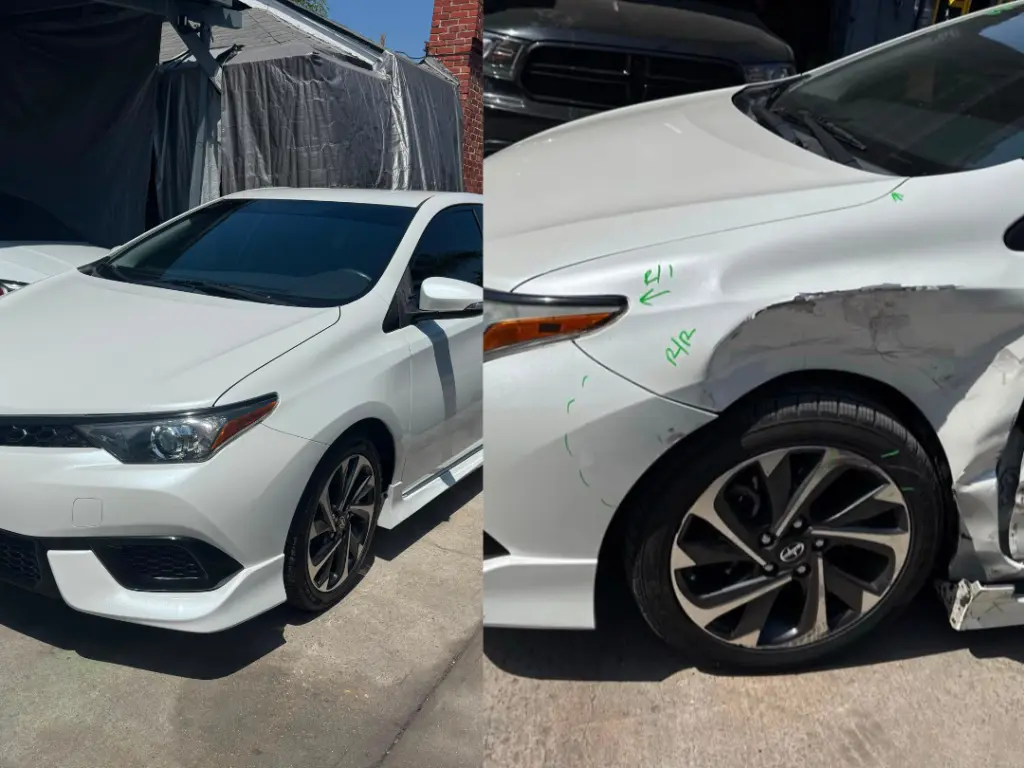

The Modern Bumper Is More Than a Plastic Cover
Many drivers are surprised to learn that the painted bumper cover is only one part of the complete bumper assembly.
A modern bumper system typically includes:
- Plastic bumper cover
- Reinforcement bar
- Energy absorber
- Mounting brackets
- Parking sensors
- Radar modules
- Camera systems
- Wiring connections
Each component has a specific purpose. While the outer cover contributes to the vehicle’s appearance, the internal structure helps manage impact forces and supports various safety systems.
This is why professional bumper repair begins with much more than a visual inspection.
Step One: Performing a Complete Damage Assessment
The repair process starts with carefully evaluating the entire bumper assembly.
Collision specialists inspect:
- Visible cracks
- Scratches
- Dents
- Broken mounting tabs
- Internal reinforcement
- Energy absorbers
- Sensor locations
- Adjacent body panels
A bumper that appears only lightly scratched may still have hidden damage beneath the surface.
I’ve often seen drivers assume the damage is limited because the bumper “popped back into place.” In reality, the internal supports may have absorbed the impact even though the exterior looks relatively normal.
A detailed inspection helps identify issues before repairs begin.
Determining Whether Repair or Replacement Is Best
Not every damaged bumper requires replacement.
Technicians evaluate several factors before deciding on the repair method.
These include:
- Size of the crack
- Depth of scratches
- Plastic flexibility
- Mounting point condition
- Structural integrity
- Manufacturer recommendations
Minor cosmetic damage can often be repaired successfully, while severe cracks or damaged mounting structures may require replacement.
The objective is always to restore both function and appearance rather than choosing the quickest option.
Removing the Bumper for a Better Inspection
Many quality repairs involve removing the bumper from the vehicle.
This provides access to hidden areas behind the bumper cover.
During removal, technicians inspect:
- Reinforcement bars
- Crash absorbers
- Mounting brackets
- Wiring harnesses
- Sensor attachments
- Adjacent structural components
Working with the bumper removed allows repairs to be performed more accurately and helps identify damage that would otherwise remain hidden.
Repairing Plastic Bumper Damage
Modern bumper covers are commonly made from flexible plastic materials designed to absorb minor impacts.
Repair techniques may include:
- Plastic welding
- Specialized repair compounds
- Reinforcement methods
- Precision sanding
- Surface reshaping
Unlike temporary cosmetic fixes, professional repairs focus on restoring the bumper’s original strength and contour.
The repair area is carefully shaped so it blends naturally with the surrounding surface.
Restoring Factory Body Lines
One of the most challenging aspects of bumper repair is recreating the factory body lines.
Today’s vehicles feature complex curves, sharp edges, and carefully designed contours.
Collision specialists use specialized tools to restore:
- Curved surfaces
- Character lines
- Mounting locations
- Panel transitions
Even slight imperfections become noticeable when sunlight reflects across the repaired surface.
Attention to these details helps the finished repair look original rather than repaired.
Preparing the Surface for Refinishing
Once repairs are complete, technicians begin preparing the bumper for paint.
Preparation typically involves:
- Cleaning the surface
- Sanding repaired areas
- Applying primer
- Smoothing imperfections
- Final surface inspection
Proper preparation creates a stable foundation for the paint system.
Skipping this stage can lead to poor adhesion or visible imperfections after refinishing.
Precision Paint Matching
Modern paint matching involves much more than selecting the correct paint code.
Technicians also consider:
- Paint age
- Sun fading
- Metallic content
- Pearl finishes
- Spray techniques
- Blending methods
The goal is to ensure the repaired bumper matches the surrounding panels under different lighting conditions.
A quality paint match helps the repair become virtually unnoticeable.
Reinstalling and Calibrating Components
After refinishing, the bumper is carefully reinstalled.
Technicians verify:
- Panel alignment
- Mounting security
- Fastener placement
- Sensor positioning
- Camera alignment
- Electrical connections
Vehicles equipped with advanced driver-assistance systems may also require electronic calibration following repairs.
This ensures systems such as parking sensors and collision warning features continue operating correctly.
An Insider Tip: Look Beyond the Paint
Many vehicle owners evaluate bumper repairs by examining the paint finish first.
Experienced collision professionals often look elsewhere.
Check for:
- Even panel gaps
- Secure bumper fit
- Flush alignment with adjacent panels
- Consistent spacing around headlights and fenders
A bumper can have excellent paint while still being improperly installed.
Proper fit is one of the clearest signs of quality workmanship.
Another Insider Tip: Listen During Your First Drive
After bumper repairs, take a short drive and pay attention to unusual sounds.
Listen for:
- Rattles
- Vibrations
- Loose trim noises
- Wind sounds
These may indicate a fastener or mounting clip that needs adjustment.
Addressing these small issues early helps ensure the repair remains secure over time.
Why Professional Repair Protects Vehicle Value
Proper bumper repairs contribute to more than appearance.
They also help maintain:
- Vehicle safety
- Panel alignment
- Sensor performance
- Exterior condition
- Buyer confidence
- Long-term durability
A professionally repaired bumper demonstrates that damage was addressed thoroughly rather than temporarily concealed.
As explained by professionals specializing in bumper repair pasadena, following manufacturer-approved repair procedures and using modern repair techniques allows damaged bumpers to be restored while maintaining proper fit, finish, and functionality.
Modern Technology Has Changed Collision Repair
Collision repair continues to evolve with advances in vehicle design.
Today’s repair facilities use:
- Digital measuring systems
- Plastic repair technologies
- Advanced refinishing equipment
- Manufacturer repair information
- Electronic diagnostic tools
These technologies improve repair accuracy while supporting the performance of increasingly sophisticated vehicles.
Final Thoughts
Restoring a damaged bumper involves much more than fixing visible scratches or dents. From the initial inspection to the final alignment and refinishing, every stage of the process contributes to preserving the vehicle’s appearance, safety, and overall functionality.
Professional collision specialists carefully evaluate hidden damage, repair or replace components when necessary, restore factory body lines, and ensure modern safety features continue to operate correctly. The result is a repair that not only improves how the vehicle looks but also helps maintain its structural integrity and long-term reliability.