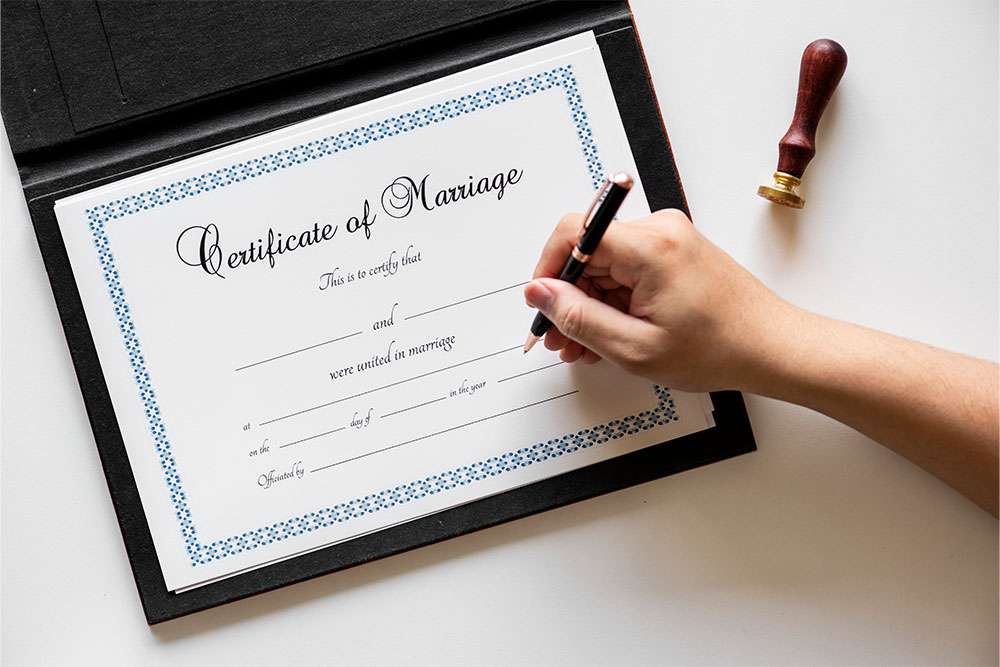

Understanding Marriage Certificate Apostilles
A marriage certificate is an important legal record that confirms a marriage has been officially registered. Couples may need this document for international immigration applications, foreign residency, citizenship matters, overseas employment, family sponsorship, or legal procedures in another country. However, a marriage certificate issued in one country may need additional authentication before a foreign government or institution accepts it. An apostille is an official certificate that verifies the authenticity of the signature, seal, or official capacity associated with a public document. It helps receiving authorities recognize the document without requiring the same traditional chain of diplomatic legalization used in many international transactions.
Why Are Apostille Services For Marriage Certificate Important?
Apostille Services For Marriage Certificate are important when couples need to present an officially issued marriage record in another country. A foreign immigration office, government agency, court, embassy, or civil registry may request an apostille to confirm that the marriage certificate comes from a legitimate public authority. This requirement can arise when applying for a spouse visa, registering a marriage abroad, changing marital status in another country’s records, or completing family-related legal procedures. The apostille authenticates the relevant official signature or seal, helping the receiving authority verify the document’s origin. However, the exact requirements depend on the destination country, the issuing jurisdiction, and the organization requesting the certificate.
What Is the Purpose of an Apostille on a Marriage Certificate?
An apostille serves as an internationally recognized form of document authentication for countries that participate in the 1961 Hague Apostille Convention. It confirms the authenticity of the signature on a public document, the capacity in which the official signing it acted, and, where applicable, the identity of the seal or stamp. For a marriage certificate, this helps foreign authorities establish that the record was issued or certified by the appropriate government official. It is important to understand that an apostille does not verify the accuracy of every detail in the marriage record or independently establish the legal validity of every aspect of a marriage. It authenticates the official origin of the document for international use.
When Do Couples Need a Marriage Certificate Apostille?
Couples may need a marriage certificate apostille when they plan to use their marriage record outside the country where it was issued. One common situation is an immigration application in which a spouse must provide proof of marriage to a foreign government. Other situations include applying for family residency, registering a marriage with an overseas civil authority, completing inheritance procedures, updating official marital records, or supporting a legal application involving a spouse. Some foreign institutions may also request an authenticated marriage certificate for employment benefits, insurance, or financial matters. Since requirements differ between countries and organizations, couples should confirm whether an apostille, another authentication certificate, or additional documentation is necessary before submitting their records.
Difference Between a Certified Marriage Certificate and a Regular Copy
A certified marriage certificate and an ordinary photocopy are not necessarily accepted in the same way for international authentication. A certified copy is issued or authenticated by the appropriate government records office and normally includes an official certification, signature, seal, or other identifying information. A regular photocopy may not contain the official features required by the apostille authority. This distinction is especially important because an apostille verifies the signature or seal of an authorized official rather than simply confirming that a document looks genuine. Couples should obtain the correct certified marriage record from the issuing vital records office or other authorized authority before beginning the authentication process.
How to Prepare a Marriage Certificate for Apostille
Preparing a marriage certificate properly can help reduce delays during the authentication process. Couples should first identify the country where the document will be used and confirm the specific requirements of the receiving institution. They should then obtain an acceptable certified marriage certificate from the appropriate issuing authority and review it for visible seals, official signatures, and accurate information. Some jurisdictions may require an additional certification from a county clerk or another government office before the document can be submitted for an apostille. The document should not be altered, laminated, or unnecessarily notarized. Following the issuing state’s instructions is important because each jurisdiction may have its own document preparation procedures.
Apostille Requirements for International Immigration Applications
Immigration applications frequently require official documents that establish family relationships and marital status. A marriage certificate may be requested when applying for a spouse visa, family reunification, permanent residency, or another immigration benefit. When the immigration authority is located in a country that accepts apostilles under the Hague Convention, an apostille may be required to authenticate the marriage record. Some authorities may also request a certified translation, additional identity documents, or supporting evidence. Couples should carefully review the immigration checklist and confirm whether the original certified marriage certificate, an apostille, and a translated version are all necessary. Proper preparation can help prevent avoidable document rejections and requests for additional information.
Using an Apostilled Marriage Certificate for Overseas Residency
People moving to another country may need to prove their marital status when applying for residency or completing local registration procedures. An authenticated marriage certificate can help establish the legal relationship between spouses when applying for dependent residency, family permits, or other immigration-related services. The foreign authority may require the certificate to be issued by the relevant government office and authenticated through the correct apostille or legalization procedure. In some cases, the document may also need to be translated into the official language of the destination country. Couples should confirm whether translations must be completed before or after authentication because the order can depend on local rules and the instructions of the receiving authority.
Understanding the Apostille Application Process
The apostille application process generally begins with identifying the correct authority responsible for authenticating the marriage certificate. For a state-issued marriage record in the United States, the relevant state’s designated competent authority usually handles the apostille. Customers may need to submit the certified certificate, a request form, the destination country, applicable payment, and return delivery information. Certain states require additional county-level certification before accepting a marriage certificate for authentication. Once the document is received, the competent authority verifies the relevant official signature or seal and attaches the apostille if the requirements are satisfied. Couples should follow the current instructions of the issuing jurisdiction rather than assume that every state uses the same application process.
Why the Destination Country Matters
The country where a marriage certificate will be used determines which authentication procedure is appropriate. Countries participating in the Hague Apostille Convention generally accept an apostille for qualifying public documents. If the destination country is not covered by the Convention, a different authentication process may be necessary, often involving a state or federal authentication certificate followed by additional consular or embassy legalization. The requirements may also depend on whether the document is being submitted to an immigration department, court, civil registry, or another government agency. Before requesting authentication, couples should verify the destination country’s current rules and make sure they are applying for the correct type of certificate.
Marriage Certificate Apostille for Spouse Visa Applications
A spouse visa application often requires official evidence that two individuals are legally married. A marriage certificate provides this evidence, while an apostille may be needed to authenticate the document for use in another country. Immigration authorities may have strict requirements concerning the issuing office, certified copy, document date, translation, and authentication. An incorrect or incomplete submission can lead to additional requests and processing delays. Couples should therefore review the visa instructions carefully and confirm whether the apostille must be attached to the original certified record or whether another approved format is accepted. Preparing the document before the application deadline can make the process more organized and reduce unnecessary complications.
The Importance of Accurate Marriage Certificate Information
Accuracy is essential when preparing a marriage certificate for international authentication. Names, dates, locations, and other personal details should be reviewed before the document is submitted. If the certificate contains a spelling mistake, incorrect date, or missing information, couples may need to request a corrected certified record from the issuing government office. An apostille generally authenticates the official signature or seal on the document; it does not correct errors in the marriage record. Submitting inaccurate information may create difficulties when a foreign agency compares the certificate with passports, immigration forms, or other identity documents. Reviewing every detail in advance can help avoid problems later in the application process.
Can a Photocopy of a Marriage Certificate Receive an Apostille?
Whether a photocopy can be authenticated depends on the rules of the issuing jurisdiction and the type of document accepted by the competent authority. Many apostille authorities require an original certified vital record rather than an ordinary photocopy. Some jurisdictions may have specific procedures for certified copies, while others do not permit a notary to certify a photocopy of an official vital record. Customers should never assume that making a photocopy and having it notarized will satisfy international requirements. The safest approach is to contact the government office responsible for issuing the marriage certificate and the apostille authority to confirm which version of the record is acceptable.
Translation Requirements for International Marriage Records
A marriage certificate issued in one language may need to be translated before it can be accepted by a foreign government or institution. Translation requirements vary depending on the destination country and the organization receiving the document. Some authorities require a certified translation, while others may specify an approved translator, particular wording, or a separate authentication procedure for the translated document. It is important to confirm whether the original certificate must receive its apostille before translation or whether the translation should be prepared as part of a different document package. Couples should not assume that an apostille automatically authenticates the accuracy of a translation. The receiving authority’s instructions should determine the correct process.
Common Mistakes During Marriage Certificate Apostille Applications
Applicants sometimes experience delays because they submit ordinary photocopies instead of certified records, choose the wrong authentication authority, overlook additional certification requirements, or fail to identify the destination country. Other common problems include incomplete request forms, incorrect payment, missing return envelopes, and translations that do not meet the receiving institution’s standards. A document may also be rejected when it does not contain the official signature or seal required by the apostille authority. Reviewing the instructions before submission can help prevent these problems. Couples should also avoid making changes to an official certificate or attaching additional pages without checking whether the issuing authority permits them.
Apostille Services for Marriage Certificates and Legal Procedures Abroad
Marriage certificates may be required in several international legal situations beyond immigration. Couples may need to present authenticated records when registering a marriage in another jurisdiction, handling family court matters, supporting inheritance applications, changing official civil status, or completing certain property-related procedures. The receiving authority may require proof that the certificate was officially issued and authenticated by the appropriate competent authority. Some legal procedures may also require additional records, such as birth certificates, divorce decrees, or other family documents. Couples should identify every required document before starting the process so they can arrange authentication and translation in the correct order.
How Long Does Marriage Certificate Apostille Processing Take?
Processing time depends on the government authority responsible for issuing the apostille, the method of submission, document requirements, and current application volume. Some offices provide in-person appointments or expedited options, while others primarily accept requests by mail or through online systems. Additional certification requirements can also increase the total time needed to prepare a marriage certificate for international use. Shipping time must be considered separately from government processing time, especially when documents are being sent between states or countries. Customers should avoid relying on general processing estimates when working with immigration or legal deadlines. Checking the latest information directly with the competent authority can help establish a more realistic timeline.
Why Professional Document Assistance Can Be Helpful
The authentication process can feel confusing when customers are unfamiliar with government procedures, certified vital records, and international document requirements. Professional document assistance can help applicants understand the general process, organize paperwork, review submission instructions, and identify the appropriate authority for their document. This support can be particularly valuable when couples are handling several records or working against an important deadline. However, customers should understand the limits of any service provider. Only the designated government authority can issue the official apostille, and no private service can guarantee that a foreign institution will accept a document. The receiving country’s requirements should always guide the final submission.
Apostille Services for Couples Living Outside the United States
Couples who live outside the United States may still need an apostille for a marriage certificate originally issued by a U.S. state. This situation can arise when spouses relocate, apply for residency, or complete legal procedures in another country. The first step is usually to obtain an acceptable certified marriage record from the state or local authority that maintains the original record. The document must then be submitted through the correct authentication procedure for that issuing jurisdiction. Depending on the state, applications may be accepted by mail, in person, or through an authorized submission process. Couples living overseas should also plan for international shipping and confirm how the authenticated document will be returned securely.
The Difference Between an Apostille and Embassy Legalization
An apostille and embassy legalization both relate to authenticating documents for international use, but they are not interchangeable in every situation. An apostille is generally used when the destination country is a member of the Hague Apostille Convention and the document qualifies under the Convention’s requirements. For a country outside the Convention, the document may need an authentication certificate followed by additional legalization through the relevant embassy or consulate. The required steps depend on the country of destination, document type, and issuing authority. Choosing the wrong process can lead to delays or rejection. Couples should verify the correct procedure before submitting their marriage certificate.
Keeping Your Apostilled Marriage Certificate Safe
Once a marriage certificate has received its apostille, it should be handled carefully because the authentication certificate is attached to or associated with the official record. Removing, separating, or altering the apostille may affect the document’s acceptability. Couples should follow the instructions of the receiving institution and avoid making unauthorized changes to the certificate. It is also sensible to keep secure digital copies of the completed document for personal records, while remembering that a digital copy may not replace the original certified and authenticated document when one is specifically required. If multiple organizations need the marriage record, customers should ask whether each requires a separate certified and apostilled copy.
How to Avoid Delays When Requesting an Apostille
Good preparation can make the authentication process more manageable. Couples should first confirm the destination country’s requirements, obtain the correct certified marriage certificate, and identify the competent authority responsible for issuing the apostille. They should carefully complete the application form, include the required payment, and provide accurate return delivery information. If a translation or additional certification is needed, these steps should be planned before the document is submitted. Applicants should also allow enough time for government processing and shipping. Checking official instructions before sending paperwork can help reduce errors, unnecessary expenses, and repeated submissions.
Choosing Reliable Apostille Document Assistance
Choosing a dependable document assistance provider can make the preparation process easier, especially when applicants are unfamiliar with international authentication requirements. Customers should look for clear communication, transparent service charges, careful document handling, and an understanding of the relevant government procedures. A reliable provider should explain which steps are handled by the service and which steps must be completed by the official apostille authority. Customers should be cautious of anyone promising guaranteed approval by a foreign government or claiming that a private company can independently issue an official apostille. The role of professional assistance is to help organize the process while ensuring that applicants understand the limits and requirements of document authentication.
Why Proper Marriage Certificate Authentication Matters
An authenticated marriage certificate can play an important role in international family, immigration, residency, and legal procedures. When a foreign authority requests an apostille, the document must be prepared according to the requirements of the issuing jurisdiction and the destination country. Obtaining the correct certified record, confirming the authentication procedure, checking translation requirements, and submitting complete paperwork can help prevent unnecessary complications. Couples should always rely on official government instructions for current requirements and processing details. With organized preparation and appropriate document support, the process can become easier to understand and manage. First Choice Notary helps customers explore document authentication assistance and prepare for apostille-related requirements when their marriage certificates are needed for international use.