
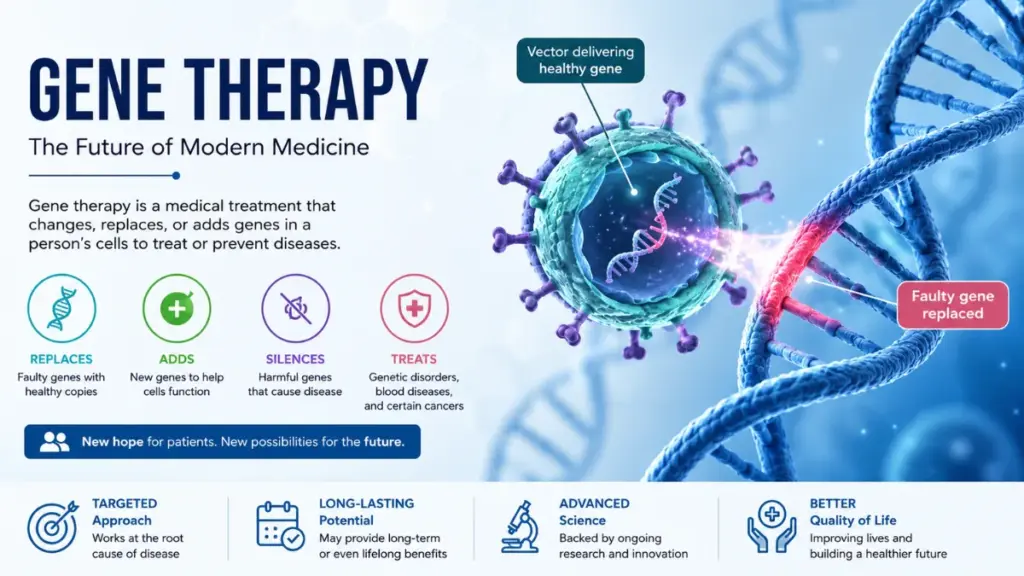

Gene therapy is one of the biggest breakthroughs in modern medicine. Instead of only treating symptoms, this advanced treatment works on the root cause of a disease by repairing or replacing faulty genes. It offers new hope for people living with rare genetic disorders, inherited diseases, and some types of cancer that previously had very limited treatment options.
Countries including India, the United States, the United Kingdom, Germany, Japan, China, Australia, South Korea, France, Canada, and Switzerland are investing heavily in gene therapy research. Bumppy Analysis finds that India is steadily expanding its capabilities through biotechnology companies, research institutions, and leading hospitals, making gene therapy an important part of the country’s future healthcare system.
What Is Gene Therapy and Why Is It Transforming Modern Healthcare?
Gene therapy is a medical treatment that changes defective genes inside the body to treat or prevent disease. Instead of managing symptoms throughout life, it focuses on correcting the genetic problem responsible for the illness.
Healthy genes are delivered into the body’s cells using specially designed carriers called vectors. Scientists also use advanced technologies like CRISPR gene editing to repair damaged DNA with remarkable precision, opening new possibilities for treating complex diseases.
Benefits, Risks, and Medical Applications of Gene Therapy
Benefits
-
Treats diseases at the genetic level.
-
May provide long-term or lifelong results.
-
Reduces dependence on repeated medications.
-
Offers hope for patients with rare inherited diseases.
-
Supports personalized treatment based on genetics.
-
Improves quality of life for eligible patients.
Risks
-
Treatment is currently expensive.
-
Immune reactions may occur in some patients.
-
Long-term effects are still under study.
-
Not suitable for every genetic disease.
-
Limited availability in many countries.
-
Requires specialized hospitals and trained experts.
Gene Therapy in India: Current Status, Treatment Cost, and Future Scope
India has made important progress in gene therapy research over the last few years. Several hospitals and biotechnology companies are working on treatments for thalassemia, sickle cell disease, spinal muscular atrophy (SMA), hemophilia, inherited blindness, and certain rare genetic disorders. Clinical trials and government-supported research are helping expand treatment options.
The biggest challenge remains affordability. Depending on the disease and therapy, treatment costs can range from ₹20 lakh to more than ₹15 crore, especially for imported therapies. However, experts believe that Indian research, local manufacturing, and improved regulations will gradually reduce costs and make gene therapy more accessible in the future.
Important Terms You Should Know About Gene Therapy
Gene Therapy
Gene therapy is an advanced medical technique that repairs, replaces, or modifies faulty genes to treat diseases at their genetic source rather than only managing symptoms.
CRISPR Gene Editing
CRISPR is a revolutionary gene-editing technology that allows scientists to precisely modify DNA. It is being used to develop treatments for inherited diseases, blood disorders, and certain cancers.
Genetic Disorders
Genetic disorders are illnesses caused by changes in DNA. Common examples include thalassemia, sickle cell disease, Duchenne muscular dystrophy, hemophilia, and spinal muscular atrophy.
Viral Vector
A viral vector is a modified virus used to safely carry healthy genes into the patient’s cells. The harmful parts of the virus are removed before medical use.
Precision Medicine
Precision medicine uses a person’s genetic information, medical history, and lifestyle to create personalized treatment plans. Gene therapy is one of the most important tools supporting this approach.
Frequently Asked Questions
1. Which diseases can gene therapy treat?
Gene therapy is approved or being studied for thalassemia, sickle cell disease, spinal muscular atrophy, inherited blindness, hemophilia, certain cancers, and several rare genetic disorders.
2. Is gene therapy available in India?
Yes. Limited gene therapy treatments and clinical trials are available through selected hospitals and research centres. Availability is expected to increase in the coming years.
3. How much does gene therapy cost in India?
Depending on the disease and treatment, costs generally range from ₹20 lakh to over ₹15 crore. Prices may reduce as more therapies become available in India.
4. Is gene therapy safe?
Approved gene therapies undergo strict testing, but every treatment has risks. Doctors carefully evaluate patients before recommending this treatment.
5. Can gene therapy permanently cure diseases?
Some gene therapies have shown long-lasting or potentially curative results for certain diseases. However, outcomes depend on the condition and the type of therapy used.
Conclusion
Gene therapy is changing healthcare by treating diseases at their genetic source rather than simply controlling symptoms. Although treatment remains expensive and limited, rapid scientific progress is making it safer and more accessible worldwide. Bumppy Wrap Up believes gene therapy will become one of the most important medical innovations of the future, offering hope to millions of people living with rare genetic and inherited diseases.