

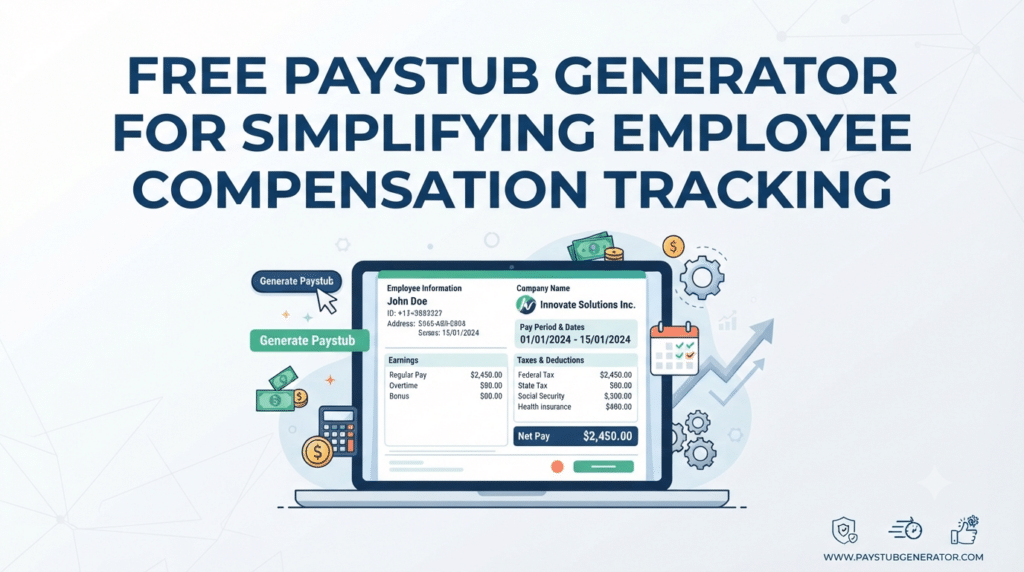

Managing employee compensation requires accurate records of salaries, working hours, bonuses, overtime, taxes, and deductions. When businesses handle multiple employees, tracking these details manually can become time-consuming. Even small payroll mistakes may create confusion for employees and employers.
A free pay stub generator helps organise compensation information in one structured document. It allows users to enter employee details, earnings, deductions, and payment dates to prepare clear pay stubs. A free pay stub template also provides a consistent format for reviewing payroll information and maintaining organized income records.
Understanding how these tools support compensation tracking can help businesses improve their payroll documentation and make employee earnings easier to review.
What Is Employee Compensation Tracking?
Employee compensation tracking involves recording the payments and benefits an employee receives during a specific pay period. It includes regular wages, overtime, bonuses, commissions, and other forms of compensation.
Employers need accurate records to understand payroll expenses and confirm that employees receive the correct payments. Employees also benefit because they can review their earnings and understand how their final paycheck is calculated.
A free pay stub generator helps present these details in an organized format. Instead of reviewing separate records, users can view important payroll information in one document.
Why Is Accurate Compensation Tracking Important?
Accurate compensation records support better payroll management. They help employers monitor employee payments, identify differences between pay periods, and maintain consistent documentation.
Here are some important benefits:
Better Payroll Organization: Employers can maintain clear records of employee earnings and payment dates.
Improved Transparency: Employees can review their gross pay, deductions, taxes, and net pay.
Easier Financial Planning: Accurate income information helps employees manage household expenses and savings.
Fewer Recording Mistakes: Regularly reviewing compensation details can help identify missing hours, incorrect rates, or unexpected deductions.
Reliable Documentation: Organized pay records can support legitimate employment and income verification needs.
A free pay stub template makes these details easier to read and compare across different payment periods.
How Does a Free Pay Stub Generator Simplify Compensation Tracking?
A free pay stub generator simplifies the process by arranging employee and payroll information into separate sections. Users enter the required details, and the tool organizes the information into a pay stub.
Most pay stubs include the following sections:
Employee name and contact information
Employer name and business details
Pay period start and end dates.
Payment date
Regular wages and overtime earnings
Bonuses and additional compensation
Taxes and other deductions
Gross pay and net pay
Year-to-date earnings
This structure helps employers and employees review compensation without searching through multiple documents.
However, users must provide accurate information and verify the calculations before using the generated document.
Tracking Different Types of Employee Earnings
Employee compensation may include several payment categories. Recording each amount separately helps explain how total earnings change from one pay period to another.
1. Regular Salary and Hourly Wages
Regular earnings represent the standard payment employees receive for their work. Salaried employees generally earn an agreed amount, while hourly employees receive wages based on their working hours and pay rate.
A free pay stub generator helps display these earnings separately so users can review the basic compensation amount.
2. Overtime Payments
Employees may receive additional compensation when they work beyond their regular scheduled hours, depending on applicable employment laws and agreements.
Employers should record overtime hours and corresponding pay rates accurately. Showing overtime separately helps employees understand how additional work affects their total earnings.
3. Bonuses and Commissions
Some businesses reward employees through performance bonuses, sales commissions, incentives, or special payments.
A free pay stub template provides space to list these additional amounts. Separate entries make it easier to identify regular income and extra compensation.
4. Benefits and Other Compensation
Employee compensation may also include employer-provided benefits, retirement contributions, insurance arrangements, or other eligible payments.
Employers should record these items according to their payroll and reporting requirements. Not every benefit appears as take-home income, so users should distinguish between taxable wages, deductions, and employer-paid benefits.
How Do Taxes and Deductions Affect Compensation?
Gross pay represents an employee’s total earnings before applicable deductions. Net pay represents the amount remaining after taxes and other deductions.
Common payroll deductions include:
Federal income tax
State and local income taxes, where applicable
Social Security and Medicare taxes
Health insurance contributions
Retirement plan contributions
Other authorized deductions
A free pay stub generator can organize these entries into separate sections, helping employees understand why their take-home pay differs from gross earnings.
Employers must apply the correct withholding rules and review current payroll requirements. The tool can display entered figures, but users should verify tax calculations rather than assume every amount is automatically correct.
How to Use a Free Pay Stub Template for Payroll Records
Using a consistent format helps businesses maintain readable compensation records. Follow these steps when preparing a pay stub:
Enter the employee’s name and employer information.
Add the correct pay period and payment date.
Record regular salary or hourly earnings.
Include overtime, bonuses, and commissions when applicable.
Enter relevant taxes and authorized deductions.
Review gross pay and calculate net pay.
Check year-to-date earnings and deduction totals.
Generate the document and verify every detail.
A free pay stub template helps users follow the same structure for each payment period. This consistency makes payroll records easier to review and maintain.
Best Practices for Managing Employee Compensation
Businesses can improve payroll documentation by following a few practical habits.
Update employee information whenever necessary.
Maintain accurate working-hour and overtime records.
Use consistent payment schedules.
Review deductions and tax entries before finalizing payroll.
Keep copies of completed pay stubs securely.
Compare current earnings with year-to-date totals.
Follow applicable payroll and recordkeeping regulations.
A free pay stub generator can support these practices by organizing entered information, but employers remain responsible for maintaining accurate payroll records.
Conclusion
Employee compensation tracking plays an important role in effective payroll management. Recording salaries, overtime, bonuses, taxes, and deductions helps businesses maintain clear financial documentation and gives employees a better understanding of their earnings.
A free pay stub generator makes it easier to organize these details in one document, while a free pay stub template provides a consistent layout for reviewing compensation. By entering accurate information and checking every section, businesses can simplify payroll documentation and maintain more reliable employee payment records.