
A fire safety system is only effective when the right equipment is available, properly maintained, and ready for use. Whether you operate an office, warehouse, factory, retail store, hotel, school, or commercial building, fire protection should be an important part of your daily operations.
A well-planned fire safety setup can help detect emergencies early, support safe evacuation, and control a small fire before it becomes more dangerous.
Fire Extinguishers
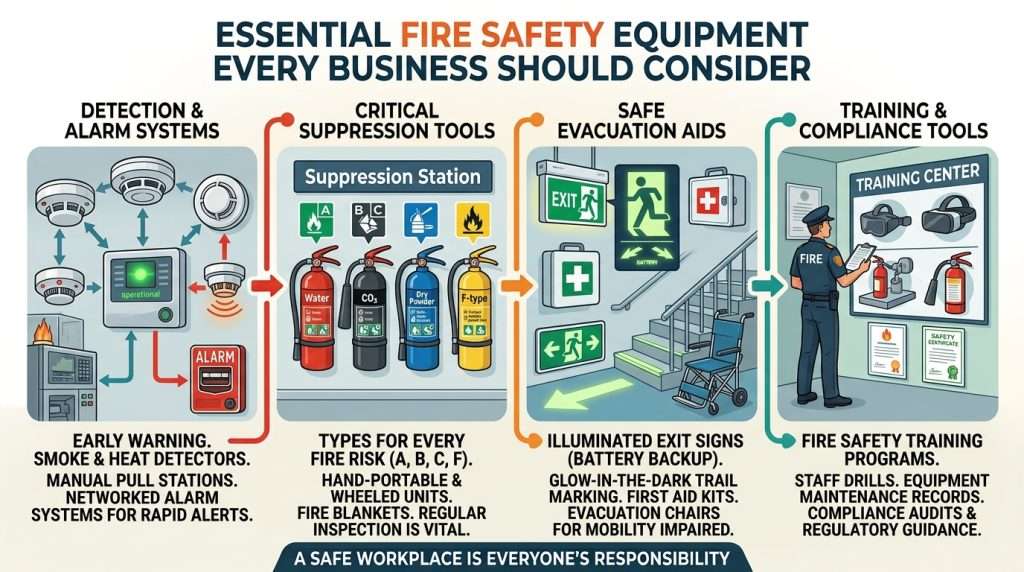
Fire extinguishers are among the most recognizable pieces of fire safety equipment. They are designed for specific types of fire, which means businesses should select them according to the hazards present on their premises.
For example, an environment with electrical equipment may have different requirements from a commercial kitchen or industrial facility.
Extinguishers should be positioned where they can be reached quickly. They should also be inspected and maintained regularly to ensure they remain in suitable working condition.
Fire Alarm Systems
A fire alarm system provides an early warning when smoke, heat, or another indication of fire is detected.
Early notification gives occupants more time to leave the building and allows emergency procedures to begin quickly.
Depending on the premises, a fire alarm setup may include detectors, manual call points, alarm sounders, control panels, and other components.
Regular testing and maintenance are important because an alarm system cannot provide reliable protection if faults go unnoticed.
Emergency Lighting
A fire may cause power failure or create conditions where normal lighting cannot be relied upon. Emergency lighting can help occupants navigate escape routes during an emergency.
Emergency lights should be installed and maintained according to the requirements applicable to the building. Regular checks can help identify failed batteries, damaged fittings, or other problems.
Fire Blankets
Fire blankets can be useful for certain small fires, particularly in environments where cooking equipment is used.
They can also provide an additional safety measure when dealing with situations involving clothing or other suitable applications.
As with all fire safety equipment, employees should understand when and how a fire blanket should be used. People should never take unnecessary risks when attempting to deal with a fire.
Fire Hose Reels and Other Equipment
Some commercial and industrial environments require additional fire protection equipment based on their risks, building layout, and applicable safety requirements.
Fire hose reels, fire doors, signage, fire-resistant equipment, and other systems may form part of a broader fire protection strategy.
The exact equipment needed should be determined by a proper assessment of the premises rather than simply installing every available product.
Why Maintenance Is Just as Important as Installation
Buying fire safety equipment is only the beginning.
Equipment can become damaged, obstructed, expired, or faulty over time. Fire alarms may develop technical problems, extinguishers may require servicing, and emergency lighting batteries can deteriorate.
Regular inspection and maintenance help identify these problems before an emergency occurs.
Businesses should keep appropriate records of inspections, servicing, testing, and repairs. This creates a clearer picture of the condition of their fire protection systems.
Employee Awareness Is Essential
Fire safety equipment cannot replace trained and informed employees.
Workers should know the location of emergency exits, alarm points, extinguishers, assembly areas, and other important safety equipment. They should also understand what to do when an alarm is activated.
Regular fire drills can help employees become familiar with evacuation procedures and highlight potential problems.
Most importantly, employees should understand that personal safety comes first. If a fire is too large or dangerous to control, people should evacuate and contact the appropriate emergency services rather than attempting to fight it.
Choose Fire Protection With Safety in Mind
Every business has different fire risks. A small office, manufacturing facility, warehouse, restaurant, and commercial building will not necessarily require the same fire protection equipment.
That is why choosing equipment based on the actual risks of a property is so important.
Businesses can improve their fire protection arrangements with suitable fire safety products and solutions. With the right equipment, regular maintenance, and proper staff awareness, businesses can create a stronger approach to fire prevention and emergency preparedness.
Fire safety should never be left until an emergency happens. Assess your risks, check your equipment, train your staff, and keep your protection systems ready before they are needed.