
Dental inlays are an effective restorative treatment used to repair teeth that have been damaged by decay or minor fractures without requiring a full dental crown. When a cavity is too large for a traditional filling but the tooth is still strong enough to avoid a crown, a dental inlay provides a durable and conservative solution. These custom-made restorations fit precisely within the damaged portion of the tooth, restoring both strength and function while preserving as much natural tooth structure as possible. Modern dental inlays are designed to blend naturally with your teeth, creating a long-lasting and aesthetically pleasing restoration.
Choosing the right restorative treatment is important for maintaining healthy teeth and preventing future dental problems. Dental inlays offer a balance between strength, durability, and conservative treatment, making them an excellent option for many patients. Whether you have a damaged molar or a large cavity that cannot be treated with a standard filling, your dentist may recommend an inlay as an effective alternative to a full crown. Understanding how dental inlays work can help you make informed decisions about your dental care.
What Are Inlays
A dental inlay is a custom-made restoration that fits inside the grooves of a damaged tooth without covering the outer cusps. It is carefully crafted to replace decayed or weakened tooth structure while preserving as much healthy enamel as possible. Unlike traditional fillings, which are shaped directly inside the tooth, inlays are fabricated outside the mouth before being permanently bonded into place. This precise manufacturing process creates an accurate fit and exceptional durability.
Dental inlays are commonly made from porcelain, composite resin, or other high-quality materials that provide both strength and a natural appearance. Because they are custom designed for each patient, they blend seamlessly with the surrounding teeth while restoring normal chewing function. Modern materials also resist staining and everyday wear, making dental inlays a dependable long-term restorative option. Properly placed inlays can protect the tooth for many years with good oral hygiene.
How They Work
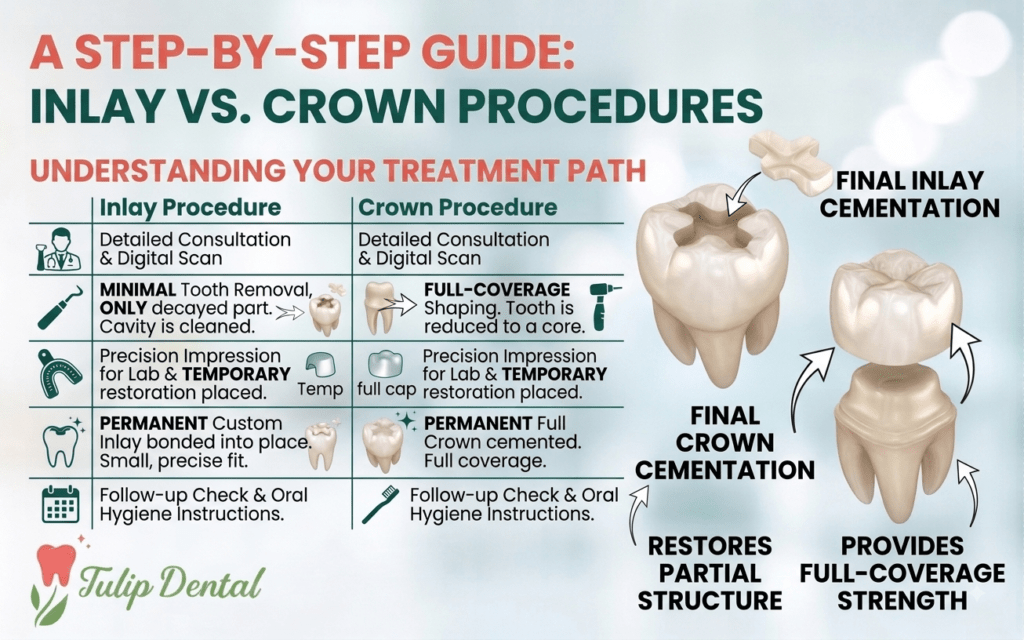
The dental inlay procedure usually requires two appointments to complete. During the first visit, the dentist removes the damaged or decayed portion of the tooth while preserving as much healthy structure as possible. An impression or digital scan is then taken to create a custom inlay that fits the prepared tooth with exceptional accuracy. A temporary restoration may be placed to protect the tooth until the permanent inlay is ready.
At the second appointment, the dentist carefully checks the fit, color, and bite before permanently bonding the inlay into position. The restoration is polished to match the surrounding teeth, creating a smooth and comfortable finish. Once bonded, the inlay strengthens the remaining tooth structure and restores normal function during chewing. Patients can usually return to their normal daily activities shortly after treatment.
Benefits of Inlays
One of the greatest advantages of dental inlays is their ability to preserve more natural tooth structure than a traditional dental crown. Since only the damaged area is restored, more healthy enamel remains intact, helping maintain the overall strength of the tooth. This conservative approach supports long-term oral health while reducing the need for more extensive treatment. Preserving natural teeth is always a primary goal in modern restorative dentistry.
Dental inlays are also highly durable and can withstand normal chewing forces for many years when properly maintained. Their custom fit provides excellent stability while reducing the risk of leakage or recurrent decay around the restoration. Porcelain inlays closely resemble natural tooth enamel, making them an attractive option for patients who value aesthetics. Combining strength, appearance, and durability makes inlays an excellent restorative solution.
Inlays vs Crowns
Although both dental inlays and crowns restore damaged teeth, they are designed for different levels of tooth damage. A dental crown covers the entire visible portion of the tooth and is typically recommended when the tooth has extensive decay, severe fractures, or significant structural weakness. An inlay, on the other hand, restores only the damaged section while preserving the remaining healthy tooth structure. This makes inlays a more conservative option whenever the tooth is strong enough to support one.
Because dental inlays require less removal of healthy enamel, they often provide a more natural and minimally invasive treatment. They are ideal for moderate cavities that are too large for traditional fillings but not extensive enough to require complete crown coverage. Your dentist will carefully evaluate the condition of your tooth before recommending the most appropriate restoration. Selecting the right treatment helps ensure long-lasting function and oral health.
Caring for Inlays
Maintaining a dental inlay is similar to caring for your natural teeth. Brushing twice daily with fluoride toothpaste, flossing every day, and attending regular dental check-ups help protect both the restoration and the surrounding tooth structure. Good oral hygiene reduces the risk of new decay while helping the inlay remain secure and functional. Routine professional cleanings also allow your dentist to monitor the condition of the restoration.
Patients should avoid chewing excessively hard objects such as ice, pens, or hard candies because these habits may damage both natural teeth and dental restorations. Wearing a custom night guard may also be recommended for patients who grind their teeth during sleep. Following your dentist’s maintenance recommendations helps maximize the lifespan of your dental inlay. Proper care allows many inlays to provide reliable performance for many years.
Frequently Asked Questions
1. What is a dental inlay?
A dental inlay is a custom-made restoration that repairs a damaged or decayed tooth by fitting inside the tooth without covering its outer cusps.
2. How is an inlay different from a filling?
An inlay is custom fabricated outside the mouth and then bonded to the tooth, while a traditional filling is placed and shaped directly during the dental appointment.
3. Are dental inlays durable?
Yes. Dental inlays are made from strong materials such as porcelain or composite resin and can last many years with proper care and regular dental visits.
4. When is a crown needed instead of an inlay?
A dental crown is generally recommended when a tooth has extensive damage, severe fractures, or significant structural weakness that cannot be adequately restored with an inlay.
5. How do I care for a dental inlay?
Maintain good oral hygiene by brushing twice daily, flossing regularly, attending routine dental check-ups, and avoiding habits that place excessive force on your teeth.
Conclusion
Dental inlays provide a conservative and highly effective solution for restoring teeth that are too damaged for traditional fillings but do not require full dental crowns. By preserving more natural tooth structure while delivering exceptional strength and durability, inlays help protect long-term oral health without unnecessary removal of healthy enamel. Their custom fit and natural appearance make them an excellent restorative option for many patients.
If you have a damaged or decayed tooth, your dentist can determine whether a dental inlay is the most appropriate treatment for your needs. With proper placement, excellent oral hygiene, and regular dental check-ups, dental inlays can provide reliable function and a natural-looking smile for many years. Choosing the right restoration today helps protect your teeth and maintain your oral health well into the future.