
Buildings and industrial structures may experience structural deterioration because of ageing, excessive loading, concrete damage, corrosion of reinforcement, or changes in operational requirements. When existing columns cannot provide the required strength, structural retrofitting can help improve their load-carrying capacity and overall performance. Retrofitting services focus on assessing structural deficiencies and applying suitable strengthening methods, allowing industrial facilities, commercial buildings, and infrastructure assets to continue operating safely.
Structural retrofitting is not simply about repairing visible cracks or damaged concrete. It involves understanding the condition of the existing structure, identifying the reasons behind deterioration, and selecting appropriate engineering solutions. Column jacketing, micro concrete jacketing, and steel jacketing are widely used approaches for strengthening reinforced cement concrete columns. The right method depends on the structural assessment, loading conditions, available space, construction requirements, and the intended service life of the structure.
What Are Structural Retrofitting Services?
Structural retrofitting services involve modifying or strengthening an existing structure to improve its ability to resist loads and perform according to engineering requirements. These services may be required when a building develops structural defects, machinery loads increase, an industrial facility changes its layout, or an assessment identifies inadequate strength. Retrofitting can involve strengthening columns, beams, foundations, and other structural components, depending on the nature and extent of the identified deficiencies.
Unlike demolition and reconstruction, structural retrofitting may allow suitable existing structures to remain in use while targeted strengthening work is completed. However, retrofitting is not automatically the best solution for every building. Engineers must evaluate the existing concrete, reinforcement, structural connections, foundation capacity, and overall stability before recommending a method. This assessment helps determine whether column strengthening, concrete repair, steel jacketing, or another rehabilitation technique is appropriate for the project.
Common Signs That a Building May Need Retrofitting
Structural problems do not always appear as major cracks or sudden damage. Early warning signs may include diagonal cracks near column joints, concrete peeling from structural surfaces, exposed reinforcement bars, rust stains, unusual deformation, or repeated cracking after previous repairs. In industrial facilities, changes in machinery loads and vibration patterns can also indicate a need for further investigation. These symptoms require professional evaluation because their appearance alone cannot establish the severity of structural damage.
Another reason to consider building retrofitting is a change in how a facility will be used. A warehouse converted into a heavier storage facility, a manufacturing unit installing new machinery, or an existing commercial building undergoing expansion may experience different loading demands. In such situations, engineers must determine whether the existing columns and supporting members can accommodate the proposed changes. Structural analysis helps establish whether strengthening is necessary and identifies suitable interventions for the affected members.
What Is Column Jacketing in Structural Retrofitting?
Column jacketing is a structural strengthening technique in which an additional layer of material is installed around an existing column to improve its performance. Depending on engineering requirements, the jacket may consist of reinforced concrete, micro concrete, or structural steel. The strengthening system is designed to work with the existing column through appropriate reinforcement, connections, and load transfer mechanisms. It can help address inadequate capacity, deterioration, or changes in structural demand.
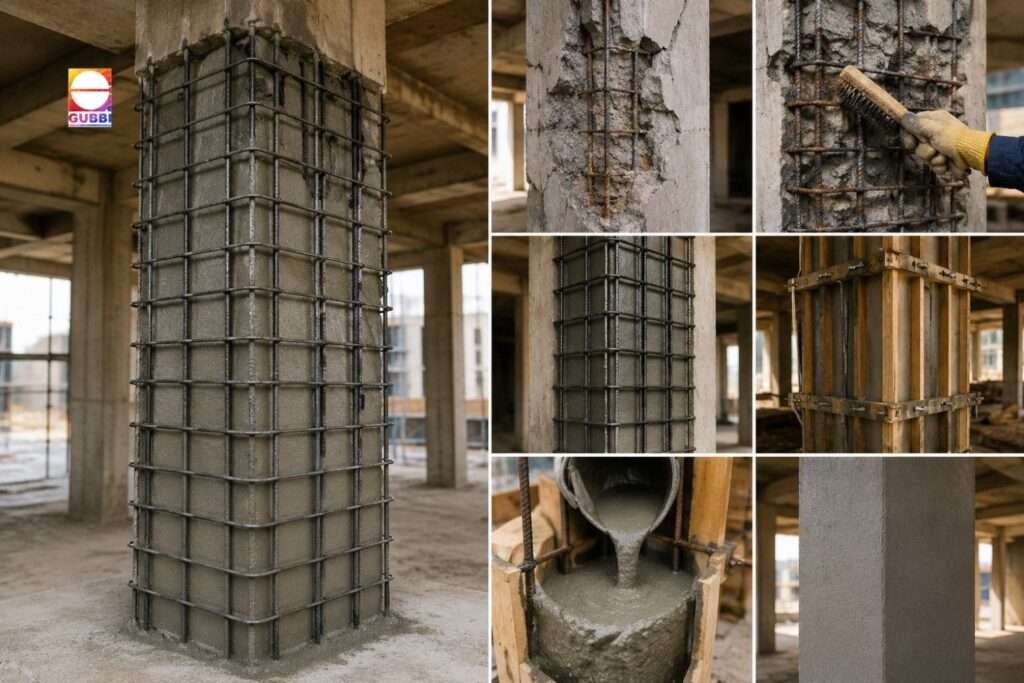
RCC column jacketing is particularly relevant when an existing reinforced concrete column requires a larger effective cross-section or additional reinforcement. The process may involve removing damaged concrete, preparing the existing surface, installing additional reinforcement, and placing the specified concrete material around the column. The final arrangement must follow the approved structural design. Simply adding concrete around a column without adequate detailing and connections does not guarantee improved structural performance.
When Is Column Jacketing Required?
Column jacketing may be considered when structural assessment identifies insufficient load-carrying capacity, reinforcement corrosion, significant concrete deterioration, inadequate confinement, or increased demands caused by a change in building use. It may also form part of seismic retrofitting when existing columns require improved strength or ductility. Engineers must evaluate the complete structural system before choosing this approach, since strengthening an individual column can affect load distribution and place additional demands on connected beams and foundations.
For example, an industrial plant may plan to install heavier production equipment or increase the loads supported by an existing floor. If the structural assessment identifies deficient columns, jacketing may provide a suitable strengthening option. The design must consider the additional loads, existing reinforcement, column dimensions, foundation capacity, and connections between structural members. The objective is to establish a technically appropriate strengthening solution rather than simply increasing the column size without evaluating the entire structure.
Micro Concrete Jacketing for RCC Columns
Micro concrete jacketing involves strengthening an existing concrete column by placing specially formulated, flowable micro concrete around it, together with additional reinforcement wherever required by the design. This material is useful in sections where conventional concrete placement may be difficult because of narrow gaps, congested reinforcement, or restricted access. Its flow characteristics can help fill the prepared jacket, provided the formwork, placement method, material specification, and site conditions are properly controlled.
The preparation stage is essential for achieving the intended result. Loose concrete and unsound material must be removed, reinforcement condition assessed, and the existing surface prepared according to the approved method. Additional reinforcement and connectors are installed where specified, followed by suitable formwork and micro concrete placement. Correct material selection, leak-free formwork, controlled pouring, and appropriate curing help reduce defects. Inspection is also important to identify potential voids, incomplete filling, or bonding problems.
Advantages of Micro Concrete Jacketing
One important advantage of micro concrete is its ability to flow around reinforcement and into appropriately designed confined spaces. This characteristic can be useful when strengthening columns with closely spaced bars or complex geometries. When the material is compatible with the design and placed correctly, micro concrete jacketing can improve the effective section of a column and help restore structural performance. However, its suitability depends on engineering calculations, material properties, surface preparation, and execution quality.
Micro concrete jacketing can also be considered for industrial structures where existing concrete members need rehabilitation without complete replacement. Factories, warehouses, commercial facilities, and infrastructure buildings may contain columns with restricted working space or difficult reinforcement arrangements. The method can support targeted strengthening while retaining suitable portions of the existing structure. Nevertheless, project teams must consider the additional column dimensions, access requirements, curing arrangements, operational restrictions, and foundation implications before deciding whether this method is appropriate.
Steel Jacketing for Structural Strengthening
Steel jacketing is a retrofitting method that uses designed steel plates, angles, or other steel sections around an existing column. The components are connected and detailed to provide the required strengthening action. Compared with concrete-based jacketing, steel systems can offer a relatively compact strengthening arrangement in suitable applications. Their effectiveness depends on the steel thickness, connection details, anchorage, existing column condition, and how the jacket transfers forces within the strengthened structural member.
Steel jacketing may be considered in industrial buildings where column strengthening must be planned around machinery, production areas, or restricted working space. It can also be useful when construction schedules limit the time available for concrete placement and curing. However, steel installation still requires careful fabrication, lifting, alignment, connection work, and inspection. Corrosion protection and suitable fire protection must also be considered where environmental exposure and building safety requirements make them necessary.
Benefits and Limitations of Steel Jacketing
A key benefit of steel jacketing is that it can provide additional confinement and structural resistance without requiring the same concrete enlargement associated with some conventional jacketing arrangements. Properly designed steel systems may also suit projects where access is limited or where rapid installation is important. These advantages do not make steel jacketing universally preferable. Engineers must compare its performance, connection requirements, installation constraints, and maintenance needs against alternative strengthening methods.
Steel jacketing also requires attention to long-term environmental conditions. Moisture, chemical exposure, and inadequate protective coatings can contribute to corrosion, potentially affecting the jacket and its connections. Steel plates must be fabricated and installed to the required tolerances, while anchors, bolts, and welds must follow the approved design. In addition, engineers need to verify that the existing column, connected members, and foundation can safely accommodate the revised load path and strengthened structural arrangement.
Micro Concrete Jacketing vs Steel Jacketing
Choosing between micro concrete jacketing and steel jacketing requires more than comparing materials or installation costs. Both techniques can improve the performance of selected structural members, but their construction requirements and limitations differ. Micro concrete jacketing adds a cementitious layer around the column, while steel jacketing relies on designed steel components and connections. The decision should reflect the required strengthening, existing column condition, available space, construction schedule, environmental exposure, and maintenance expectations.
Micro concrete jacketing may be suitable when the design requires a reinforced enlargement of the existing concrete section or when flowable material is beneficial for placement. Steel jacketing may be considered where a comparatively compact jacket or a particular confinement arrangement is required. Neither method should be selected solely because it appears faster or less expensive. A structural assessment helps determine the appropriate solution and identifies any associated work needed on beams, foundations, or connections.
How to Select the Right Column Jacketing Method
The first consideration is the structural deficiency that needs to be addressed. A column with inadequate axial capacity may require a different strengthening arrangement from one with deficient shear resistance, corrosion damage, or insufficient ductility. Engineers assess the existing member, reinforcement details, concrete condition, and applicable loading requirements before determining the intervention. The selected method should address the identified deficiency instead of treating every damaged column with the same jacketing technique.
Space limitations and site operations also influence the decision. An industrial facility may have pipelines, cable trays, machinery, or access routes close to the columns being strengthened. Micro concrete placement may require space for formwork and material delivery, while steel jacketing may require fabrication access and equipment for handling steel components. Construction teams must also consider worker safety, temporary support requirements, shutdown periods, and the possibility of completing work in phases.
Long-term performance should be considered alongside the immediate strengthening objective. Engineers evaluate moisture exposure, chemical conditions, maintenance access, fire safety, and compatibility between existing materials and the proposed jacket. Budget planning should include design, preparation, materials, installation, inspection, protective treatments, and potential operational downtime. Comparing these factors provides a more realistic basis for selecting a suitable method than considering the initial material cost alone.
The Structural Assessment Process Before Retrofitting
Before recommending retrofitting services, engineers need to establish the actual condition of the existing structure. The investigation may include a visual inspection, review of available drawings, measurement of cracks, examination of exposed reinforcement, and relevant concrete testing. Depending on the project, non-destructive testing or other material investigations may also be required. The findings help distinguish surface deterioration from structural deficiencies and support decisions about the extent of repair or strengthening needed.
The next stage involves reviewing existing loads and anticipated future requirements. Engineers may evaluate machinery loads, storage loads, changes in building use, structural geometry, and the performance of connected members. Calculations can then establish whether existing columns meet the required capacity and which strengthening options deserve consideration. The assessment should also identify related issues, including foundation limitations, damaged joints, water ingress, and corrosion, that could affect the performance of the proposed retrofitting system.
Once the investigation is complete, the design team can prepare the strengthening approach, construction sequence, material specifications, and inspection requirements. Depending on project complexity, the plan may include temporary supports, restrictions on loading, phased execution, and monitoring during the work. A clear method statement helps contractors understand the required procedures and quality checks. This preparation reduces avoidable site changes and ensures that construction decisions remain consistent with the approved engineering design.
Step-by-Step Process for Column Jacketing
Column jacketing generally begins with site inspection, structural assessment, and approval of the strengthening design. The existing column is examined to identify damaged concrete, reinforcement corrosion, cracking, and other defects. Where necessary, temporary supports or load restrictions are introduced before work begins. The project team then prepares the work area, confirms access arrangements, and establishes safety measures to protect workers, nearby equipment, and the surrounding structure.
The next stage involves removing unsound concrete and preparing the existing member according to the approved method. Exposed reinforcement is inspected, cleaned, and treated where specified. Additional reinforcement, connectors, anchors, or steel components are installed as required by the design. For concrete-based jacketing, formwork is positioned before the specified material is placed. For steel jacketing, plates or sections are fitted and connected using the approved connection details.
After installation, the strengthened column undergoes appropriate curing, finishing, and inspection according to the selected system. Engineers or quality-control personnel verify the work against the approved specifications, including material records, reinforcement details, connections, and concrete placement requirements. Any identified defects must be assessed and corrected before the member is accepted. The column should return to its intended loading condition only when the responsible engineering team confirms that the required conditions have been satisfied.
Industrial Applications of Structural Retrofitting
Industrial facilities often require structural strengthening when production processes change, equipment becomes heavier, or existing concrete members deteriorate under demanding operating conditions. Column jacketing can be considered for manufacturing plants, process buildings, warehouses, and other facilities where structural assessment identifies inadequate column performance. The strengthening plan must account for equipment loads, vibration, chemical exposure, operational access, and any restrictions on shutting down production during construction.
Commercial buildings may also require retrofitting when their intended use changes or an assessment identifies deficiencies in the existing structure. Office buildings, commercial complexes, and institutional facilities can contain columns affected by ageing, corrosion, or previous modifications. Depending on the findings, engineers may recommend concrete jacketing, micro concrete jacketing, or steel jacketing. The objective is to address the identified structural requirements while coordinating the work with building operations and other ongoing activities.
Infrastructure assets can present additional challenges because of exposure to moisture, weather, chemicals, and repeated loading. Columns supporting elevated structures or other infrastructure components may require investigation when deterioration or increased loading affects their performance. Any strengthening intervention must consider accessibility, environmental conditions, traffic or operational restrictions, and the consequences of temporarily limiting use. The selected system should be supported by appropriate engineering calculations, material specifications, and inspection procedures.
Cost Factors for Column Jacketing and Retrofitting
The cost of column jacketing depends on the number of columns, their dimensions, the extent of existing damage, and the strengthening capacity required. Other factors include the selected material, reinforcement quantity, steel fabrication, surface preparation, formwork, access equipment, and labour requirements. A column requiring substantial concrete removal and reinforcement replacement may involve a different scope of work from one needing a designed strengthening jacket around an otherwise sound existing member.
Project location and operational conditions can also influence the overall budget. Restricted access, working at height, machinery close to columns, and limited shutdown periods may increase execution complexity. Steel jacketing can involve fabrication and connection costs, while micro concrete jacketing requires suitable material placement, formwork, and curing arrangements. A meaningful quotation should account for the complete scope, including investigation, design, execution, quality checks, and any necessary protective treatments.
The most suitable financial comparison considers the total project cost rather than the price of one material or installation activity. In suitable cases, retrofitting may reduce the need for extensive demolition and reconstruction, helping retain usable parts of an existing facility. However, savings depend on the condition of the structure and the work required to achieve the intended performance. A detailed assessment and clearly defined scope provide a more reliable basis for budgeting and planning.
Common Mistakes to Avoid During Structural Retrofitting
One common mistake is selecting a jacketing method before identifying the actual structural deficiency. Visible cracks or damaged concrete may indicate several different underlying problems, and applying an additional layer without investigating the cause may not resolve them. Engineers should establish whether the issue relates to loading, reinforcement corrosion, inadequate detailing, foundation movement, or another factor. The strengthening design must address the underlying problem and consider its effect on the complete structural system.
Another mistake is overlooking the connection between the new jacket and the existing column. Inadequate surface preparation, unsuitable anchorage, incorrect reinforcement placement, or incomplete concrete filling can affect the intended performance. Steel systems can also be compromised by poorly executed connections or insufficient corrosion protection. Following approved construction details, maintaining appropriate supervision, and carrying out specified inspections are important for achieving the performance assumed during structural design.
Retrofitting work should not be treated as a purely cosmetic activity. Painting damaged concrete, covering corrosion without proper treatment, or filling cracks without identifying their cause may leave the underlying deficiency unresolved. Structural strengthening requires suitable investigation, engineering decisions, and controlled execution. Building owners should ensure that contractors understand the approved scope and that changes made during construction are reviewed by the responsible engineer before implementation.
Choosing a Structural Retrofitting Contractor
Selecting a contractor for structural retrofitting requires attention to technical capability, project planning, material quality, and execution procedures. Building owners should look for a team that understands existing RCC structures, column strengthening methods, site constraints, and the importance of following approved engineering details. The contractor should also be able to coordinate with structural consultants, communicate site requirements clearly, and maintain suitable documentation throughout the strengthening process.
Before appointing a contractor, discuss the observed structural problems, proposed assessment, recommended strengthening method, work sequence, and expected operational restrictions. Ask how reinforcement preparation, material placement, steel connections, protective coatings, and quality checks will be managed. A clear scope of work helps avoid misunderstandings about what the quotation includes. Decisions should be based on the actual engineering requirements rather than broad promises about strength, speed, or savings.
For industrial, commercial, and infrastructure projects, Gubbi Civil Engineers Limited can be considered when evaluating structural retrofitting and column jacketing requirements. Before proceeding, share the available structural drawings, inspection findings, photographs of affected members, and details of any proposed loading changes. These details can help initiate a more informed technical discussion. The final strengthening method should be confirmed through appropriate assessment, engineering design, and a clearly defined execution plan.
Frequently Asked Questions About Retrofitting Services
1. What are retrofitting services in civil engineering?
Retrofitting services involve strengthening or modifying existing structures to improve their ability to meet specified structural performance requirements. Depending on the assessment, the work may include column jacketing, beam strengthening, concrete repair, foundation strengthening, or seismic upgrades. The appropriate solution depends on the existing condition, loading requirements, structural design, and intended use of the facility.
2. What is the difference between micro concrete jacketing and steel jacketing?
Micro concrete jacketing uses a flowable cementitious material to form a designed strengthening layer around an existing member, often with additional reinforcement. Steel jacketing uses designed steel plates or sections connected around the member. Micro concrete may suit reinforced section enlargement, while steel can suit compact strengthening arrangements. The final selection depends on engineering calculations, site conditions, and installation requirements.
3. Can column jacketing increase the load-bearing capacity of an existing column?
Yes, appropriately designed column jacketing can increase load-carrying capacity and improve other structural characteristics. The extent of improvement depends on the existing column, additional reinforcement, jacket material, connection details, and load-transfer mechanism. Engineers must also check the connected beams, joints, and foundations to ensure that strengthening the column does not create deficiencies elsewhere in the structure.
4. Is micro concrete suitable for damaged RCC columns?
Micro concrete may be suitable for strengthening or rehabilitating selected damaged RCC columns, particularly where a flowable material is beneficial for filling a designed jacket. However, damaged concrete and corroded reinforcement must be investigated and treated appropriately. The material cannot replace structural assessment, reinforcement detailing, or correct installation. Suitability should be confirmed according to the column’s condition and the approved strengthening design.
5. Is steel jacketing suitable for industrial buildings?
Steel jacketing may be suitable for industrial buildings where column strengthening, additional confinement, or restricted construction space influences the design. It can also be considered when installation schedules are important. Engineers must evaluate the required steel sections, connections, existing concrete condition, corrosion exposure, fire protection, and overall load transfer before approving the system for a particular industrial application.
6. Is retrofitting better than rebuilding an existing structure?
Retrofitting can be a practical alternative to rebuilding when the existing structure remains suitable for strengthening and rehabilitation. It may reduce demolition, material waste, and disruption to facility operations. However, the decision depends on the extent of damage, the feasibility of strengthening, safety requirements, and total project cost. A professional structural assessment is necessary before comparing the alternatives.
7. How long does column jacketing take to complete?
The duration depends on the number and size of columns, the selected jacketing method, the extent of repairs, access conditions, and the construction sequence. Micro concrete jacketing requires appropriate placement and curing arrangements, while steel jacketing involves fabrication, fitting, and connection work. A project-specific schedule should be prepared after the site assessment and strengthening design are completed.
Structural retrofitting provides a way to address identified deficiencies in existing buildings and industrial structures without automatically resorting to complete reconstruction. Column jacketing, micro concrete jacketing, and steel jacketing offer different approaches to strengthening RCC columns, each with specific design and installation requirements. The right choice depends on the existing structural condition, required capacity, available space, environmental exposure, construction schedule, and long-term maintenance considerations.
For building owners and facility managers, the most important step is to identify structural problems early and obtain a suitable engineering assessment before planning strengthening work. A properly designed and executed solution can improve structural performance, support changing operational requirements, and help extend the useful service life of suitable existing assets. Careful planning, appropriate materials, skilled execution, and quality control remain essential throughout the retrofitting process.