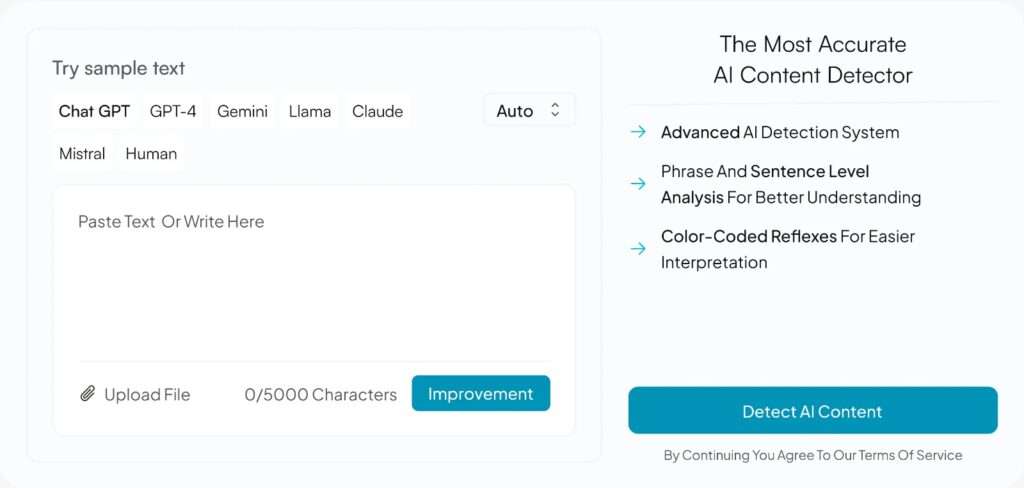

A teacher gets an essay that reads a little too smoothly. An editor opens a freelance draft and something feels off. A writer pastes their own honest work into a checker and gets a scary percentage back. Sound familiar? That’s the world of the KI detector, where “KI” is short for Künstliche Intelligenz, the German term for artificial intelligence. These tools are everywhere now, but how reliable are they, and what should you do with their results? Here’s a plain-English look at how they work, where they slip up, and how to read a score sensibly.
How These Tools Actually Work
Detection tools don’t “know” who wrote something. They look for statistical patterns and make an educated guess.
In simple terms, they tend to check things like:
- Predictability. Machine text often picks very likely words, so it can look suspiciously smooth.
- Variation. People mix long and short sentences more unevenly than most chatbots do.
- Style signals. Repeated phrasing, tidy structure, and generic wording can all raise a score.
The result is usually a probability or a percentage, not a verdict. Think of it as a weather forecast: “70% chance of rain” doesn’t mean it will rain.
Why Results Can Be Wrong
Here’s the part many people miss. These tools get things wrong in both directions.
- False positives. Human writing gets flagged, especially if it’s formal, very polished, or written by someone using a second language.
- False negatives. Machine text that’s been edited heavily can slip through.
- Short samples. A couple of sentences simply don’t give a tool much to work with.
- Different tools, different answers. Run the same text through three checkers and you may get three results.
A realistic example: a student writes a careful, textbook-style paragraph by hand, and a checker flags it. Nothing dishonest happened. The writing just happened to be predictable. That’s why a score alone should never be treated as proof.
How to Read a Result Sensibly
If you’re the one running the check, a few habits keep you fair and accurate.
- Treat it as a clue. Not a conclusion.
- Test longer passages. More text usually means a steadier reading.
- Compare tools. If results disagree wildly, that’s a sign to be cautious.
- Look at the text itself. Is it generic? Missing specifics? Does it contradict what the writer knows?
- Talk to the author. Ask about their process, sources, or drafts. A real conversation tells you more than a percentage.
And if you’re the writer who’s been flagged, keep your notes, outlines, and earlier drafts. They’re the best evidence of how the piece came together.
What to Do If Your Own Writing Gets Flagged
Don’t panic. Try this:
- Re-run the same text on a different tool to see whether the result holds up.
- Look for sections that read stiffly or sound generic.
- Add real specifics: dates, names, personal examples, numbers you’ve checked.
- Vary your rhythm. Mix short sentences with longer ones.
- Keep a record of your process for next time.
None of this is about “gaming” a tool. It’s about making your writing more distinctly yours, which is better for readers anyway.
Using Detection Tools Responsibly
Used well, these tools can start useful conversations about authorship and quality. Used badly, they can unfairly damage someone’s reputation. A few ground rules:
- Never punish anyone based on a score alone.
- Be open about which tools you use and why.
- Follow the policies of your school, workplace, or publisher.
- Remember that using AI isn’t automatically wrong. Hiding it where disclosure is required is the issue.
Platforms like isgen.ai are among the options people explore here, but whichever you try, compare more than one and apply your own judgment.
Common Mistakes to Avoid
- Treating a percentage as a final answer
- Checking only a short snippet
- Ignoring false positives
- Relying on one tool
- Skipping a human conversation before drawing conclusions
FAQs
Are detection tools 100% accurate?
No. They estimate likelihood and can be wrong in either direction.
Can a human-written text be flagged?
Yes, it happens fairly often, especially with formal or highly polished writing.
Does a low score mean the text is fully human?
Not necessarily. Edited machine text can score low too.
Should I use more than one tool?
It helps. Comparing results shows how much they agree.
What matters more than the score?
Context, the writer’s process, and whether the content is accurate and original.
Know Someone Dealing With This?
If a friend, student, or colleague is worried about a flagged draft, send this their way. And if you’ve got your own experience with these tools, share it in the comments.