
Introduction
Vietnam is one of the world’s leading coffee-producing countries, supplying Robusta and Arabica beans to international markets. As competition increases, coffee producers, exporters, processors, and roasters must maintain reliable quality standards throughout production. Professional Lab / QC Equipment helps businesses inspect green coffee, measure important physical characteristics, evaluate roasted samples, and identify quality variations before products reach customers. Investing in suitable laboratory solutions from Coffee Pro Direct can help Vietnamese coffee businesses strengthen testing procedures, improve consistency, and develop greater confidence among domestic and international buyers.
Understanding the Importance of Coffee Laboratory Equipment
Coffee laboratory equipment includes instruments and tools used to examine green beans, roasted coffee, and finished products. These tools help technicians evaluate moisture, density, size, color, defects, and sensory characteristics. Quality control laboratories provide a structured environment where businesses can compare samples and document results using consistent procedures. Professional Lab / QC Equipment supports informed decisions at different stages of coffee production. For Vietnamese exporters and processors, reliable testing can help maintain product specifications and improve communication with international buyers.
Why Quality Control Matters in Vietnam’s Coffee Industry
Vietnam’s coffee sector includes farms, cooperatives, processing facilities, exporters, manufacturers, and independent roasters. Each participant contributes to the quality of the final product through harvesting, processing, storage, transportation, and roasting. Variations at any stage can influence the beans’ physical and sensory characteristics. Suitable Lab / QC Equipment helps businesses identify these differences and respond before they create larger commercial problems. As Vietnamese companies explore specialty coffee and higher-value products, consistent testing becomes increasingly important for maintaining quality and building market credibility.
Green Coffee Analysis for Better Purchasing Decisions
Green coffee analysis helps buyers understand the condition of beans before purchasing, processing, or exporting them. Technicians examine sample appearance, bean size, moisture, density, defects, and other relevant characteristics. These observations can help identify differences between suppliers, origins, processing methods, and harvest periods. Professional Lab / QC Equipment makes this evaluation more organized and repeatable. Vietnamese coffee exporters can use documented sample results to compare lots, communicate specifications, and make better purchasing decisions when working with domestic producers and international customers.
Coffee Moisture Meters for Accurate Measurement
Moisture content is an important factor in green coffee storage and processing because excessive or unsuitable moisture conditions can affect bean stability and quality. Coffee moisture meters help technicians measure water content using appropriate testing methods. Businesses should follow instrument instructions and use consistent sampling procedures to obtain meaningful results. Reliable Lab / QC Equipment should include suitable moisture measurement tools when green coffee evaluation is a regular activity. Vietnamese producers and exporters can use these measurements to support storage decisions and monitor incoming coffee lots.
Measuring Green Coffee Density
Green bean density provides useful information about the physical characteristics of coffee. Differences in density may relate to growing conditions, bean development, variety, and processing. Technicians can use suitable measurement instruments to compare samples and better understand how different lots may respond during roasting. Density measurements should be interpreted alongside moisture, size, and other quality indicators rather than used as a single measure of quality. Professional Lab / QC Equipment helps Vietnamese roasters and exporters collect useful information when evaluating Robusta and Arabica coffee samples.
Coffee Bean Size and Screen Analysis
Screen analysis classifies green coffee beans according to their physical size using standardized sieves or screens. This process helps businesses understand size distribution and identify inconsistencies within a sample. Bean size can influence processing, sorting, grading, and roasting behavior, although it does not independently determine cup quality. Suitable Lab / QC Equipment should include appropriate screens when size classification is part of the quality-control process. Vietnamese coffee processors can use these tools to compare lots and maintain clearer specifications for customers and manufacturing operations.
Identifying Physical Defects in Green Coffee
Physical defect inspection helps technicians identify broken beans, insect damage, discoloration, foreign materials, and other visible irregularities. The process usually involves preparing a representative sample and examining beans under suitable lighting. Businesses should follow relevant grading standards and buyer specifications when classifying defects. Professional Lab / QC Equipment supports accurate inspection through sample trays, sorting tools, scales, and other accessories. For Vietnamese exporters, systematic defect evaluation can help identify quality concerns before coffee is processed, blended, packaged, or shipped.
Coffee Sample Dividers for Representative Testing
A representative sample is essential for reliable laboratory analysis. Sample dividers help separate larger quantities of coffee into smaller portions while reducing the risk of selection bias. This allows technicians to prepare manageable samples for moisture measurement, defect inspection, screen analysis, and roasting evaluation. A coffee laboratory should include suitable sample preparation tools as part of its Lab / QC Equipment collection. Vietnamese exporters and processing facilities can use consistent dividing procedures to improve testing reliability and make comparisons between different coffee lots more meaningful.
Sample Roasters for Coffee Quality Evaluation
Sample roasters allow technicians to roast small quantities of green coffee under controlled conditions before evaluating the resulting flavor and aroma. They are particularly useful for comparing suppliers, origins, processing methods, and experimental lots. Operators can record roasting parameters and repeat tests using consistent procedures. A professional laboratory should include an appropriate sample roaster within its Lab / QC Equipment setup. Vietnamese businesses can use sample roasting to understand the potential of local Robusta and Arabica beans before making larger production or purchasing decisions.
Coffee Color Measurement and Roast Analysis
Roast color measurement provides useful information about the appearance and development of roasted coffee. Color meters can help businesses compare roast levels and monitor consistency between batches. Depending on the instrument, measurements may be taken from whole beans or ground coffee. Consistent sample preparation is important because differences in grinding and measurement conditions can influence readings. Professional Lab / QC Equipment may include roast color analyzers for businesses that require documented roasting specifications. Vietnamese roasters can use these measurements alongside sensory evaluation to improve production control.
Coffee Grinders and Sample Preparation Tools
Consistent grinding is important when preparing coffee samples for cupping and other laboratory evaluations. Differences in grind size, grinder cleanliness, and preparation time may influence extraction and sensory results. Laboratories should select grinders appropriate for their testing procedures and establish clear cleaning routines to prevent cross-contamination between samples. Reliable Lab / QC Equipment includes suitable grinding and sample preparation tools that support repeatable evaluation. Vietnamese coffee professionals can use standardized preparation procedures to make comparisons between Robusta, Arabica, and different processing methods more dependable.
Sensory Evaluation and Professional Cupping Equipment
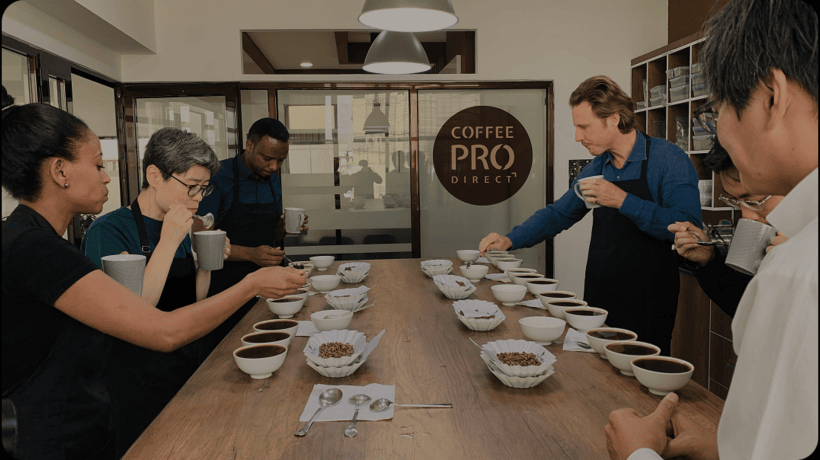
Coffee cupping helps trained evaluators examine fragrance, aroma, flavor, acidity, sweetness, body, aftertaste, and overall balance. Common laboratory tools include cupping bowls, spoons, precision scales, grinders, kettles, sample containers, and clean water. Evaluators should follow consistent preparation methods and record observations clearly. A well-equipped Lab / QC Equipment setup makes sensory testing easier to organize and repeat. Vietnamese producers and exporters can use cupping sessions to identify distinctive flavor characteristics and understand the expectations of specialty coffee buyers.
Water Quality and Temperature Control in Coffee Testing
Water quality and temperature can influence coffee extraction during sensory evaluation. Laboratories should use suitable water preparation methods and maintain consistent brewing conditions when comparing samples. Temperature measurement tools, kettles, and appropriate water filtration equipment can support more controlled testing. These tools are important parts of Lab / QC Equipment for businesses that conduct regular cupping and sensory analysis. Vietnamese coffee laboratories should establish consistent water preparation procedures so that differences in evaluation results are more likely to reflect the coffee rather than uncontrolled testing conditions.
Digital Scales and Accurate Laboratory Measurements
Precision scales are essential for weighing green coffee, roasted samples, ground coffee, and cupping portions. Accurate measurements help technicians follow testing procedures and maintain consistent sample quantities. Laboratories should select scales with suitable capacity, readability, and calibration requirements. Equipment should be placed on stable surfaces and protected from dust, moisture, and unnecessary movement. Professional Lab / QC Equipment should include reliable weighing instruments for routine testing. Vietnamese coffee businesses can use accurate measurements to improve sample preparation and strengthen the documentation of quality-control activities.
Organizing Laboratory Data and Quality Records
Recording laboratory results helps businesses understand quality trends and compare coffee samples over time. Useful records may include supplier details, origin, lot number, moisture, density, screen size, defects, roasting information, and sensory observations. Digital spreadsheets or specialized laboratory software can make information easier to organize and retrieve. A complete Lab / QC Equipment strategy should consider data management alongside physical instruments. Vietnamese exporters can use organized records to support traceability, investigate quality variations, communicate specifications, and improve internal decision-making.
Designing an Efficient Coffee Quality Control Laboratory
An effective laboratory layout should separate sample receiving, green bean preparation, measurement, roasting, cooling, grinding, and sensory evaluation areas. Equipment should be positioned to support an organized workflow and reduce unnecessary sample movement. Clean work surfaces, adequate lighting, ventilation, suitable storage, and clear labeling are also important. A carefully planned Lab / QC Equipment setup helps technicians complete testing activities efficiently. Vietnamese coffee businesses should consider available floor space, sample volume, staff responsibilities, and future expansion when designing their laboratory facilities.
Equipment Cleaning, Calibration, and Maintenance
Laboratory instruments must be maintained properly to support dependable testing. Scales, moisture meters, grinders, sample trays, sieves, and other tools should be cleaned according to their manufacturers’ instructions. Instruments requiring calibration should be checked at suitable intervals, with maintenance and calibration records retained. A professional Lab / QC Equipment collection delivers better value when supported by regular inspection and responsible operation. Vietnamese laboratories should establish maintenance schedules and train employees to recognize equipment problems before inaccurate measurements affect purchasing or production decisions.
Supporting Vietnamese Coffee Exporters and Processors
Coffee exporters and processors need reliable information about the products they handle. Laboratory testing can support supplier comparisons, incoming quality inspection, processing evaluation, sample approval, and customer communication. Different markets may also have specific requirements concerning physical characteristics, safety, documentation, and product specifications. Suitable Lab / QC Equipment helps businesses organize testing activities and maintain useful quality records. For Vietnamese companies serving international buyers, these practices can strengthen confidence, support commercial relationships, and create opportunities for differentiated coffee products.
Choosing the Right Laboratory Equipment Supplier
Selecting a supplier requires careful evaluation of product specifications, instrument accuracy, durability, operating requirements, technical documentation, and after-sales support. Businesses should identify their testing needs before purchasing equipment and compare products according to practical requirements rather than price alone. Availability of spare parts, maintenance assistance, and operator guidance may also influence long-term value. Coffee Pro Direct provides coffee equipment solutions that businesses can explore when planning professional Lab / QC Equipment facilities for green coffee analysis, roasting evaluation, and quality management.
The Future of Coffee Laboratory Technology in Vietnam
Vietnam’s coffee industry has opportunities to strengthen its position through improved processing, specialty production, product development, and reliable quality management. Modern measurement instruments, digital recordkeeping, and standardized sensory evaluation can help businesses understand their products more clearly. As buyers demand greater consistency and transparency, laboratory capabilities may become an increasingly important business investment. Professional Lab / QC Equipment supports this progress by connecting accurate testing with better operational decisions. Vietnamese producers, exporters, and roasters can use laboratory development to pursue higher-value opportunities.
Conclusion
Professional Lab / QC Equipment plays an important role in helping Vietnamese coffee businesses evaluate green beans, monitor roasting results, and maintain consistent quality standards. From moisture measurement and defect inspection to sample roasting and sensory evaluation, suitable instruments support better decisions throughout the coffee supply chain. Investing in reliable laboratory tools can strengthen product development, traceability, and buyer confidence. Coffee Pro Direct helps businesses explore coffee equipment solutions for building organized testing facilities and supporting long-term growth in Vietnam’s competitive coffee industry.
Frequently Asked Questions
What is Lab / QC Equipment in the coffee industry?
Lab / QC Equipment refers to instruments and tools used to inspect, measure, analyze, and evaluate coffee quality. It may include moisture meters, density meters, sample dividers, screen sieves, precision scales, sample roasters, grinders, roast color analyzers, and cupping accessories. These tools help coffee professionals examine green beans and roasted samples using consistent procedures.
Why is laboratory testing important for Vietnamese coffee businesses?
Laboratory testing helps Vietnamese coffee businesses understand the physical and sensory characteristics of their products. It can identify differences between suppliers, detect visible defects, measure moisture, and support roasting evaluations. These activities help producers, processors, and exporters make informed decisions before coffee reaches customers. Reliable testing records can also improve traceability and communication with international buyers.
Which instruments are essential for a coffee quality control laboratory?
Essential instruments depend on the laboratory’s purpose, but many facilities use precision scales, moisture meters, sample dividers, sieves, sample trays, grinders, and cupping equipment. A laboratory focused on roasting may also require a sample roaster and color measurement device. Larger facilities may need additional testing and data management solutions.
How does a coffee moisture meter support quality control?
A moisture meter measures the water content of green coffee using the instrument’s specified testing method. This information can help businesses monitor incoming samples, compare coffee lots, and assess storage conditions. Consistent sampling and correct instrument operation are important for obtaining useful readings.
How can Coffee Pro Direct help businesses select laboratory equipment?
Coffee Pro Direct provides coffee equipment solutions for businesses planning roasting, sample preparation, and quality evaluation operations. Companies can explore suitable equipment categories according to their testing activities, available workspace, sample volume, and operational goals. Before purchasing, businesses should identify required measurements and compare instrument specifications, maintenance needs, and technical support.