
A washing machine that leaves water inside the drum, leaks across the laundry floor, or stops spinning can turn a normal laundry routine into a frustrating problem. You may find soaking wet clothes after a cycle, hear the machine struggling to drain, or notice water collecting underneath the appliance. These symptoms can appear separately, but sometimes one fault affects several washing machine functions.
Before assuming the machine needs a major repair, check a few common causes. A blocked drain filter, kinked hose, unbalanced load, damaged door seal, or faulty pump can interfere with normal operation. Knowing what to look for can help you understand the problem and decide when to arrange a technician’s inspection.
Why Is Your Washing Machine Not Draining?
A washing machine not draining properly may leave water sitting at the bottom of the drum after the wash cycle. Some machines stop before spinning because they cannot remove the water. Others may display a drainage error or continue making a humming sound without pumping water out.
A Blocked Drain Filter
The drain filter catches lint, coins, buttons, hairpins, and other small objects that enter the washing machine during laundry. When debris builds up, water may struggle to pass through the filter.
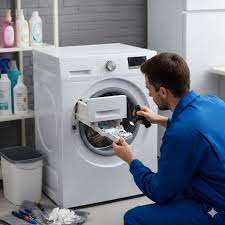
Check the user manual to locate the filter and follow its cleaning instructions. Switch off and unplug the appliance first, and prepare towels and a shallow container because trapped water may spill out when you open the filter.
A Kinked or Blocked Drain Hose
The drain hose carries used water away from the appliance. If it bends sharply, becomes crushed behind the machine, or develops an internal blockage, water may not flow out correctly.
Check the visible hose for twists or compression. Do not pull the appliance roughly because this can damage the connections. If the hose appears clear but drainage remains slow, a technician may need to inspect it further.
A Faulty Drain Pump
The pump pushes wastewater through the drain hose. A damaged pump, blocked impeller, or electrical fault can stop the drainage process.
You may hear humming, grinding, or no sound at all when the machine should drain. Avoid repeatedly restarting the cycle because a faulty pump may overheat or suffer further damage.
What Makes a Washer Stop Spinning?
A washer not spinning can leave clothes heavy with water, even when the wash cycle appears to finish. The drum may turn slowly, attempt to spin several times, or stop completely before reaching its normal speed.
The cause may involve the load, drainage system, door lock, or internal drive components.
Uneven Laundry Distribution
Large towels, blankets, and heavy clothing can collect on one side of the drum. This creates an unbalanced load, so the machine may reduce the spin speed or stop the cycle to limit excessive movement.
Pause the machine and redistribute the laundry evenly. Avoid washing one heavy item by itself if the manufacturer recommends adding similar items to balance the load.
Water Still Inside the Drum
Many washing machines will not begin a high-speed spin while water remains inside. If a blocked filter, restricted hose, or faulty pump prevents drainage, the machine may skip the spin stage.
Check the drainage system before assuming the motor has failed. A drainage fault can sometimes explain both wet clothes and a missing spin cycle.
Door Lock or Lid Switch Problems
Front-load machines use a door lock to confirm that the door is securely closed. Top-load models may use a lid switch for the same purpose. If the safety mechanism fails to register correctly, the washer may refuse to spin.
Check that the door or lid closes properly and that no clothing is trapped around the opening. Do not force the lock or attempt to bypass the safety mechanism.
Worn Drive Components
A damaged belt, motor issue, worn bearings, or faulty control component can also affect drum movement. These problems usually require technical inspection because accessing the parts involves opening the appliance.
Finding the Source of a Washing Machine Leak
Water around the appliance needs attention, even if the machine still completes its cycle. A washing machine leaking water can damage flooring, cabinets, and nearby electrical equipment if the leak continues.
The location and timing of the water can provide useful clues.
- Water near the door: A dirty, damaged, or poorly seated door gasket may allow water to escape during washing.
- Water behind the appliance: Loose hose connections, damaged inlet hoses, or drain hose problems may cause leaks.
- Water underneath the machine: Internal hoses, pump seals, or other components may have developed a leak.
- Water near the detergent drawer: Excess detergent, residue buildup, or a blocked dispenser passage can cause water to overflow.
- Water during filling: A loose inlet connection or damaged supply hose may be responsible.
If you find water around the appliance, stop the cycle and switch off the machine. If you can safely reach the plug without stepping into water, disconnect the power. Turn off the water supply and avoid using the washer until you identify the source.
Could One Fault Be Causing All Three Problems?
Leaking, drainage failure, and spinning problems can sometimes occur together. For example, a blocked drain filter may prevent water from leaving the drum, which can stop the spin cycle. A damaged pump seal may cause a leak while also affecting drainage.
A worn hose or loose connection can also release water during draining. If the machine stops before completing its cycle, the remaining water may make it seem as though the drum has a separate spinning problem.
This is why checking each symptom separately matters. Replacing one component without identifying the underlying fault may leave the other problems unresolved.
Simple Checks You Can Try Before Calling a Technician
Basic washing machine troubleshooting can help identify minor issues, but always follow the manufacturer’s instructions and avoid opening electrical or sealed components.
Start with these safe checks:
- Check the laundry load: Remove a few heavy items or redistribute clothes around the drum if the load appears uneven.
- Inspect the visible hoses: Look for sharp bends, crushed sections, or loose external connections.
- Check the door area: Remove trapped clothing and inspect the visible rubber gasket for dirt or damage.
- Review the detergent amount: Excess detergent can create too much foam and interfere with rinsing or drainage.
- Look for an error code: Check the user manual to understand what the displayed code means.
- Inspect the drain filter: Clean it only if the manual allows user access and you can safely release the trapped water.
Do not tilt the machine, reach inside moving parts, or remove panels to investigate a fault. If the appliance trips the breaker, smells burnt, makes loud grinding noises, or continues leaking, stop using it and arrange professional inspection.
When Does the Washing Machine Need Professional Repair?
Some faults need more than cleaning or adjusting the laundry load. If the machine repeatedly fails to drain, refuses to spin with balanced loads, or leaks after you check the visible connections, an internal component may need attention.
A technician can inspect the drain pump, internal hoses, door gasket, inlet valve, motor, drive belt, bearings, and electronic controls. They can also test the machine through a cycle to see when the fault appears.
Look for a repair service that explains the problem before starting work. The technician should identify the faulty part, discuss the repair options, and explain whether replacement makes more sense than repair based on the appliance’s condition.
Get Your Washing Machine Working Properly Again
A leaking washer, a drum full of standing water, or a cycle that ends without spinning can point to different faults within the same appliance. Checking the load, visible hoses, filter, and door area may help you identify a simple issue. However, repeated problems often require a closer inspection of the pump, motor, seals, or internal connections.
When a washer keeps leaking, stops spinning, or refuses to drain, homeowners often search online for washing machine repair near me to find someone who can diagnose the problem. Dubai Fixes can inspect the appliance, identify the faulty component, and explain the necessary repair before work begins. Addressing the issue promptly can help prevent further disruption or water damage.
Frequently Asked Questions
1- Why does my washing machine fill with water but not drain?
A blocked drain filter, restricted hose, or faulty pump can prevent wastewater from leaving the drum. Check the accessible filter and visible hose for blockages, following the manufacturer’s instructions.
2- Can a washing machine leak and still work normally?
Yes, some machines continue washing even when a hose connection, door gasket, or dispenser has a leak. However, continued operation can cause water damage and may worsen the fault. Stop using the appliance until you identify the leak.
3- Why are my clothes still wet after the washing cycle?
The washer may have skipped or failed to complete the spin cycle. An unbalanced load, drainage problem, door lock fault, or damaged drive component can prevent the drum from reaching its normal spin speed.
4- Is it safe to use a washing machine that is leaking?
No. Stop the cycle, disconnect power if you can do so safely, and turn off the water supply. Do not operate the machine again until the leak has been checked.
5- Does a blocked drain filter stop a washing machine from spinning?
It can. If the filter prevents water from draining, the washer may not start its high-speed spin cycle. Cleaning the filter according to the manufacturer’s instructions may resolve the problem if no other fault exists.