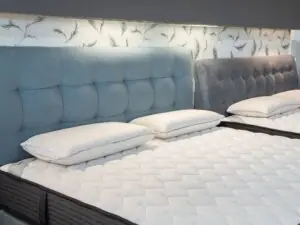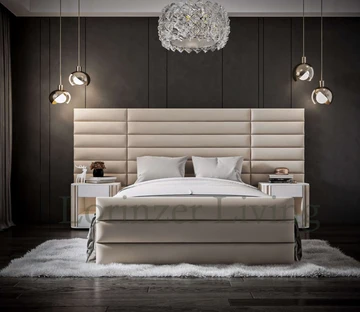

A handmade bed in UK is a frame made to order by a maker who cuts, joins and finishes each piece, using solid timber or hardwood-framed construction and structural joinery instead of flat-pack fixings. It suits buyers who want an exact fit, repairable construction and a frame that outlasts several mattresses. The core takeaway: judge a bed by its joints, materials and fit, not by the word “handmade”.
Deep-Dive Context: What “Handmade” Does and Doesn’t Guarantee
“Handmade” is not a regulated term in UK furniture retail. It can describe a workshop where one maker builds the whole frame, or a factory where people assemble pre-cut panels. The more useful question is which structural decisions were made by a person, and which were left to machine tolerances?
The attributes that determine how a bed performs:
- Frame material: Solid hardwood (oak, ash, beech) or softwood (pine) rails and legs, versus MDF or chipboard carcasses.
- Joinery: Mortise-and-tenon, dowelled or bolt-through joints, versus cam-lock fittings and staples.
- Slat system: Sprung beech or birch slats that flex under load, versus fixed ply decks or solid platform bases.
- Upholstery: Hand-tensioned fabric over foam and wadding, versus thin glued coverings.
- Finish: Hand-applied oils, waxes or lacquers, versus sprayed veneers.
Real-world scenario: A couple in a Victorian terrace has a sloping ceiling and a 2.3 m wall. A standard 5 ft frame with a tall headboard leaves no room for a bedside table and bumps the ceiling. A maker can lower the headboard, shorten the legs or narrow the footprint. A catalogue frame cannot. Fit problems like this, more than looks, are the most common reason people commission a bed.
Think of the frame as a structure with a mattress on top. The mattress wears out in the commonly advised seven to ten years, while the frame is a long-term fixture, so construction quality matters more than styling.
How a Handmade Bed Is Commissioned and Built
- Confirm the mattress first. Build the frame around the mattress, not the reverse. UK sizes are nominal: a king is generally about 150 × 200 cm, but dimensions vary slightly between manufacturers.
- Specify the frame. Agree headboard height, leg height, storage needs, finish and any non-standard dimensions.
- Select the timber. Ask whether it is kiln-dried (furniture timber for heated UK homes is typically dried to roughly 8 to 12% moisture content) and whether it is FSC or PEFC certified.
- Cut and join. This is where longevity is decided. Rails, legs and headboard frames are machined, then joined.
- Finish or upholster. Wood is sanded and oiled or lacquered. Upholstered frames are padded and covered.
- Inspect. Check squareness, stability under load and slat fit.
- Deliver and assemble. Many beds arrive in sections.
Common bottlenecks:
- Lead time: Made-to-order work usually takes several weeks, longer for special fabrics. Ask for a written estimate before paying a deposit.
- Access: A one-piece headboard may not turn a tight stairwell. Measure doorways, landings and turns, not just the bedroom.
- Slat compatibility: Many mattress makers specify the maximum gap between slats. Check your mattress guidance and tell the maker.
- Wall obstacles: Skirting boards, radiators and sockets can push a headboard off the wall and change the usable width.
Strategic Evaluation: Handmade, Flat-Pack and Factory Upholstered
| Criterion | Handmade / Made-to-Order | Flat-Pack (Panel-Based) | Factory-Made Upholstered |
|---|---|---|---|
| Structural durability | Solid joinery that can be re-tightened | Fixings loosen with repeated assembly | Varies with the hidden internal frame |
| Customisation | Size, height, finish and storage adjustable | Fixed catalogue options | Limited fabric and size choices |
| Repairability | Re-oil, re-sand, re-cover, replace parts | Rarely economical to repair | Re-covering possible if the frame is sound |
| Upfront cost | Highest | Lowest | Mid-range |
| Delivery time | Weeks | Often immediate | Days to weeks |
| Best for | Long-term ownership, awkward rooms | Short-term or rental use | Quick style updates |
Decision framework:
- Cost per year of use. A frame at twice the price lasting 20 years costs less per year than one replaced every seven.
- Time horizon. If you move often or expect to redecorate within a few years, a mid-range upholstered frame may serve you better.
- Room complexity. Sloping ceilings, alcoves and non-standard mattresses favour made-to-order.
- Repair culture. If you want to refinish or re-cover rather than replace, solid construction is the only route.
Expert Guidance: Pitfalls and How to Avoid Them
1. Buying before measuring. Allow for headboard thickness, skirting boards, radiators and door swing. Leave at least 60 cm of walking space on each side you use, and confirm that the delivery route can take the largest component.
2. Overlooking the slat system. Poorly spaced slats can make a mattress sag and may affect its warranty. Sprung slats suit most pocket-spring and foam mattresses. Solid bases suit some memory foam and latex mattresses, but check your mattress guidance.
3. Skipping fire-safety compliance. In Great Britain, the Furniture and Furnishings (Fire) (Safety) Regulations 1988 apply to upholstered furniture and to mattress and base sets. Compliance is the supplier’s legal duty, so ask for confirmation and check for permanent labels on upholstered items.
4. Accepting “solid wood” without detail. Ask which parts are solid timber and which are engineered board. Mixed construction can be perfectly good, but you should know what you are paying for.
Questions to put to any maker:
- Which timber is used, and is it certified?
- How are rails joined to legs and headboard?
- What is the stated weight rating, and has the design been assessed against BS EN 1725, the standard covering safety requirements and test methods for domestic beds and mattresses?
- What does the guarantee cover: joints, slats, finish?
- Can I see photos of work in progress or visit the workshop?
A reputable maker answers these readily. Vague replies are a signal to look elsewhere.
Future-Proof Recommendations and Next Steps
Decide your mattress first, then specify the frame around it. Shortlist two or three makers who answer the questions above clearly. Get lead times, guarantee terms and finish details in writing, and measure your delivery route before paying a deposit.
If you plan to keep the bed for many years, have an unusual room or want a specific finish, handmade construction is a sound long-term purchase. If you need something quickly or temporarily, a well-reviewed factory-made frame is a rational choice. In either case, look after the bed: check fixings once a year, re-oil wooden surfaces as needed and keep the frame away from damp walls.
FAQs
Are handmade beds worth the extra cost in the UK?
Often, if you plan to keep the bed for many years. Solid joinery and repairable finishes typically extend a frame’s life well beyond that of flat-pack alternatives, which lowers the cost per year of use.
How long does a made-to-order bed take?
Usually several weeks, depending on the maker’s workload and your choice of timber or fabric. Ask for a written lead time before you pay a deposit.
What timber is best for a bed frame?
Oak and ash are very hard-wearing, while pine and other softwoods are lighter and cheaper. Joint quality and properly dried timber matter more than species alone, so ask whether supply is FSC or PEFC certified.
Do handmade beds fit standard UK mattresses?
Yes. Makers build to standard sizes such as double (135 × 190 cm), king (150 × 200 cm) and super king (180 × 200 cm), and can also build to non-standard dimensions. Check your mattress’s actual measurements first.
Can a handmade bed be repaired or refinished?
Generally yes. Solid frames can be re-tightened, re-oiled or re-sanded, and upholstered headboards can be re-covered. That is much harder with glued panel constructions.
Technical Indexing & Asset Blueprint
1. Schema Markup (JSON-LD)
Mark up only content visible on the page.
{
  "@context": "https://schema.org",
  "@graph": [
    {
      "@type": "Article",
      "@id": "https://www.lorinzerliving.com/handmade-beds-uk/#article",
      "headline": "Handmade Beds UK: How to Choose a Frame Built for Decades, Not Years",
      "description": "A UK buyer's guide to handmade beds: joinery, timber, mattress fit, fire-safety rules and how handmade compares with flat-pack and factory-made frames.",
      "datePublished": "2026-11-23",
      "dateModified": "2026-11-23",
      "inLanguage": "en-GB",
      "author": { "@type": "Organization", "name": "Lorinzer Living", "url": "https://www.lorinzerliving.com/" },
      "publisher": { "@type": "Organization", "name": "Lorinzer Living", "url": "https://www.lorinzerliving.com/" },
      "mainEntityOfPage": "https://www.lorinzerliving.com/handmade-beds-uk/",
      "image": "https://www.lorinzerliving.com/images/handmade-bed-joinery-comparison.webp"
    },
    {
      "@type": "FAQPage",
      "mainEntity": [
        {
          "@type": "Question",
          "name": "Are handmade beds worth the extra cost in the UK?",
          "acceptedAnswer": { "@type": "Answer", "text": "Often, if you plan to keep the bed for many years. Solid joinery and repairable finishes typically extend a frame's life well beyond that of flat-pack alternatives, which lowers the cost per year of use." }
        },
        {
          "@type": "Question",
          "name": "How long does a made-to-order bed take?",
          "acceptedAnswer": { "@type": "Answer", "text": "Usually several weeks, depending on the maker's workload and your choice of timber or fabric. Ask for a written lead time before you pay a deposit." }
        },
        {
          "@type": "Question",
          "name": "What timber is best for a bed frame?",
          "acceptedAnswer": { "@type": "Answer", "text": "Oak and ash are very hard-wearing, while pine and other softwoods are lighter and cheaper. Joint quality and properly dried timber matter more than species alone, so ask whether supply is FSC or PEFC certified." }
        },
        {
          "@type": "Question",
          "name": "Do handmade beds fit standard UK mattresses?",
          "acceptedAnswer": { "@type": "Answer", "text": "Yes. Makers build to standard sizes such as double (135 x 190 cm), king (150 x 200 cm) and super king (180 x 200 cm), and can also build to non-standard dimensions. Check your mattress's actual measurements first." }
        },
        {
          "@type": "Question",
          "name": "Can a handmade bed be repaired or refinished?",
          "acceptedAnswer": { "@type": "Answer", "text": "Generally yes. Solid frames can be re-tightened, re-oiled or re-sanded, and upholstered headboards can be re-covered. That is much harder with glued panel constructions." }
        }
      ]
    }
  ]
}