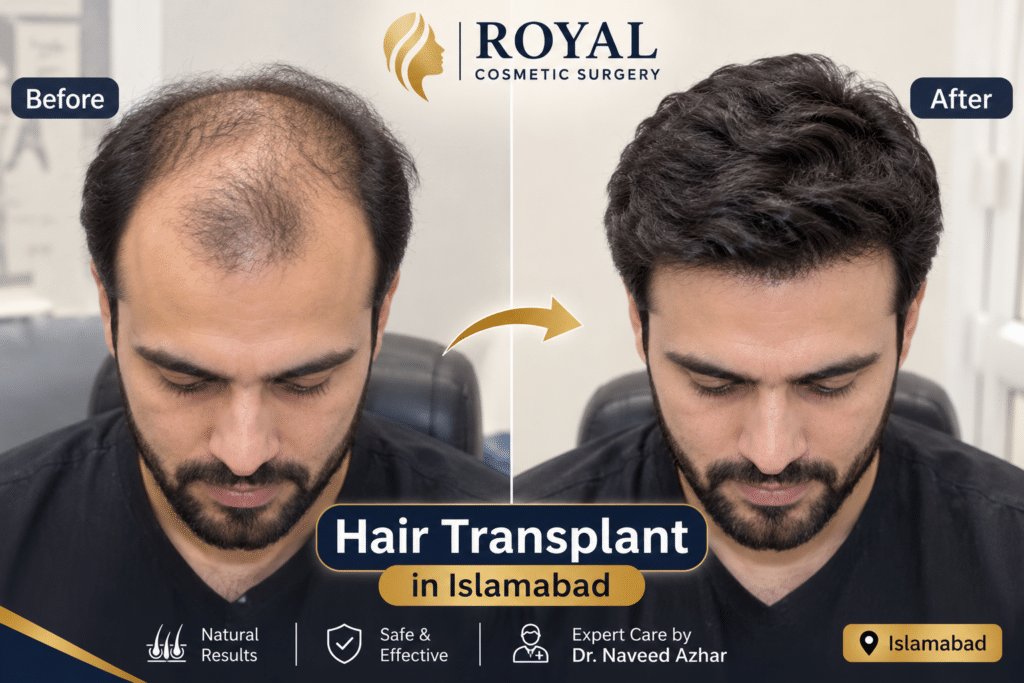

Hair Implant in Islamabad: Cost, Process, Results & Who Is a Good Candidate (2026 Guide)
Hair loss is no longer only a concern of middle age. Stress, hormonal changes, poor nutrition, genetics and styling habits now cause thinning and receding hairlines in people in their 20s and 30s. If you are searching for a fast way to look fuller and younger, a hair implant in Islamabad may be one of the options your specialist discusses with you. This guide explains how hair implants work, how they differ from a hair transplant, who is suitable, what the procedure involves, and what you can expect to pay in Pakistan.
What Is a Hair Implant?
A hair implant is a hair restoration treatment that uses biofibre (artificial) hair instead of your own natural hair follicles. The goal is the same as a hair transplant, which is to cover bald or thin areas, but the material is different. The fibres are placed into the scalp one by one to match the length, color and density of your existing hair, so the final look is natural.
Many people search for “hair implant” when they actually mean a hair transplant, so the difference matters. A hair transplant moves your own living follicles from a donor area, usually the back of the head, to thinning areas, and that hair keeps growing for years. A hair implant uses synthetic fibres that do not grow, so the length stays fixed. Your specialist will explain which approach suits your hair loss pattern and expectations.
Hair Implant vs Hair Transplant: Quick Comparison
Hair type: implants use artificial biofibre. Transplants use your own natural hair.
Growth: implanted fibres do not grow. Transplanted hair grows, can be trimmed and styled, and is generally long lasting.
Results: implants show coverage immediately. Transplants take several months to show full results.
Donor hair: implants can suit people with limited donor hair. Transplants need healthy donor hair.
Follow-up: implants may need top-up sessions as fibres fall out over time. Transplants usually need fewer.
If you want a permanent, natural-growing solution, you may also ask about FUE hair transplant, scarless hair transplant or stem cell hair transplant options.
Key Benefits of Hair Implants
When performed by an experienced clinician, a hair implant offers several advantages:
Immediate coverage: you see a fuller look straight away, without waiting months.
A short procedure: most sessions take around 2 to 3 hours under local anesthesia.
A minimally invasive approach: there is no large surgical wound.
Quick recovery: most people return to routine activities within a short time, following their doctor’s advice.
An option for limited donor hair: it can be considered when donor hair is not enough for a transplant.
A confidence boost: many patients feel more comfortable in social and professional settings.
Who Is a Good Candidate?
A hair implant may be suitable if you:
Have noticeable baldness or thinning hair
Want instant visible results
Do not have enough donor hair for a transplant
Are in good general health
Have realistic expectations about what artificial fibres can and cannot do
You may not be a suitable candidate if you have an active scalp infection or skin disease, uncontrolled diabetes, or conditions that slow healing. A proper scalp examination and medical history review are essential before any decision. If your hair loss is related to patchy bald spots, your doctor may first recommend assessing alopecia areata.
How to Prepare
Preparation is simple, but it matters:
Complete any blood tests your doctor requests.
Make sure your scalp is free from infection or irritation.
Avoid trimming your hair before the session unless told otherwise.
Tell your doctor about all supplements and medicines, especially blood thinners.
Arrange a ride home and plan a relaxed day after the session.
The Hair Implant Procedure, Step by Step
The treatment is performed by a trained specialist in a clinical setting. A typical session looks like this:
Consultation and scalp check: the doctor examines your scalp, checks for infection and plans the hairline, density and number of fibres.
Patch test: a small test is done to check how your scalp reacts.
Local anesthesia: the treatment area is numbed so you stay comfortable.
Implantation: the specialist places the biofibre hairs one by one using a special implanting tool, following a natural-looking pattern.
Cleaning and finishing: the scalp is cleaned with an antiseptic, and you receive aftercare instructions before going home.
Depending on the area covered and the number of fibres, the procedure usually takes between 2 and 3 hours. Some patients need more than one session.
Results and How Long They Last
Because the fibres are already at their final length, you see the change immediately. The look is typically natural when the density and hairline are planned carefully. In practice, results depend heavily on the doctor’s skill and on how your scalp responds. At Royal Cosmetic Surgery, the expected visible duration is around 8 to 9 months for many patients, and top-up sessions may be suggested to maintain density.
It is important to understand that synthetic fibres can loosen and shed over time, and some patients may experience irritation, infection or scalp reactions. That is why choosing an experienced clinic and following aftercare strictly is so important.
Aftercare Tips
Good aftercare protects your results and reduces the risk of complications:
Use the antiseptic or medication your doctor prescribes.
Keep the scalp clean and follow the washing instructions you are given.
Do not scratch, pick or apply any product to the scalp without approval.
Avoid heavy exercise, sweating and dusty places for the period your doctor recommends.
Take pain relief only as advised if you feel discomfort.
Contact your clinic quickly if you notice swelling, pus, fever or worsening redness.
Attend all follow-up visits.
Hair Implant Cost in Islamabad, Rawalpindi and Pakistan
The cost of a hair implant at Royal Cosmetic Surgery generally ranges from PKR 60,000 to PKR 400,000. The final price depends on:
The size of the area being treated
The number of fibres or sessions needed
The specialist’s expertise
The clinic’s facilities and location
Any additional medicines or follow-up care
The best way to get an exact quote is a personal consultation, where your scalp is assessed and a plan is built around your goals. You can also review the hair transplant cost in Islamabad to compare options.
Other Hair Loss Treatments You Can Consider
A hair implant is not the only solution. Depending on your hair type and stage of loss, your specialist may suggest:
PRP hair treatment to stimulate weak follicles
Exosomes hair therapy, a newer regenerative approach
Mesotherapy for hair loss
Scalp micropigmentation for a shaved, dense look
Non-surgical hair replacement
Hair fall treatment for early thinning
Choosing the Right Clinic
Whatever treatment you choose, check the specialist’s qualifications, ask to see real before-and-after results, confirm which materials and techniques are used, and make sure you understand the risks, costs and follow-up plan. Be careful of clinics that promise guaranteed or risk-free results.
Book Your Consultation
If you are considering a hair implant in Islamabad, the first step is an honest, personal consultation. The team at Royal Cosmetic Surgery will assess your scalp, explain whether a hair implant or a hair transplant suits you better, and give you a clear cost estimate with no pressure.
Royal Cosmetic Surgery
3rd Floor, Ammar Center, F-7 Markaz, Islamabad
Phone/WhatsApp: +92 332 5488777
Website: https://www.royalcosmeticsurgery.com.pk/hair-implant.html