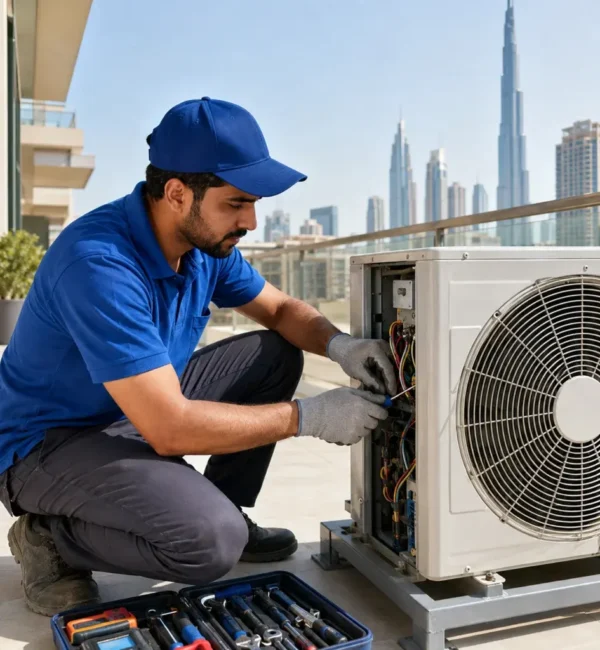

An air conditioner that refuses to start can quickly disrupt your daily routine, especially during hot weather. You may press the remote several times without getting a response, notice that the indoor unit stays silent, or hear a brief clicking sound before the system shuts down. In some cases, the AC starts normally but switches off when the circuit breaker trips. Repeatedly resetting the breaker may seem like an easy fix, but it does not address the electrical fault behind the shutdown.
Several problems can prevent an AC from starting or cause it to trip the breaker, including damaged wiring, a faulty capacitor, a malfunctioning thermostat, or an overloaded electrical circuit. Start with simple checks, such as inspecting the remote batteries and confirming the thermostat settings. However, repeated breaker trips, burning smells, or unusual electrical sounds require immediate attention. A technician can test the electrical components, locate the fault, and recommend the correct repair before the problem causes further damage.
Why Does Your AC Refuse to Start?
An AC that does not respond to the remote or thermostat may have a simple power issue or an internal electrical fault. Before arranging a repair visit, check the basic controls and power supply. These initial checks can help you understand the problem without opening the unit or handling electrical components.
Check the Power Supply
Look at the AC’s dedicated breaker and confirm that the main power supply is available. If the breaker has tripped, do not keep switching it back on. A repeated trip indicates a fault that needs inspection.
Inspect the Remote Control
Weak batteries, damaged buttons, or a faulty remote sensor can prevent the unit from receiving a start command. Replace the batteries and try the control panel if your AC supports manual operation.
Review the Thermostat Settings
Check that the thermostat is set to cooling mode and that the selected temperature is below the current room temperature. Incorrect settings or a blank display may indicate a control or power issue.
AC Tripping the Circuit Breaker: What Causes It?
A breaker trips when the electrical system detects a condition that could cause damage or create a safety risk. If your AC repeatedly loses power during startup or operation, the issue may involve a motor, compressor, capacitor, wiring connection, or circuit. The cause needs proper testing rather than repeated resets.
AC Capacitor Failure
A weak or damaged capacitor may prevent the compressor or fan motor from starting correctly. You might hear a humming sound while the unit fails to run. A technician can test the capacitor and replace it if necessary.
Damaged Electrical Wiring
Loose connections, worn insulation, or damaged wiring can interrupt power and cause the breaker to trip. Avoid touching exposed wires or attempting repairs yourself. An electrician or AC technician should inspect the affected connections.
Compressor or Motor Problems
A faulty compressor or fan motor may draw more electrical current than the circuit can safely handle. If the breaker trips when the AC starts, a technician should check the motor and compressor before replacing any parts.
Overloaded Electrical Circuit
Other appliances connected to the same circuit may contribute to an overload, depending on the electrical setup. An inspection can determine whether the circuit has the correct capacity for the AC and its starting current.
When the Thermostat or Remote Stops Responding
Sometimes, the AC has power, but the controls cannot communicate with the system. This can make the unit appear completely dead even when the main electrical supply works. Checking the thermostat and remote helps narrow down the issue before a technician tests the control board or wiring.
AC Thermostat Not Working in Dubai
A faulty thermostat may show a blank screen, display incorrect room temperatures, or fail to send a cooling command. Check its batteries if applicable and review the settings. If the display remains blank, arrange an inspection.
AC Remote Not Responding
If the AC remote not responding is the main issue, replace its batteries and check for damaged buttons or a blocked signal path. If the unit still does not respond, the remote sensor or control board may need testing.
Faulty Control Board
The control board receives signals from the thermostat and remote and coordinates the AC’s operation. A damaged board can prevent startup or cause irregular shutdowns. A technician can test its connections and electrical components to identify the fault.
When You Need Emergency AC Repair in Dubai
Some AC problems need prompt attention because they involve electrical safety rather than ordinary cooling performance. Do not continue operating a unit that shows signs of electrical damage. If you need emergency AC repair in Dubai, arrange a technician’s visit when the system repeatedly trips its breaker, produces a burning smell, or makes unusual electrical noises.
Burning Smell or Smoke
Switch off the AC at the breaker if you can do so safely. Do not restart the unit. A burning smell or smoke may indicate overheating wires, damaged insulation, or a failing electrical component.
Repeated Breaker Trips
A breaker that trips again after a reset signals an unresolved electrical problem. Leave it switched off and arrange a professional inspection. Repeatedly restoring power can increase the risk of further damage.
AC Stops During Operation
If the system suddenly shuts down and loses power, note what happened immediately before the shutdown. A technician can check the electrical supply, capacitor, motor, compressor, and control system to locate the cause.
How Professional AC Electrical Repairs Restore Operation
Electrical AC repairs require more than replacing the part that appears damaged. A technician needs to identify why the system stopped working and check related components before restarting it. This approach helps prevent the same fault from returning shortly after the repair.
Electrical System Inspection
The technician checks the power supply, breaker, wiring connections, and relevant electrical components. These tests help identify interruptions, loose connections, and signs of overheating without relying on guesswork.
Component Testing
The technician tests the capacitor, motors, thermostat, control board, and compressor as needed. This process helps distinguish a failed component from a wider electrical supply problem.
Repair and Replacement
After identifying the fault, the technician explains the repair options and replaces damaged components where necessary. The repair should address the actual cause rather than focus only on the visible symptom.
Final Operating Test
Once the repair is complete, the technician runs the AC and checks its startup, cooling operation, and electrical performance. This final test helps confirm that the system operates correctly after the repair.
Conclusion:
An AC that will not turn on or repeatedly trips the breaker may have a problem with its power supply, wiring, capacitor, motor, thermostat, or control board. Basic checks can help rule out remote and thermostat settings, but electrical faults need proper testing. Stop using the unit if the breaker keeps tripping or you notice smoke, sparks, or a burning smell. Arrange an inspection so a technician can identify the cause, complete the necessary repair, and test the AC before returning it to normal operation.
Frequently Asked Questions
1. Why is my AC not turning on even though the power is available?
The issue may involve a faulty capacitor, thermostat, remote sensor, control board, wiring connection, or internal safety switch. A technician can test the system to identify which component prevents startup.
2. Why does my AC keep tripping the circuit breaker?
An AC tripping the circuit breaker can indicate damaged wiring, a failing capacitor, a motor problem, a compressor fault, or an overloaded circuit. Leave the breaker off if it trips repeatedly and arrange an inspection.
3. Can a faulty capacitor stop my AC from starting?
Yes. The capacitor helps certain AC motors start and run. If it fails, the fan or compressor may struggle to start, produce a humming sound, or stop operating.
4. Should I reset the AC breaker if it trips?
You should not repeatedly reset a breaker that keeps tripping. It may be responding to an electrical fault. Leave it off and arrange a qualified technician to inspect the system.
5. Can a faulty thermostat make the AC stop working?
Yes. A thermostat that cannot send the correct signal may prevent the AC from starting or maintaining the selected temperature. The technician can check its settings, power supply, wiring, and operation.