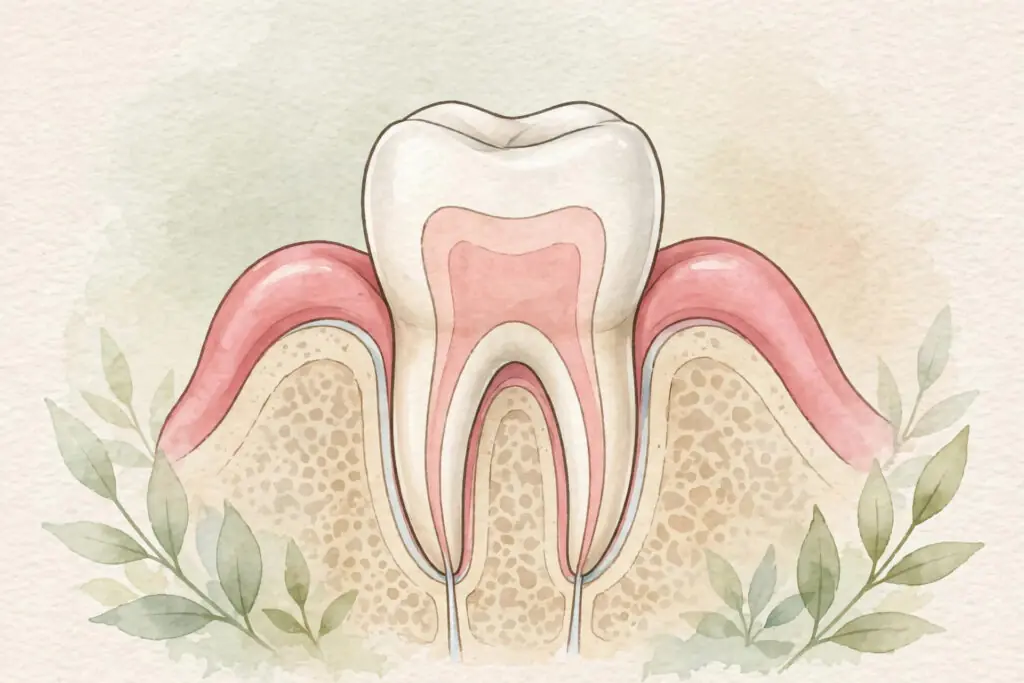

Gum disease is common in adults and easy to overlook. Early changes can be painless, so inflamed gums may go unnoticed for months. Over time, inflammation around the teeth can affect tissues and bone that hold teeth in place. Understanding how gum disease develops, what each stage can look like, and what treatment options a dental professional may discuss can help readers recognise early signs and ask informed questions at a dental evaluation.
This article provides general educational information about stages, warning signs, risk factors, evaluation, treatment, and daily habits. It does not describe a plan for any individual reader. Gum health varies with hygiene, general health, medication use, smoking, genetics, and frequency of professional care.
How Gum Disease Develops
Healthy gums are typically firm, pink, and close-fitting around each tooth, forming a seal that helps protect roots and bone from bacteria. That seal can be disrupted when plaque, a soft, sticky daily film containing bacteria, builds up along the gumline.
Brushing and cleaning between teeth remove much of this film. When plaque remains, it can harden into tartar, also called calculus. Tartar is rough and porous, so more plaque can collect on it, and it cannot be removed by brushing or flossing at home. Only professional cleaning can remove tartar once it has formed above or below the gumline. In response to bacteria, the body produces inflammation. At first, this may be limited to surface gum tissue. If buildup continues, pockets may form as attachment loosens, and bacteria can collect inside them where brushing cannot easily reach. As pockets deepen, more tissue and bone may be affected. Progression varies: some people remain mild for years, while others change faster.
The Four Stages of Gum Disease
Dental professionals often describe gum disease in four broad stages. Boundaries are not always sharp, but the progression below is widely used for general education. Each stage involves deeper tissue and a wider range of treatment considerations.
Gingivitis: The Earliest Stage
Gingivitis is the mildest form of gum disease. Inflammation is generally limited to the gums, and bone and ligaments that support teeth are not yet significantly affected. Gums may look redder than usual, appear puffy, and bleed during brushing or flossing. Tenderness and a change in breath may also occur. At this stage, changes are often limited to soft tissue, and improved cleaning can often reduce inflammation, so early attention matters even without pain.
Early Periodontitis
When inflammation continues without adequate care, gingivitis may progress to early periodontitis. Infection and inflammation begin to affect tissues that attach teeth to bone. Small pockets may form between teeth and gums. These pockets are measured in millimetres during a dental examination, and even a small increase in depth can indicate that attachment has begun to loosen. Symptoms often remain mild. Regular examinations matter here, because a dental professional can detect pocket and bone changes not visible at home.
Moderate Periodontitis
In moderate periodontitis, pocket depths tend to increase further, and more supporting tissue and bone may be affected. Gum recession may become more noticeable, exposing more of the tooth root. Teeth may feel slightly less stable, and sensitivity to hot, cold, or sweet foods and drinks may increase where roots are exposed. Bacteria in deeper pockets are harder to remove at home, so professional treatment becomes more central. A dental professional may discuss tobacco use, blood sugar control in general terms, stress, nutrition, and medications that reduce saliva flow.
Advanced Periodontitis
Advanced periodontitis is the most severe stage. A substantial amount of supporting bone and tissue may have been lost. Teeth may feel loose, shift position, or cause discomfort when chewing. Gum recession may be pronounced, pockets may be deep, and the bite may feel different because teeth have moved. Care discussions tend to be more complex and may combine non-surgical and surgical approaches, including general options for replacing a tooth that cannot be retained. Monitoring remains important, because periodontal disease is often managed over time rather than resolved by one procedure. Readers seeking general background on periodontal disease treatment in Van Nuys may find it helpful to learn how staging guides the options discussed at an evaluation.
Warning Signs to Watch For
Gum disease does not always cause pain, especially in early stages. Small changes can help a person decide when to seek a dental evaluation. The signs below do not by themselves confirm a diagnosis, but a pattern of signs is worth mentioning at a dental visit.
- Gums that bleed regularly during brushing or flossing
- Gums that look red, swollen, puffy, or tender
- Gums pulling back from teeth, making teeth look longer
- Persistent bad breath or unpleasant taste despite brushing
- Teeth that feel loose, shift, or fit together differently
- Increased sensitivity near the gumline to hot, cold, or sweet items
- Pus, swelling, or soreness around a tooth or gumline
- Pain when chewing, or a change in how an appliance fits
Sudden swelling, fever, or severe pain should be treated as a reason to seek prompt dental advice. A dental professional can advise on timing based on symptoms described.
Factors That Can Increase Risk
Risk is not determined by one factor alone. Several influences can combine to make gum disease more likely or speed its progression.
- Inconsistent brushing or cleaning between teeth
- Tobacco use, including smoking, linked to slower healing
- Health conditions affecting immune response, such as diabetes in general terms
- Hormonal changes, for example during pregnancy or menopause
- Medications that reduce saliva flow
- Poor nutrition affecting tissue health and immune response
- Stress affecting immune function and oral care routines
- A family history of gum disease
None of these factors means gum disease is inevitable. They help explain why a dental professional may ask about health history, medications, tobacco use, and daily routines during an evaluation.
How Gum Health Is Evaluated
A gum evaluation usually begins with questions about symptoms, health history, medications, tobacco use, and oral care habits. A dental professional then examines the gums for redness, swelling, recession, and bleeding, and a small probe measures pocket depth around each tooth. Recorded over time, these measurements show whether pockets are stable, improving, or deepening. X-rays may show bone levels, and the examination may also check loose teeth and bite.
Together, these findings help a dental professional describe the stage, identify areas needing most attention, and outline possible options. A plan is often tailored to extent of disease, general health, preferences, and other dental needs.
Treatment Options Dentists May Discuss
Treatment aims to reduce bacteria, remove plaque and tartar, reduce inflammation, and help gums reattach where possible. The right category depends on stage, pocket depth, bone involvement, and individual circumstances.
Non-Surgical Approaches
Many cases, particularly in earlier stages, are managed with non-surgical care. Scaling and root planing, often described as deep cleaning, is a common example. Scaling removes plaque and tartar from above and below the gumline. Root planing smooths root surfaces, which can make it harder for bacteria to cling and easier for gums to reattach. This procedure may take one or more visits, and temporary sensitivity afterward is possible. Other steps may include brushing and flossing instruction, interdental brushes or water flossers where recommended, and antimicrobial rinses in some cases. Follow-up visits re-measure pockets and assess healing. General information on gum disease treatment in Van Nuys can help readers understand questions to ask about non-surgical care and follow-up.
Surgical Approaches
When non-surgical care alone is not enough for deeper pockets or more advanced tissue changes, surgical options may be discussed. These procedures are considered case by case, and a person may be referred to a periodontist, a specialist in gum health. Flap surgery is one option: gums are gently lifted back so tartar can be removed from deeper areas and irregular bone surfaces smoothed, before gums are repositioned. Bone grafting may be discussed where bone loss has occurred, to support regeneration of bone around a tooth where appropriate. Soft tissue grafts may be considered where recession has exposed roots, using tissue from another area to help cover them. Benefits, risks, and recovery vary. After surgery, follow-up remains important, so healing can be monitored.
Daily Habits That Support Gum Health
Daily habits do not replace professional cleaning, especially where tartar or deep pockets are present, but they limit plaque between visits.
- Brush twice daily with fluoride toothpaste and a soft-bristled brush
- Brush for about two minutes, covering all surfaces of every tooth
- Clean between teeth daily with floss or interdental brushes
- Replace a toothbrush when bristles become worn or frayed
- Avoid tobacco in all forms
- Note new bleeding, swelling, or sensitivity, and mention it at the next visit
- Keep regular dental visits, even when gums feel comfortable
A varied diet supports tissue health, while frequent sugary snacks and drinks can feed plaque bacteria.
Frequently Asked Questions
Can early gum disease be reversed?
Gingivitis is often described as reversible, in the sense that inflammation can improve when plaque and tartar are removed and daily cleaning improves. Once periodontitis has developed, the condition is usually described as manageable rather than fully reversible, and lost bone and attachment do not always return fully.
Is gum disease painful?
Not always. Early gum disease is often painless, which is why it can go unnoticed. Bleeding during brushing may be the only sign. Pain or discomfort when chewing tends to appear more often as disease advances. Absence of pain should not be taken as a sign that gums are healthy.
How often should gums be checked?
Frequency depends on stage, risk factors, and stability. Some people attend routine examinations every six months, while others with periodontal disease attend maintenance visits every three or four months. A dental professional sets the interval based on pocket depths, bleeding, and response to treatment.
Does treatment hurt?
Experiences vary. Non-surgical cleaning may cause temporary sensitivity or soreness, and local anaesthetic is often used for deeper cleaning to improve comfort. Surgical procedures involve anaesthetic during treatment and a healing period afterward, when soreness or swelling may occur.
Putting It All Together
Gum disease ranges from mild gingivitis to advanced periodontitis, which can affect bone and tooth stability. Recognising stages and warning signs, and learning about treatment options, can help readers approach dental care with greater clarity. Consistent home care, regular professional cleanings, and timely evaluation when symptoms appear support gum health. General education is a starting point, not a substitute for examination.
This article is for general educational purposes only and is not medical advice. Experiences and outcomes can vary. Consult a qualified dental professional about your specific situation.