
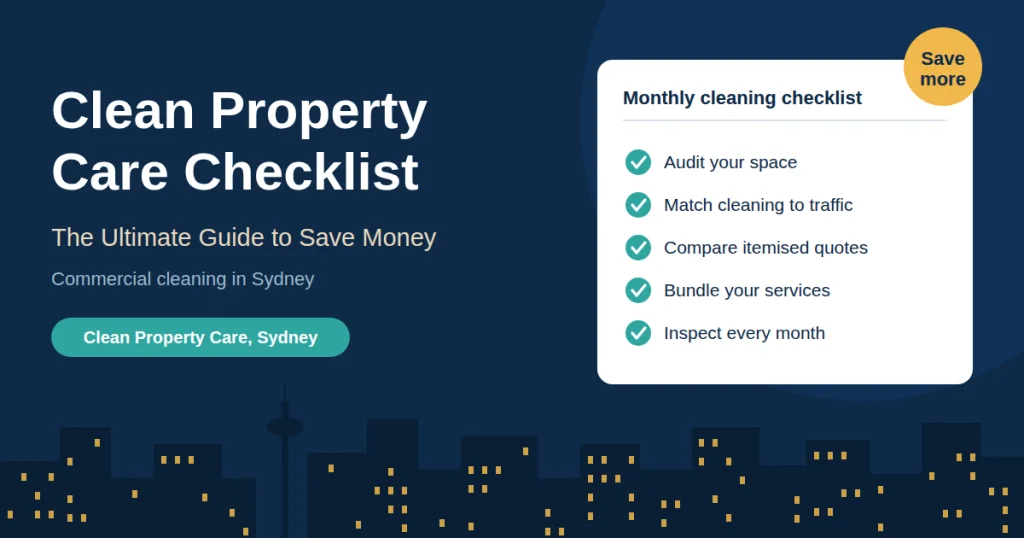

By Clean Property Care | Sydney
Keeping a workplace spotless is one of those expenses that feels optional until it isn’t. A grubby reception area, a sticky lunchroom or a neglected carpet quietly costs businesses money through lost customers, sick days, premature equipment replacement and expensive emergency call-outs. The good news is that with the right checklist, you can keep standards high and your budget firmly under control. Whether you manage a boutique in Surry Hills, a warehouse in Alexandria or a full floor of offices in the CBD, this guide shows you how to plan, schedule and buy commercial cleaning services in Sydney without overpaying.
Why a Cleaning Checklist Saves You Money
A checklist turns cleaning from a reactive cost into a predictable one. Without it, tasks get missed, duplicated or rushed, and you end up paying for extra visits to fix problems that regular care would have prevented. Worn carpet, stained stone floors, mouldy bathrooms and clogged air vents all cost far more to repair than they do to maintain.
A written checklist also gives you leverage. When every task, frequency and standard is documented, you can compare quotes fairly, hold your cleaners accountable and stop paying for work you don’t need. If you’re comparing commercial cleaning services in Sydney, a clear scope is the single best way to avoid hidden extras, vague pricing and disputes about what was included. It also makes onboarding a new provider far easier, because everyone starts from the same page.
Step 1: Audit Your Property Before You Spend a Dollar
Before requesting any quotes, walk the site with a notepad or your phone and record the basics: floor types (carpet, vinyl, tile, polished concrete), the number of toilets and kitchens, glass and window areas, after-hours access arrangements and any security requirements. Estimate the floor area of each zone, then rate every zone as high, medium or low traffic.
Customer-facing areas such as entrances, reception counters and bathrooms deserve the most attention. Storerooms, archive rooms and rarely used meeting rooms seldom need daily service. This simple audit prevents the most common budget leak of all: paying for daily cleaning in areas that only need a weekly once-over.
Step 2: The Master Cleaning Checklist
Use the following schedule as a starting point, then adjust it to your site. The golden rule is to match frequency to traffic, not to habit.
Daily Tasks
- Empty bins and replace liners
- Clean, disinfect and restock toilets (soap, paper, sanitiser)
- Vacuum or mop entrances and main walkways
- Wipe kitchen benches, sinks and shared tables
- Disinfect high-touch points such as door handles, light switches, lift buttons and counters
- Spot-clean glass doors and the reception desk
Weekly Tasks
- Vacuum all carpets and mop all hard floors thoroughly
- Dust desks, shelves, window sills and skirting boards
- Clean the outside of fridges, microwaves and other appliances
- Sanitise shared phones, keyboards and equipment
- Clean internal glass and partitions
Monthly Tasks
- Dust air vents, high ledges, blinds and light fittings
- Detail-clean bathrooms, including grout, taps and drains
- Spot-treat carpet stains and buff hard floors
- Wipe down walls, doors and frames
Quarterly and Annual Tasks
- Steam clean or hot-water extract carpets
- Strip and reseal hard floors
- Clean external windows and façades
- Pressure wash entrances, car parks and loading docks
- Clean air-conditioning grilles and arrange routine servicing
Work through this list with your provider and mark each task with an agreed frequency. Anything that isn’t on the list shouldn’t be on the invoice.
Step 3: Tailor the Checklist to Your Property Type
No two sites are identical, and the cheapest way to clean is the one built around how your space is actually used.
Offices
Offices save money by concentrating on desks, kitchens, bathrooms and meeting rooms. A clean-desk policy helps cleaners work faster, which lowers time-based charges. Reliable office cleaning services in Sydney will also manage waste and recycling, restock consumables and sanitise shared technology. If your team works a hybrid roster, consider cleaning every second night instead of every night; many Sydney businesses with part-time occupancy trim their costs this way without noticing any drop in standards.
Retail
First impressions drive sales, and a dusty display or smeared window can send shoppers straight past your door. When arranging retail cleaning services Sydney stores should prioritise entrances, windows, fitting rooms, counters, floors and shelving. Schedule heavy cleaning before opening or after closing so customers are never disrupted, and plan extra attention for peak periods like end-of-financial-year sales, school holidays and Christmas trade.
Industrial Sites
Warehouses, factories and workshops need a safety-first approach: degreasing, dust control, spill management, floor scrubbing and compliant waste handling. Quality industrial cleaning services Sydney businesses rely on will understand Work Health and Safety obligations and site induction requirements. Preventing build-up reduces slip hazards, protects machinery and cuts incident-related downtime, which is often the biggest hidden cost of all.
Shopping Centres
Large retail precincts have unique demands: food courts, public amenities, car parks, travelators, lifts, glass and common areas, often serviced around the clock. Professional shopping centre cleaning services Sydney landlords commission typically use a team model with an on-site supervisor, day porters for rapid response and after-hours crews for deep cleaning, backed by clear reporting so management can see exactly what was done.
Commercial Buildings
For property managers, commercial building cleaning Sydney tenants expect spans lobbies, lifts, stairwells, amenities, tenant floors, façades and plant areas. Bundling common-area services into a single contract is usually cheaper than managing several separate arrangements, and consistent standards across the building help you retain tenants and protect the value of the asset.