

Hearing the words “kidney disease” can feel overwhelming, especially when a doctor starts talking about stages and numbers you’ve never heard before. Once you understand what these stages actually mean, the whole picture becomes far less frightening and far more manageable.
What “Stages” Actually Measure
Doctors track chronic kidney disease CKD using a measurement called GFR kidney function, or glomerular filtration rate. In plain terms, this number shows how well your kidneys are filtering waste out of your blood. A higher number means your kidneys are doing their job well. As the number drops, it means the kidneys are struggling more.
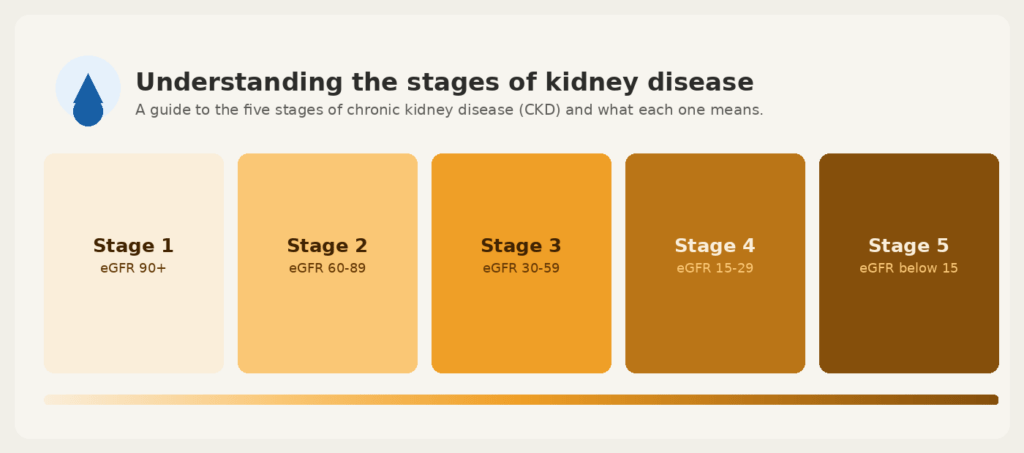
Based on this number, the stages of chronic kidney disease range from mild to severe, five stages in total. Think of it less like a countdown and more like a map, it helps you and your doctor know exactly where you stand and what to watch for next.
Stage 1 and 2: Mild, Often Silent Damage
In the earliest stages, kidney function is still fairly normal or only slightly reduced. Most people feel completely fine and have no symptoms at all. The only way to catch it this early is through a simple blood or urine test, which is exactly why routine screening matters so much for people with diabetes, high blood pressure, or a family history of kidney problems.
Many patients are genuinely surprised to learn they’re already at stage 1 or 2, since day-to-day life feels entirely normal. This is precisely why these early stages so often go undiagnosed without proactive testing.
Stage 3: Moderate Damage, More Noticeable Signs
By stage 3, kidney function has dropped enough that some people start noticing changes, like tiredness, swelling in the feet or ankles, or changes in how often they urinate. This is often the point where doctors start talking more seriously about diet changes, blood pressure control, and closer monitoring to slow things down.
Stage 3 is sometimes split further into 3a and 3b, reflecting a wide range within this single stage. A patient at the early end of stage 3 may have years of stable function ahead, while someone closer to stage 4 needs more urgent attention.
Stage 4: Severe Damage, Planning Ahead:
At stage 4, kidney function is significantly reduced, and conversations usually shift toward preparing for what comes next. This might mean discussing dialysis options or exploring whether a transplant could be possible down the road. It’s a heavier stage emotionally, but it’s also a stage where planning ahead genuinely helps, giving patients and families time to prepare rather than facing decisions during a sudden crisis.
Stage 5: Kidney Failure:
Stage 5 means the kidneys have lost most or all of their ability to function on their own. At this point, dialysis or a transplant becomes necessary to sustain life. For many families, cost becomes a major concern here, which is exactly why free dialysis treatment programs exist, so a stage 5 diagnosis doesn’t also mean losing access to life-saving care.
Why Knowing Your Stage Actually Helps
Understanding your stage isn’t just medical bookkeeping. It shapes real decisions, what foods to eat, how often to see a doctor, and when to start thinking about bigger treatment options. Patients who understand their stage tend to feel more in control, even when the diagnosis itself is hard to hear.
Doctors also use staging to set realistic expectations. Someone at stage 2 can often focus on prevention and lifestyle changes, while someone at stage 4 needs a much more active, closely monitored treatment plan. Knowing where you stand removes a lot of guesswork from both sides of the conversation.
Protecting Your Kidneys at Every Stage:
Regardless of stage, certain habits support kidney health throughout the entire journey. Managing blood pressure and blood sugar, staying hydrated appropriately, limiting excess salt, and attending every scheduled checkup all make a measurable difference. These habits don’t reverse existing damage, but they consistently slow how quickly a condition progresses from one stage to the next.
Talking to Family About Your Stage:
Sharing a kidney disease diagnosis with family can feel just as hard as hearing it yourself. Many patients worry about becoming a burden or about how much detail to share with children in the household. A simple, honest explanation in plain language rather than medical jargon, it usually works better than either oversharing every clinical detail or hiding the diagnosis entirely.
Family involvement often makes a real difference in how well a patient manages their condition long-term. Someone who understands what stage 3 means, for example, is far more likely to help with meal planning or remind a loved one about medication than someone who was never given a clear explanation in the first place.
FAQs:
Can kidney disease move backward to an earlier stage?
In some cases, especially when caught early and managed well, decline can slow significantly or even stabilize, though full reversal is uncommon once damage has occurred.
How often should someone with early-stage kidney disease get tested?
This depends on individual risk factors, but many doctors recommend testing every six to twelve months for people with diabetes or high blood pressure.
Does everyone with stage 3 kidney disease eventually need dialysis?
No. Many people stay at stage 3 for years, or even the rest of their lives, with proper management of blood pressure and blood sugar.
Is GFR the only test used to determine kidney disease stage?
GFR is the main measurement, but doctors often combine it with a urine test checking for protein, which gives a fuller picture of how the kidneys are functioning.
Final Thoughts:
Kidney disease stages exist to help, not to frighten. They give patients and doctors a shared language for tracking what’s happening and planning what comes next. Whatever stage a diagnosis lands on, understanding it clearly is always the better starting point than guessing.