
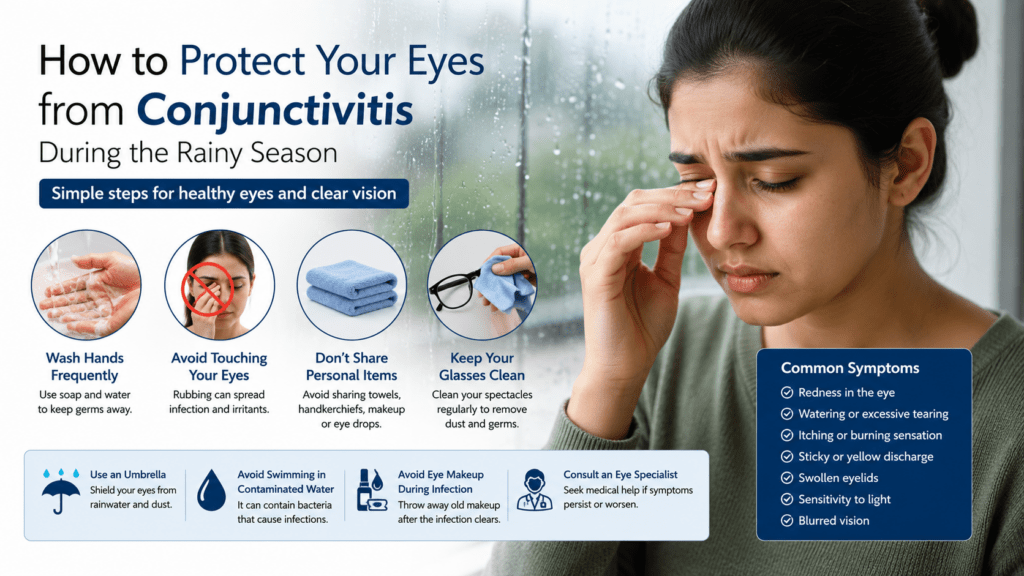

The rainy season brings cooler weather and much-needed relief from the summer heat, but it also creates favorable conditions for the spread of eye infections, especially conjunctivitis, commonly known as pink eye. Increased humidity, poor hygiene, and frequent contact with contaminated surfaces can increase the risk of infection. By understanding the causes, symptoms, and preventive measures, you can protect your eyes and maintain good vision throughout the monsoon.
What Is Conjunctivitis?
Conjunctivitis is an inflammation of the conjunctiva, the thin, transparent membrane that covers the white part of the eye and lines the inside of the eyelids. It can be caused by viruses, bacteria, allergies, or environmental irritants. Viral and bacterial conjunctivitis are contagious and can spread quickly through direct contact, shared towels, or contaminated objects.
Common Symptoms
Recognizing the early signs of conjunctivitis is important for timely treatment. Common symptoms include:
- Redness in one or both eyes
- Excessive tearing or watery eyes
- Itching or burning sensation
- Sticky or yellow eye discharge
- Swollen eyelids
- Sensitivity to light
- Temporary blurred vision due to discharge
If you experience these symptoms, avoid touching your eyes and consult an eye specialist promptly.
Tips to Prevent Conjunctivitis During the Rainy Season
Preventing conjunctivitis is easier than treating it. Follow these simple eye care practices:
- Wash your hands frequently with soap and water.
- Avoid rubbing or touching your eyes.
- Do not share towels, pillowcases, cosmetics, or eye drops.
- Clean your spectacles regularly.
- Replace eye makeup after recovering from an eye infection.
- Avoid swimming in contaminated pools or stagnant water.
- Wear protective eyewear while travelling in dusty or polluted environments.
- Eat a healthy diet rich in vitamins A and C to support eye health.
Maintaining good personal hygiene is one of the most effective ways to reduce the risk of infection.
Treatment Options
Treatment depends on the underlying cause. Viral conjunctivitis usually resolves on its own with supportive care, while bacterial conjunctivitis may require antibiotic eye drops prescribed by an ophthalmologist. Allergic conjunctivitis is managed with anti-allergy medications and by avoiding allergens. Never use over-the-counter steroid eye drops without medical advice, as they may worsen certain eye conditions.
When Should You Visit an Eye Specialist?
Seek immediate medical attention if your symptoms are severe, your vision becomes blurred, you experience intense eye pain, or the redness persists for several days. Early diagnosis and proper treatment help prevent complications and reduce the spread of infection.
For detailed information on causes, symptoms, prevention, and treatment, visit Agarwal Hospitals’ Rainy Season Conjunctivitis Eye Care Guide: https://agarwalhospitals.com/rainy-season-conjunctivitis-eye-care-guide/
Conclusion
Conjunctivitis is a common eye infection during the rainy season, but it can often be prevented with proper hygiene and timely care. Washing your hands regularly, avoiding eye rubbing, and consulting an eye specialist at the first sign of infection can help keep your eyes healthy. Taking these simple precautions will allow you to enjoy the monsoon season while protecting your vision.