
Non-surgical and minimally invasive body-contouring procedures use different forms of energy to address localised fat. Two approaches that are sometimes compared are focused ultrasound and laser lipolysis. Liposonix Fat Removal in Dubai uses high-intensity focused ultrasound to create a controlled thermal effect within selected subcutaneous fat, whereas laser-based procedures use light energy that is absorbed by tissue and converted into heat.
Although both approaches involve thermal effects, their energy sources, delivery systems, and treatment methods are different. Some laser lipolysis procedures are minimally invasive and involve a fibre inserted beneath the skin, while others use external laser applicators. Understanding the exact technology is essential before comparing outcomes or recovery.
Liposonix Fat Removal in Dubai vs Laser Lipolysis: The Main Difference
The most important distinction is how energy reaches the target tissue.
Liposonix delivers focused acoustic energy from an external treatment handpiece. Laser lipolysis uses laser light, which produces a photothermal effect when absorbed by tissue.
The phrase “laser lipolysis” covers different technologies, so patients should confirm whether a proposed treatment is external or minimally invasive.
How Focused Ultrasound Works
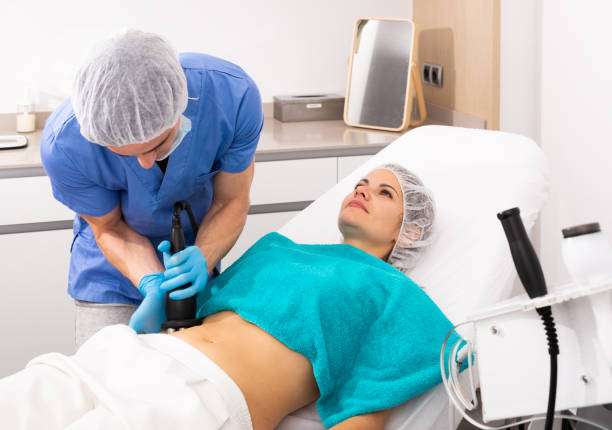
Liposonix uses high-intensity focused ultrasound to concentrate acoustic energy at a selected depth within subcutaneous adipose tissue.
The intended thermal effect disrupts targeted fat cells. The body then gradually processes the affected cellular material through its natural inflammatory and clearance mechanisms.
The procedure does not involve conventional surgical suction or an incision for fat removal.
How Laser Lipolysis Works
Laser energy can be absorbed by tissue and converted into heat. Depending on the system, the laser may be delivered externally or through a small fibre inserted beneath the skin.
In minimally invasive laser-assisted lipolysis, thermal energy is delivered directly into the treatment area. The procedure may involve local anaesthesia, small entry points, and specific recovery instructions.
External laser-based body-contouring devices have different mechanisms and should not be treated as equivalent to invasive laser lipolysis.
Focused Ultrasound Waves vs Photothermal Energy
| Feature | Liposonix | Laser lipolysis |
|---|---|---|
| Energy source | Focused acoustic ultrasound | Laser light |
| Main tissue interaction | Concentrated acoustic energy creates a thermal effect | Absorbed light energy converts to heat |
| Delivery | External focused ultrasound handpiece | External applicator or minimally invasive fibre, depending on device |
| Incisions | No conventional surgical incision | May involve small entry points if fibre-based |
| Fat-removal mechanism | Targeted tissue disruption followed by biological clearance | Varies by system; may involve thermal disruption and, in some procedures, suction |
| Recovery | Generally non-surgical, with temporary effects possible | Varies; invasive methods require additional recovery |
| Treatment suitability | Depends on approved indication and tissue profile | Depends on laser system, technique, and treatment area |
The comparison highlights why a procedure’s name alone is not enough to establish how it works.
How Photothermal Energy Affects Tissue
Laser lipolysis relies on the absorption of light energy by tissue. As energy is absorbed, it can generate heat and produce a controlled thermal response.
The effect depends on the laser wavelength, delivery method, tissue characteristics, and treatment protocol.
External Laser Systems
External laser systems deliver energy through the skin. Their intended effects and treatment depth depend on the specific device.
They should not automatically be described as equivalent to minimally invasive laser lipolysis.
Fibre-Based Laser Lipolysis
Some procedures use a small laser fibre introduced beneath the skin. This allows energy to be delivered directly into the target tissue.
Because the technique is minimally invasive, it may involve local anaesthesia, entry points, and additional procedural precautions. The clinician should explain whether fat is physically removed or whether the treatment relies primarily on a thermal tissue response.
Why Treatment Depth and Delivery Method Matter
Liposonix uses a focused ultrasound system with a defined focal zone. Laser procedures use different delivery methods, so their target depths and tissue effects vary.
A clinician must consider the patient’s anatomy, treatment area, fat thickness, skin condition, and underlying structures.
The deepest or most powerful treatment is not necessarily the best. Appropriate targeting and safety are more important than maximising energy exposure.
Which Areas Can Be Treated?
The approved treatment areas vary by device and procedure.
Liposonix has been associated with non-invasive waist circumference reduction. Laser lipolysis may be used for selected areas depending on the technology and whether the procedure is external or minimally invasive.
Patients should not assume that a device approved for one body region can safely treat another.
Why the Abdomen Requires Careful Assessment
Abdominal fullness may come from subcutaneous fat, visceral fat, loose skin, or abdominal-wall changes.
Liposonix is intended for selected subcutaneous fat. It does not remove visceral fat around internal organs.
Laser-based procedures also have limitations and should not be selected without identifying the source of the fullness.
Comparing Candidate Suitability
Liposonix may be considered for adults with a localised subcutaneous fat deposit that matches the device’s intended use.
Laser lipolysis suitability depends on the specific procedure. External systems and minimally invasive laser techniques may have different eligibility criteria and risks.
A consultation should review:
-
Fat distribution and tissue thickness.
-
Skin laxity and quality.
-
Previous procedures and surgical history.
-
Medical conditions and medications.
-
Hernias or other anatomical concerns.
-
Expected contour changes and recovery preferences.
The clinician should explain why a particular technology is being recommended and whether a less invasive or surgical alternative may be more appropriate.
Recovery and Possible Side Effects
Recovery differs considerably between the two approaches.
After Liposonix
Temporary tenderness, swelling, redness, bruising, tingling, or altered sensation may occur. The body gradually processes the treated tissue, so contour changes develop over time.
After Laser Lipolysis
External laser procedures may have a recovery profile closer to other non-invasive treatments, depending on the device. Minimally invasive laser lipolysis may involve bruising, swelling, tenderness, entry-site care, and restrictions based on the procedure.
Thermal injury, burns, infection, contour irregularities, and sensory changes are possible complications depending on the method.
Patients should receive clear aftercare instructions and understand when symptoms require medical review.
Which Option Is Better for Stubborn Fat?
There is no universal answer. The appropriate procedure depends on the treatment area, amount of fat, skin quality, medical history, and the degree of change the patient wants.
Liposonix may appeal to suitable patients seeking a non-invasive focused ultrasound approach. A minimally invasive laser procedure may be considered in different circumstances where a clinician determines that its method is appropriate.
The decision should be based on clinical suitability, not simply on the assumption that ultrasound is gentler or laser energy is stronger.
Clinic Note
Laser lipolysis is not one single procedure. External laser devices and fibre-based minimally invasive techniques differ in how they deliver energy and what recovery they involve. Patients comparing them with Liposonix should confirm the exact device, method, approved treatment area, and practitioner qualifications.
Frequently Asked Questions
Is Liposonix a type of laser lipolysis?
No. Liposonix uses focused ultrasound energy, not laser light. Both approaches can create thermal effects, but their energy sources and delivery methods differ.
Does laser lipolysis always require surgery?
No. Some laser-based systems are external, while others use a fibre inserted beneath the skin. The exact method should be confirmed before treatment.
Which treatment has less downtime?
Liposonix is non-invasive, whereas fibre-based laser lipolysis is minimally invasive. Recovery depends on the specific device and technique, so a clinician should explain the expected downtime.
Can both procedures treat abdominal fat?
Some systems are designed for selected abdominal or waist areas, but approved indications vary. Assessment is necessary to establish whether the proposed area is appropriate.
Does Liposonix remove fat through suction?
No. It uses focused ultrasound to disrupt selected tissue, after which the body gradually clears the affected cellular material.
Can laser lipolysis tighten loose skin?
Some laser procedures may produce thermal effects in tissue that influence skin appearance, but the degree of tightening varies. Patients with significant laxity may require a different treatment approach.
Discuss Ultrasound and Laser Body Contouring at Tajmeels Clinic
Focused ultrasound and laser lipolysis use different technologies and are not interchangeable. Understanding the delivery method, treatment area, expected recovery, and potential risks is essential before selecting a procedure.
At Tajmeels Clinic, patients considering Liposonix Fat Removal in Dubai can discuss their body-contouring goals and explore whether focused ultrasound or another approach is more appropriate. An individual assessment helps align the treatment recommendation with anatomy, medical history, and realistic expectations.