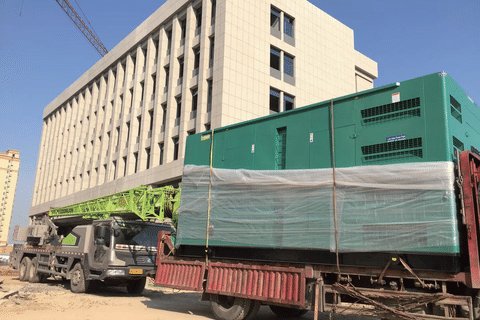

Ask any facilities manager what keeps them up at night and the answer is rarely the servers themselves. It is the quiet question underneath everything else: if the grid goes down at two in the morning, will the backup power actually start, and will it carry the load until the morning crew arrives? A data center can have the best racks, the best cooling and the best monitoring in the world, and still go dark because somebody sized the generator from a brochure instead of from the building.
I have watched this mistake play out more times than I would like. A project team adds up the nameplate ratings of every piece of equipment, adds a generous margin for safety, and orders a machine far bigger than the site will ever need. On paper it looks cautious. In practice the generator spends its life running at a quarter of its capacity, burning fuel badly, glazing its cylinders and costing a fortune to maintain. Oversizing is not safety. It is a different kind of risk, wearing a reassuring label.
Start with the load you actually have, not the one on the brochure
The honest starting point is a load study, and it is less glamorous than it sounds. You walk the site, you look at what really runs at the same time, and you measure it. IT load is the obvious part, but it is never the whole story. Cooling is usually the second-biggest draw and it behaves very differently from servers: chillers and computer room air handlers cycle, they start and stop, and their inrush current can be several times their running current. Then there is lighting, security, fire systems, pumps, the UPS itself with its battery charging load, and the small army of odds and ends that nobody thinks to count until they all switch on together.
A good rule that has served me well is to size for the real coincident load and then add a sensible margin, usually around ten to twenty percent for growth, rather than doubling everything just in case. The aim is a generator that runs at roughly seventy to eighty percent of its rated capacity when the site is at full stretch. That is where diesel engines are happiest: hot enough to burn clean, loaded enough to stay efficient, and with enough headroom left to absorb a sudden step in load without sagging. Getting that balance right is the difference between a machine that starts first time in year ten and one that has been quietly deteriorating since year two. When the numbers get complicated, it is worth talking to an experienced diesel generator manufacturer early, before the concrete is poured, because the choice of engine, alternator and control system shapes everything from the fuel tank to the exhaust route.
Motor starting is where good sizing goes wrong
If there is one place where generator projects quietly fail, it is motor starting. A chiller compressor or a large fan does not politely draw its rated current when it starts. For a few seconds it can pull five or six times that amount, and the generator has to supply it while the voltage stays high enough for everything else to keep running. I have seen a perfectly adequate generator trip offline not because the steady load was too big, but because three motors started at once and the voltage dipped far enough for the UPS to complain and the servers to notice.
The fixes are not exotic. Stagger the starts so the big motors do not all demand current in the same second. Use soft starters or variable speed drives where the application allows it. And when you are doing the maths, size the alternator for the starting kVA, not just the running kVA. This is the part of the calculation that separates a spreadsheet exercise from a design that actually works on a bad night, and it is worth spending an afternoon on rather than discovering the problem during the first real outage.
Prime, standby and that awkward middle ground
Generator ratings confuse a lot of buyers, and the confusion costs money. A standby-rated set is built for emergencies: limited hours per year, variable load, and a clear expectation that it will sit ready most of its life. A prime-rated set is built to run as the main source of power, for unlimited hours at variable load. A continuous rating goes further still. Buying a standby set and then running it eight hours a day as if it were prime power is a fast way to a short engine life and a voided warranty, and I have seen exactly that happen on sites where the grid was less reliable than anyone admitted in the planning meetings.
Be honest about how many hours the generator will really run. If the local grid drops out a few times a year for an hour at a time, standby is the right call. If outages are weekly, or the site is somewhere the grid cannot be trusted at all, step up to a prime rating and size the fuel system to match. Engine choice matters here too: a well-proven engine family with a deep parts network will save you far more over ten years than the cheapest quote on the table. That is one reason Cummins diesel generators turn up in so many data center specifications, because when something does eventually need attention, the parts and the people who know the engine are not hard to find.
Noise, fuel and the neighbours you forgot about
Generators are loud, thirsty and hot, and all three facts have a habit of being discovered late. A bare open set in a concrete room can be deafening, and the room itself can turn into an oven if the ventilation was designed as an afterthought. Exhaust needs a clear route, radiators need cool air in and hot air out without recirculating, and the fuel tank needs to be big enough for the runtime the business actually promised its customers, plus a margin for the tanker being late.
Noise deserves special attention because it is the complaint that arrives after the money is spent. If the data center sits near homes, offices or a hospital, the acoustic treatment is not a luxury, it is part of the design. A silent diesel generator in a properly designed canopy can bring sound levels down to something the neighbours will never notice, and it is far cheaper to specify the canopy at the start than to build a brick enclosure around a noisy machine a year later. While you are at it, check the local rules on emissions and fuel storage before you order anything. A generator that cannot legally run where you put it is an expensive sculpture.
The part nobody budgets for: testing
Here is the uncomfortable truth about backup power: a generator that has never been tested under load is a guess, not a plan. Monthly start tests are better than nothing, but a machine can start happily with no load and still fail the moment real current is demanded. A proper load bank test, done at least once a year, tells you the truth about the engine, the alternator, the cooling and the fuel system all at once. It also tells you whether the automatic transfer switch will actually do its job when the mains disappears, which is a separate piece of equipment with its own way of failing quietly.
Keep records of every test. Note the load, the temperatures, the fuel consumption, anything unusual. Over a few years those notes become the most valuable document in the building, because they show a slow decline long before it becomes a failure. And run the generator properly during tests: a short, lightly loaded run can do more harm than good, leaving unburned fuel in the exhaust and glazing the cylinder bores. Load it properly, let it get hot, and let it prove itself.
Sizing a generator for a data center is not really about buying the biggest machine you can afford. It is about understanding what the building truly needs, respecting the physics of starting motors, choosing the right rating for the hours you will actually run, and then proving the whole system works before you need it. Get those four things right and the generator becomes what it should be: the boring, reliable piece of equipment that nobody talks about, because it simply works every time the lights go out.