
A villa roof plays an important role in protecting the entire property from outdoor conditions, moisture, and structural damage. In Dubai, roofs are exposed to intense sunlight, high temperatures, dust, humidity, and seasonal rainfall, which can gradually affect roofing materials. Without proper protection, small cracks and weak joints may develop into serious leakage problems that require expensive repairs. Maintaining the roof in good condition requires preventive measures that address these environmental challenges before they cause lasting damage.
A Villa roof waterproofing in Dubai is an effective solution for improving roof lifespan, preserving structural integrity, and helping homeowners maintain a durable property for years.
Why Villa Roofs Need Long-Term Protection
Villa roofs experience continuous environmental exposure throughout the year. High temperatures can cause roofing materials to expand, while cooling periods may lead to contraction. Repeated temperature changes can gradually weaken surface coatings, joints, and protective layers.
Rainwater presents another challenge, particularly when roof drainage is inadequate or water collects in low areas. Standing water can place additional stress on vulnerable surfaces and increase the likelihood of seepage.
A well-planned waterproofing system provides an additional layer of protection that helps reduce these risks. It supports the condition of the roof by preventing moisture from entering areas where it could damage underlying materials.
How Waterproofing Extends Roof Lifespan
Waterproofing improves roof longevity by protecting the surface against conditions that contribute to premature deterioration. Rather than allowing moisture to penetrate roofing materials, a waterproof barrier helps keep the underlying structure dry and protected.
Prevents Water Penetration
Water entering through cracks, joints, or damaged roofing layers can gradually affect concrete and other building materials. Waterproofing seals vulnerable areas and reduces the possibility of moisture reaching the underlying structure.
Preventing water penetration helps minimize dampness, ceiling stains, peeling paint, and deterioration associated with recurring leakage.
Reduces Surface Deterioration
Roof surfaces can become damaged when they remain exposed to harsh weather conditions without adequate protection. Waterproof coatings and membranes provide a protective layer that reduces direct exposure to moisture and other environmental factors.
This additional protection helps maintain the condition of the roof surface and can reduce the need for frequent repair work.
Protects Roof Joints and Weak Areas
Roof corners, drainage outlets, parapet walls, expansion joints, and pipe openings are common areas where water may enter. These locations require careful treatment because even small gaps can compromise the overall waterproofing system.
Professional waterproofing addresses these vulnerable points using suitable materials and application techniques, helping maintain continuous protection across the roof.
The Role of Dubai’s Climate in Roof Deterioration
Dubai’s climate can place considerable stress on roofing systems. Prolonged heat and direct sunlight may affect the flexibility and performance of certain waterproofing materials. Dust and debris can also accumulate around drainage outlets, restricting water movement across the roof.
When rainfall occurs, blocked drains or uneven roof surfaces may allow water to remain in certain areas. Repeated exposure to these conditions can contribute to cracks, coating damage, and leakage.
Choosing a waterproofing system suitable for the local climate helps improve roof performance. Material selection should consider temperature resistance, flexibility, surface compatibility, drainage conditions, and the roof’s existing condition.
Different Waterproofing Systems for Longer Roof Life
The right waterproofing solution depends on the roof design, existing surface, and level of protection required. Different systems offer different advantages when correctly installed.
Bitumen Membrane Waterproofing
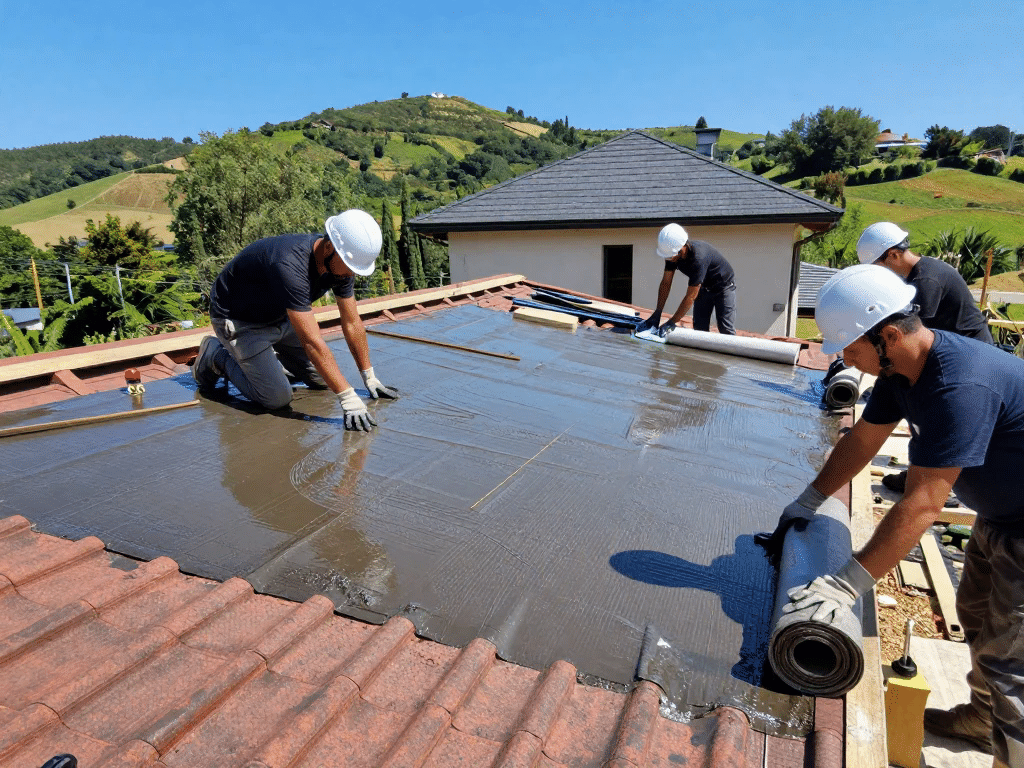
Bitumen membranes provide a protective layer commonly used on flat roofs. Their installation creates continuous coverage across the roof surface, helping prevent water penetration through vulnerable areas.
This system is particularly useful when the roof requires a durable membrane with properly sealed joints and edges.
Liquid-Applied Waterproofing
Liquid waterproofing materials are applied directly to the roof and form a seamless protective coating after curing. They can be suitable for surfaces with complicated shapes, corners, and detailing.
The seamless nature of these coatings helps reduce potential entry points for water when the application is completed correctly.
Polyurethane Waterproofing
Polyurethane waterproofing systems offer flexibility and can help accommodate certain movements in roofing surfaces. Their suitability depends on the substrate, exposure conditions, and the technical requirements of the project.
Combination Waterproofing Systems
Some roofs require multiple waterproofing layers or compatible systems to achieve the required protection. Combination approaches may address different weaknesses in the roof while providing a more comprehensive protective arrangement.
A professional assessment helps determine which solution offers the most suitable long-term performance.
Why Proper Installation Matters
Even high-quality waterproofing materials may fail prematurely when installation is not carried out correctly. Applying a coating over a dirty, damaged, or poorly prepared surface can reduce adhesion and lead to weak areas.
A professional waterproofing process generally includes:
- Inspecting the roof and identifying existing leakage points.
- Removing dust, debris, and unsuitable surface materials.
- Repairing cracks and damaged sections before application.
- Preparing the surface according to the selected system.
- Applying waterproofing layers with the required coverage and thickness.
- Treating corners, joints, drainage outlets, and roof edges carefully.
- Checking the finished system to identify possible defects.
GSW Technical Works provides waterproofing solutions for residential properties, helping homeowners protect their roofs against moisture penetration and premature deterioration.
Signs Your Villa Roof Needs Waterproofing
Identifying roof problems early can help prevent damage from spreading. Homeowners should pay attention to the following warning signs:
- Damp patches appearing on ceilings.
- Peeling paint or bubbling finishes.
- Visible cracks across the roof surface.
- Water collecting around drainage outlets.
- Damaged or lifting waterproofing layers.
- Persistent moisture or leakage after rainfall.
These signs may indicate that the existing roof protection requires inspection, repair, or replacement.
Maintenance Practices That Help Extend Roof Life
Waterproofing is not a one-time solution that eliminates the need for maintenance. Regular inspections help preserve the protective layer and identify minor issues before they become costly.
Homeowners can maintain their roofs by keeping drainage outlets clear, removing accumulated debris, avoiding damage from unnecessary drilling, and checking roof surfaces for visible cracks or coating deterioration.
Professional inspections are particularly helpful after repairs, renovation work, or significant rainfall. Promptly addressing minor defects can support the long-term performance of the waterproofing system.
Frequently Asked Questions
How does roof waterproofing increase the lifespan of a villa roof?
Waterproofing helps prevent moisture penetration, reduces deterioration, protects vulnerable joints, and limits damage caused by repeated water exposure. These benefits help maintain the roof’s condition over time.
How often should villa roof waterproofing be inspected?
Inspection frequency depends on the waterproofing material, installation quality, roof exposure, and maintenance history. Regular checks and professional assessments when signs of deterioration appear help identify issues early.
Is waterproofing necessary for newly constructed villas?
Yes. Waterproofing during construction helps protect the roof from the beginning and reduces the risk of moisture-related problems developing as the property ages.
Conclusion
A roof’s lifespan depends on its ability to withstand environmental exposure while maintaining effective protection against moisture. Waterproofing helps reduce leakage risks, preserve roofing materials, protect vulnerable areas, and minimize premature deterioration. Selecting the right system, ensuring professional installation, and maintaining the roof regularly can make a significant difference in its long-term performance. Investing in Villa Roof Waterproofing Dubai helps homeowners protect their property, reduce recurring repair expenses, and maintain a stronger, more dependable roof for the future.