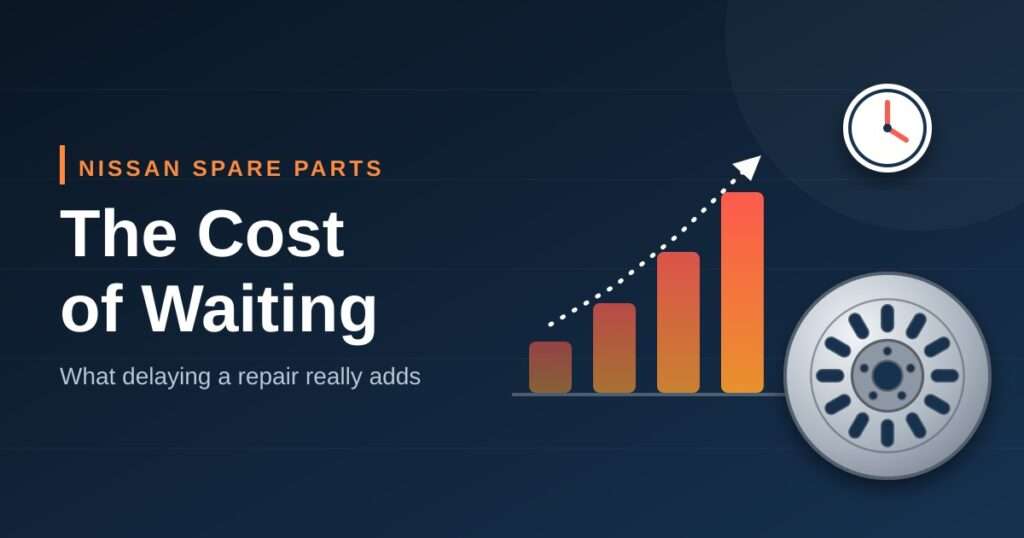

Putting off a repair feels like saving money, but with Nissan spare parts, the bill usually grows while you wait. A worn part rarely stays the same. It wears further, passes strain to the parts around it, and turns a simple replacement into a larger job. This guide explains how that happens, which repairs can wait and which cannot, and how to decide with a clear head instead of a guess.
If you are weighing up a repair right now, you can look through the Nissan spare parts categories to see what the part involved is and what it is likely to involve.
Why Costs Climb While You Wait
Wear Spreads to Neighbouring Parts
Parts work as a system. A worn bearing makes its housing wear. A loose belt damages the pulleys it runs on. A small leak lowers fluid levels and strains the pump. You end up paying for the original part and everything it harmed.
Labor Gets Bigger
A job caught early may involve a single part. A job caught late may require taking apart more of the car to reach the damage, and labor is often the largest part of the bill.
Breakdowns Cost More Than Planned Repairs
A car that stops on the road adds towing, urgent labor and rushed part choices. You lose the chance to compare options calmly.
You Pay With Time Too
Repairs left until they become urgent take the car off the road at the worst moment, and you may wait for parts to arrive.
The Typical Chain Reactions
These examples show how a small delay grows. They are general patterns, and exact outcomes depend on the car and the fault.
Brake Pads to Brake Discs
Pads are designed to wear out. If you keep driving after the friction material is gone, the metal backing scores the disc. A pad-only job becomes pads, discs and sometimes more.
A Seeping Gasket to Low Oil
A slow oil leak looks harmless. Left alone, the level drops, parts run with less protection, and what could have been a gasket replacement can become engine damage.
A Worn Belt to a Stranded Car
Belts drive the alternator, the cooling pump and other parts. A worn belt that snaps can cause overheating or a flat battery, and a car that stops where it is.
Worn Suspension to Worn Tires
Loose or tired suspension parts alter how the tires meet the road. The tires wear unevenly and need replacing early, a cost that could have been avoided.
A Dirty Filter to Poor Running
A clogged filter restricts air or fuel. The engine works harder, uses more fuel and may run roughly. A cheap filter is replaced late and the engine pays for it.
Repairs That Can Wait and Repairs That Cannot
Never Delay
- Anything affecting brakes or steering.
- Overheating or a rapidly dropping coolant level.
- Oil pressure warnings.
- Tires with damage, bulges or very low tread.
- Loud grinding or any sudden change in how the car behaves.
Plan Soon
- Slow leaks.
- Worn belts and hoses.
- Noisy suspension.
- Weak battery performance.
Can Usually Be Scheduled
- Cosmetic damage.
- Minor interior faults.
- Small trim or clip issues that do not affect safety.
If you are unsure which group a problem belongs to, ask a technician to inspect it and say so in writing, so you have a record.
A Simple Way to Compare Costs
Use this quick comparison before deciding to wait.
- Cost to fix it now: part plus labor.
- Cost if it gets worse: the likely extra parts, extra labor and possible towing.
- Risk: could it affect safety?
- Time: how long could the car be off the road if it fails?
If the possible extra cost is much larger than the cost today, waiting is rarely a good bet.
Smart Ways to Spread the Cost Without Waiting
- Fix the safety items first and schedule the rest.
- Ask for an itemized quote so you can see each cost.
- Replace related parts together where it saves labor.
- Compare original and quality aftermarket options for non-critical parts.
- Set aside a small monthly amount for repairs.
A Repair Timeline to Keep
Write the answers down so you can act without second-guessing.
- Date the problem was noticed
- What was noticed (sound, smell, feel)
- Part suspected
- Quote received
- Decision and date