

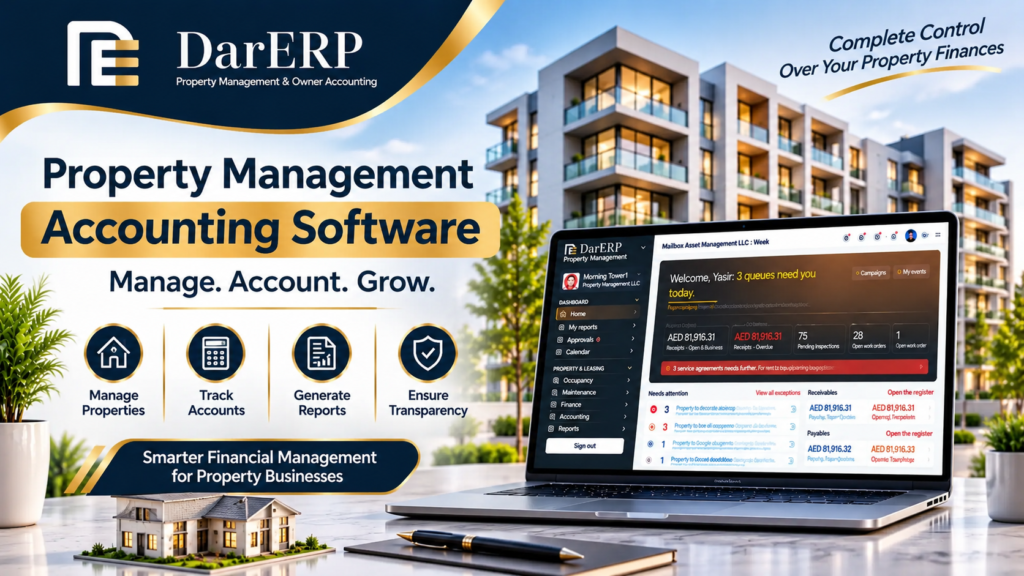

Managing rental properties involves several financial activities that need to remain accurate and properly connected. Rental collections, maintenance expenses, supplier payments, and landlord settlements often happen at different times, making it difficult to understand the complete financial position of a property. When these transactions are recorded in separate spreadsheets or accounting registers, property managers may spend unnecessary time comparing balances and investigating differences.
A Property Management Accounting Software UAE provides a more organized approach by bringing rental income, property expenditure, and owner-related financial records into one system. This helps real estate businesses understand where money comes from, how it is spent, and what amounts are owed to property owners. For landlords and property management companies in the UAE, maintaining these records together is an important part of transparent and efficient financial administration.
Why Tracking Property Finances in One Place Matters
Consider a property management company responsible for several residential buildings in Dubai. The leasing team maintains rental agreements, accountants record incoming payments, and property supervisors coordinate maintenance expenses. Meanwhile, landlords expect accurate information about their earnings and payments.
Although these activities are connected, they may be recorded by different employees using separate systems.
This creates an important accounting challenge: the rental income recorded for a property must agree with its tenant accounts, approved expenses, and ownership records.
A centralized property financial management system provides a consistent structure for maintaining these relationships. Rather than examining unrelated spreadsheets, employees can work with financial records associated with the correct building, unit, tenant, and owner.
Step 1: Create a Financial Record for Every Property
Before tracking transactions, establish accurate information about each property.
The accounting system should identify the building, rental units, ownership details, and relevant financial accounts. These references help ensure that transactions are assigned to the correct asset.
For example, a maintenance invoice relating to a residential apartment should not be recorded against an unrelated commercial property.
When businesses manage properties for different landlords, ownership information becomes equally important. Each transaction must be associated with the correct owner according to the management agreement.
This initial setup may appear administrative, but it determines how reliable future financial statements will be.
A clear property accounting structure helps prevent incorrect allocations and makes financial information easier to retrieve.
Step 2: Record Rental Income Against Tenancy Agreements
Rental income tracking begins with the tenancy agreement, not the bank statement.
A lease establishes the rental period, agreed payment terms, and financial obligations associated with the tenant. These details provide the basis for recording rental receivables.
A dedicated rental income tracking system helps maintain financial records linked to individual tenancy arrangements.
For UAE property businesses, rental installments and post-dated cheques may require particular attention. Accountants should distinguish between rent that has become due, payments actually received, and collection instruments that have not yet cleared.
This distinction is important because expected rental income and available cash are not the same.
When tenancy records and accounting information are maintained consistently, finance teams can review outstanding balances without reconstructing payment histories from separate files.
Step 3: Match Rental Payments with the Correct Tenant Accounts
Receiving a rental payment does not complete the accounting process. The transaction must also be identified and recorded against the correct outstanding obligation.
Problems can occur when a payment reference is incomplete, a tenant has multiple outstanding charges, or an amount is allocated to the wrong account.
Property accountants should establish a clear process for reviewing received payments and applying them to the appropriate tenant balances.
A structured tenant payment management system makes it easier to maintain transaction histories and investigate unmatched receipts.
For example, when a tenant questions an outstanding balance, the accounting team should be able to examine the relevant charges, receipts, and adjustments.
Accurate payment allocation reduces confusion during collection reviews and supports more dependable rental statements.
Step 4: Organize Property Expenses by Category and Responsibility
Not every cost associated with a property should be treated in the same way.
Routine maintenance, building utilities, supplier services, management charges, and capital improvements may have different accounting implications.
A property expense tracking system helps organize expenditure according to the relevant property and financial category.
However, proper classification also requires identifying who is responsible for the cost.
Under some management arrangements, certain expenses are payable by the landlord, while others may be recoverable from tenants or handled by the management company.
Accountants should therefore review supporting documentation and contractual responsibilities before assigning costs.
Accurate expense records help prevent incorrect deductions from owner balances and provide clearer information about property operating expenditure.
Step 5: Connect Supplier Invoices with Property Accounts
Maintenance contractors and other service providers may work across several buildings managed by the same company.
When supplier invoices arrive, the finance team needs enough information to identify the services provided, the property involved, and the appropriate accounting treatment.
A structured accounts payable process helps maintain supplier liabilities, invoice references, and payment information.
For example, a contractor may service equipment in two separate buildings. The related expenditure should be assigned according to the work performed rather than recorded entirely against one property.
DarERP Property Management Software includes accounts payable, general ledger, and property administration functionality that can support the organization of these financial records.
Linking supplier information with property accounting helps businesses maintain clearer expense histories and investigate unexpected charges.
Step 6: Calculate Owner Balances Before Making Payments
Owner payments require more care than simply transferring the rent collected from tenants.
A property management company may need to account for authorized expenses, management charges, previously settled amounts, and other contractual adjustments before determining what is payable to a landlord.
An owner accounting system helps maintain the records required to calculate these balances.
It is important to distinguish between income attributable to the owner, funds received, amounts retained for agreed obligations, and payments already made.
The accounting treatment should reflect the property management agreement and applicable financial policies.
Accurate owner balances help avoid payment disputes and ensure that landlord statements reflect the underlying transactions.
Step 7: Record Owner Payments and Maintain a Clear Settlement History
Once an owner payment has been approved, it should be recorded against the appropriate owner account.
The transaction record should identify the landlord, the relevant accounting period or settlement reference, and the payment details needed for reconciliation.
This is particularly useful when an owner receives payments associated with several properties.
A dependable landlord payment tracking process helps distinguish balances awaiting settlement from payments already completed.
Businesses should also maintain supporting documentation for payment adjustments and authorized deductions.
When an owner requests clarification about a previous settlement, accountants can refer to the relevant records rather than reconstructing the payment history manually.
What Should a Centralized Property Accounting System Include?
To manage these financial activities effectively, businesses should evaluate whether their software provides:
- Rental accounting: Tenant ledgers, rental receivables, payment histories, and outstanding balance information.
- Expense administration: Property cost categories, supplier invoices, accounts payable, and supporting transaction references.
- Owner financial management: Owner ledgers, settlement records, authorized deductions, and landlord statements.
- Core accounting: General ledger, bank and cash management, journal adjustments, and reconciliation support.
- Financial reporting: Property-specific income and expense information, outstanding liabilities, and accounting summaries.
These functions should operate through consistent property and account references rather than independent, disconnected registers.
Keep Owner Money Separate from Management Company Revenue
One of the most important principles in property management accounting is distinguishing money administered for landlords from revenue earned by the management company.
A company may collect rent on behalf of a property owner, but the entire collection does not automatically represent the management company’s income.
Management fees and other contractual charges require their own accounting treatment.
Similarly, refundable tenant security deposits should not automatically be recognized as rental revenue.
A suitable real estate accounting system helps organize these financial categories, while accountants determine the correct treatment according to ownership agreements and applicable accounting requirements.
Maintaining these distinctions is essential for accurate financial statements and responsible fund management.
Use Reconciliation to Verify Financial Records
Even when all transactions are maintained in one system, accounting records must be checked regularly.
Bank reconciliation helps identify differences between recorded cash activity and actual banking transactions.
Owner account reviews are equally important because outstanding settlements, recorded expenses, and completed payments must agree with the supporting financial information.
For example, an owner payment might appear in the accounting records before the related bank transaction has been confirmed. This difference should be reviewed rather than assumed to be correct.
Regular reconciliation strengthens the reliability of property management financial reporting and helps prevent unresolved discrepancies from affecting future accounting periods.
How DarERP Supports Property Financial Administration
Real estate businesses often need software that manages property information alongside accounting records.
DarERP UAE brings property administration and financial accounting functions into one ERP environment. Its modules include general ledger, accounts receivable, accounts payable, bank and cash management, and owner-related accounting.
These functions are relevant to businesses seeking to maintain rental records, property expenses, and landlord financial information through a consistent accounting structure.
For property management companies in Dubai and across the UAE, the practical benefit is having the financial information needed to support everyday administration and accounting reviews.
Businesses should still verify that the available workflows match their specific payment, settlement, and reporting procedures.
Build a Simple Monthly Financial Review Process
A useful accounting system becomes more valuable when accompanied by a consistent review routine.
At the end of each accounting period, finance teams should confirm that tenant receipts have been allocated correctly, outstanding rental balances are accurate, and supplier expenses are properly classified.
They should also review owner balances, completed payments, and any adjustments awaiting approval.
Once relevant accounts have been reconciled, the business can prepare property and owner statements using verified information.
This approach creates a clear sequence: record transactions, verify balances, reconcile accounts, and prepare financial reports.
Following a consistent process makes it easier to identify unusual entries before they affect landlord settlements or management decisions.
Final Thoughts
Tracking rental income, property expenses, and owner payments is not simply about maintaining three separate financial registers. These activities are connected, and an error in one area can affect the accuracy of the others.
Property Management Accounting Software helps real estate businesses organize these relationships by maintaining tenant financial records, property expenditure, accounting balances, and owner payment information within a structured environment.
The most effective approach combines accurate transaction recording with clear ownership responsibilities, regular reconciliation, and consistent financial reporting.
For landlords and property management companies in the UAE, maintaining these financial records together can improve transparency, simplify accounting reviews, and support more dependable property administration.
Frequently Asked Questions
1. How can I track rental income and property expenses in one system?
A property accounting system can maintain rental receivables, recorded payments, supplier invoices, and operating expenses using consistent property references. This allows accountants to review income and expenditure associated with the same asset without relying on unrelated financial registers.
2. How are owner payments calculated in property management accounting?
Owner payments are determined according to the management agreement and relevant financial records. Accountants may need to consider collected rent, authorized expenses, management fees, previous settlements, and other applicable adjustments before confirming the amount payable.
3. What is the difference between rental income and owner payments?
Rental income represents revenue associated with leasing a property, while owner payments are amounts transferred or settled to the landlord according to ownership arrangements and the management agreement. The two amounts may differ because of expenses, liabilities, deductions, and settlement timing.
4. Can property management accounting software manage multiple properties and owners?
Yes. Suitable software can maintain separate financial records for multiple properties and ownership accounts while providing organized accounting information across the portfolio. Businesses should verify how the platform handles owner relationships, settlement records, and reporting before implementation.